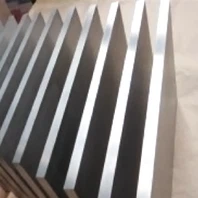
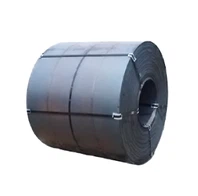
Hey there! I'm an ASTM A537 supplier, and today I wanna chat about the weldability of ASTM A537 in different positions. ASTM A537 is a high-strength, heat-treated carbon steel plate that's widely used in pressure vessels, storage tanks, and other structural applications. Understanding its weldability in various positions is crucial for ensuring the quality and integrity of welded structures.
First off, let's talk about what weldability means. Weldability refers to the ability of a material to be welded into a sound joint with suitable properties. When it comes to ASTM A537, several factors can affect its weldability, including its chemical composition, mechanical properties, and the welding process used.
Weldability in the Flat Position
The flat position is the easiest and most common welding position. In this position, the weld joint is horizontal, and gravity helps the molten metal flow into the joint. ASTM A537 generally has good weldability in the flat position. The heat input can be controlled more easily, and the weld pool is more stable compared to other positions.
One of the key advantages of welding ASTM A537 in the flat position is that it allows for better fusion and penetration. The molten metal can flow evenly into the joint, resulting in a strong and defect-free weld. However, it's still important to follow proper welding procedures, such as preheating and post-weld heat treatment, to ensure the best results.
Weldability in the Horizontal Position
Welding in the horizontal position can be a bit more challenging than in the flat position. In this position, the weld joint is vertical, and the molten metal has a tendency to sag or drip. To overcome this, special welding techniques and equipment may be required.


When welding ASTM A537 in the horizontal position, it's important to use a lower heat input to prevent the molten metal from flowing out of the joint. A smaller electrode diameter and a faster welding speed can also help to control the weld pool. Additionally, proper joint preparation and fit-up are crucial to ensure good fusion and penetration.
Weldability in the Vertical Position
The vertical position is one of the most difficult welding positions. In this position, the weld joint is vertical, and the molten metal has to be held in place against gravity. Welding ASTM A537 in the vertical position requires a high level of skill and experience.
To weld ASTM A537 in the vertical position, a special welding technique called vertical up welding is often used. This technique involves welding from the bottom of the joint to the top, using a small electrode diameter and a slow welding speed. The welder has to control the weld pool carefully to prevent it from flowing down.
Another option is vertical down welding, which is faster but requires more skill. In vertical down welding, the welder welds from the top of the joint to the bottom. This technique can be used for thinner materials, but it may not be suitable for thicker sections of ASTM A537.
Weldability in the Overhead Position
The overhead position is the most challenging welding position. In this position, the weld joint is above the welder, and the molten metal has to be held in place against gravity. Welding ASTM A537 in the overhead position requires a high level of skill and experience.
To weld ASTM A537 in the overhead position, a special welding technique called overhead welding is used. This technique involves using a small electrode diameter and a low heat input to prevent the molten metal from dripping. The welder has to control the weld pool carefully to ensure good fusion and penetration.
It's also important to use proper safety equipment, such as a welding helmet with a good view, to protect the welder from the heat and sparks.
Factors Affecting Weldability
In addition to the welding position, several other factors can affect the weldability of ASTM A537. These include:
- Chemical Composition: The chemical composition of ASTM A537 can affect its weldability. Elements such as carbon, manganese, and sulfur can have an impact on the weldability. For example, a high carbon content can increase the hardness of the weld and make it more prone to cracking.
- Mechanical Properties: The mechanical properties of ASTM A537, such as its strength and ductility, can also affect its weldability. A material with high strength may require a higher heat input during welding, which can increase the risk of cracking.
- Welding Process: The welding process used can also have an impact on the weldability of ASTM A537. Different welding processes, such as shielded metal arc welding (SMAW), gas metal arc welding (GMAW), and flux-cored arc welding (FCAW), have different characteristics and requirements.
Tips for Welding ASTM A537
Here are some tips for welding ASTM A537 in different positions:
- Preheat the Material: Preheating the material before welding can help to reduce the risk of cracking and improve the weldability. The preheat temperature depends on the thickness of the material and the welding process used.
- Use the Right Welding Consumables: Using the right welding consumables, such as electrodes and filler metals, is crucial for ensuring good weld quality. Make sure to choose consumables that are compatible with ASTM A537.
- Control the Heat Input: Controlling the heat input during welding is important to prevent overheating and cracking. Use a lower heat input for thinner materials and a higher heat input for thicker materials.
- Follow Proper Welding Procedures: Following proper welding procedures, such as joint preparation, fit-up, and welding technique, is essential for ensuring good weld quality. Make sure to follow the manufacturer's recommendations and industry standards.
Conclusion
In conclusion, the weldability of ASTM A537 in different positions depends on several factors, including the welding position, the chemical composition of the material, the mechanical properties, and the welding process used. While ASTM A537 generally has good weldability, welding in more difficult positions, such as the vertical and overhead positions, requires a high level of skill and experience.
If you're in the market for ASTM A537 or other related materials like SA285GrC A387GR11CL2, SA387GR11 A387 steel plate, or SA516GR70, I'm here to help. I can provide you with high-quality materials and expert advice on welding and other applications. Feel free to reach out to me for more information or to start a procurement discussion.
References
- AWS D1.1/D1.1M:2020, Structural Welding Code - Steel
- ASME Boiler and Pressure Vessel Code, Section IX, Welding and Brazing Qualifications