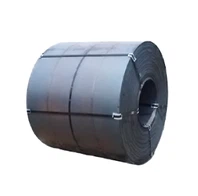
Hey there! I'm a supplier of 1045 steel plates, and today I wanna talk about the phosphorus content in 1045 steel plates and its effects.
First off, let's understand what 1045 steel is. It's a medium - carbon steel that's widely used in various industries because of its good combination of strength and machinability. Now, when it comes to phosphorus, it's one of the important chemical elements in steel, and its content can have a big impact on the properties of the 1045 steel plate.
Phosphorus Content in 1045 Steel Plate
In 1045 steel plates, the typical phosphorus content is usually limited to a relatively low level. Generally, the maximum phosphorus content allowed in 1045 steel is around 0.035%. This limit is set for a good reason. Phosphorus is considered an impurity in steel to some extent, although it does have some beneficial effects under certain conditions.
During the steel - making process, phosphorus can enter the steel from the raw materials, such as iron ore and scrap metal. The steel - making facilities have to carefully control the addition of these raw materials to keep the phosphorus content within the specified range. If the phosphorus content is too high, it can lead to some negative consequences for the steel's performance.
Effects of Phosphorus on 1045 Steel Plate
Positive Effects
- Improved Strength and Hardness: In small amounts, phosphorus can increase the strength and hardness of the 1045 steel plate. It does this by solid - solution strengthening. Phosphorus atoms dissolve in the iron lattice of the steel, which makes it more difficult for dislocations to move. As a result, the steel becomes stronger and harder. This can be beneficial in applications where high strength is required, like in the manufacturing of shafts and gears.
- Enhanced Machinability: Phosphorus can also improve the machinability of 1045 steel. It helps to break the chips into smaller pieces during the machining process, which reduces the cutting forces and improves the surface finish of the machined parts. This is a big plus for manufacturers who need to shape the steel into various components efficiently.
Negative Effects
- Cold Brittleness: One of the major drawbacks of high phosphorus content is cold brittleness. When the phosphorus content exceeds the acceptable limit, the steel becomes more brittle at low temperatures. This means that it's more likely to crack or break under impact loading in cold environments. For example, if a 1045 steel plate with high phosphorus content is used in a structure in a cold climate, it could fail unexpectedly during an impact event, like a sudden shock or a collision.
- Reduced Weldability: High phosphorus levels can also have a negative impact on the weldability of the 1045 steel plate. During the welding process, the high phosphorus content can cause hot cracking in the weld zone. This is because phosphorus has a low melting point and can form low - melting - point eutectics at the grain boundaries of the steel. These eutectics can cause the weld to crack as it cools down, which undermines the integrity of the welded joint.
Controlling Phosphorus Content for Optimal Performance
As a 1045 steel plate supplier, I understand the importance of controlling the phosphorus content to ensure the best performance of the steel. We work closely with our steel - making partners to monitor and adjust the steel - making process. This includes using high - quality raw materials with low phosphorus content and implementing strict quality control measures throughout the production process.
We also offer different grades of 1045 steel plates with varying phosphorus contents to meet the specific needs of our customers. For applications where high strength and machinability are the main concerns, and the operating temperature is relatively high, we can provide steel plates with a slightly higher phosphorus content within the acceptable range. On the other hand, for applications in cold environments or where weldability is crucial, we offer steel plates with a very low phosphorus content.

Applications of 1045 Steel Plate and Phosphorus Considerations
1045 steel plates are used in a wide range of industries, and the phosphorus content plays an important role in determining their suitability for different applications.
- Automotive Industry: In the automotive industry, 1045 steel plates are used to make components such as axles and crankshafts. The phosphorus content needs to be carefully controlled to ensure a good balance between strength, hardness, and machinability. Since these components are often subjected to high - stress conditions, the steel needs to have sufficient strength, but at the same time, it should also be easy to machine into the required shapes.
- Construction Industry: In construction, 1045 steel plates can be used in the fabrication of structural members. If the structure is located in a cold climate, the phosphorus content should be kept low to avoid cold brittleness. For example, in the construction of bridges in northern regions, using 1045 steel plates with a low phosphorus content is essential to ensure the safety and durability of the structure.
Comparison with Other Steel Grades
When comparing 1045 steel plates with other steel grades like astm a537 16Mo3, SA285GrA, and SA285GrC A387GR11CL2, the phosphorus content and its effects can vary significantly.
- astm a537 16Mo3: This is a pressure - vessel steel. It has different chemical composition requirements compared to 1045 steel. The phosphorus content in astm a537 16Mo3 is also strictly controlled, but the focus is more on its performance under high - pressure and high - temperature conditions. The effects of phosphorus on its properties are also different, as it has a different alloying system.
- SA285GrA and SA285GrC A387GR11CL2: These are also pressure - vessel steels. They have specific requirements for phosphorus content to ensure their safety and reliability in pressure - vessel applications. The acceptable phosphorus ranges for these steels may be different from that of 1045 steel, depending on their intended use and the design requirements of the pressure vessels.
Conclusion
In conclusion, the phosphorus content in 1045 steel plates is a critical factor that affects their performance in various applications. While a small amount of phosphorus can bring some benefits, such as improved strength and machinability, too much phosphorus can lead to problems like cold brittleness and reduced weldability.
As a 1045 steel plate supplier, I'm committed to providing high - quality steel plates with carefully controlled phosphorus content. Whether you need steel for high - strength applications, machining - intensive projects, or structures in cold environments, we can offer the right grade of 1045 steel to meet your needs.
If you're interested in purchasing 1045 steel plates or have any questions about the phosphorus content and its effects, feel free to reach out to me. We can have a detailed discussion about your specific requirements and find the best solution for your project.
References
- "The Making, Shaping and Treating of Steel", United States Steel Corporation
- "Metallurgy for Engineers", Robert A. Higgins