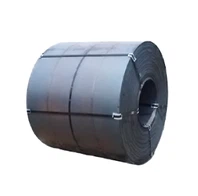
As a supplier of 690QL plates, I understand the critical importance of ensuring the quality and integrity of these high-strength steel products. In the construction and engineering industries, where safety and performance are paramount, the reliability of 690QL plates can significantly impact the success of projects. Therefore, rigorous inspection methods are employed to guarantee that the plates meet the required standards and specifications. In this blog post, I will delve into the various inspection methods used for 690QL plates, providing insights into how we maintain the highest quality in our products.
Visual Inspection
Visual inspection is the most basic yet essential method for assessing the surface quality of 690QL plates. This inspection is typically the first step in the quality control process and involves a thorough examination of the plate's surface for any visible defects such as cracks, scratches, pits, or inclusions. Inspectors use their naked eyes or magnifying glasses to detect these imperfections, which can affect the plate's structural integrity and performance.
During visual inspection, inspectors look for surface irregularities that may indicate underlying issues. For example, cracks can propagate under stress, leading to premature failure of the plate. Scratches and pits can reduce the plate's corrosion resistance, increasing the risk of rust and degradation over time. Inclusions, such as non-metallic particles or foreign materials, can also weaken the plate's structure and cause localized stress concentrations.
Visual inspection is not only important for detecting surface defects but also for verifying the plate's dimensions and shape. Inspectors measure the thickness, width, and length of the plate to ensure that it meets the specified tolerances. They also check the plate's flatness and straightness, as any deviations from the required standards can affect the plate's fit and performance in the final application.
Ultrasonic Testing
Ultrasonic testing (UT) is a non-destructive testing method used to detect internal defects in 690QL plates. This technique involves sending high-frequency sound waves into the plate and analyzing the reflections to identify any flaws or discontinuities. UT is particularly effective in detecting internal cracks, voids, and inclusions that may not be visible on the surface.
In ultrasonic testing, a transducer is used to generate and receive the sound waves. The transducer is placed on the surface of the plate, and the sound waves are transmitted into the material. When the sound waves encounter a defect, they are reflected back to the transducer, where they are detected and analyzed. The time it takes for the sound waves to travel to the defect and back is measured, and the location and size of the defect can be determined based on this information.
UT is a highly sensitive and accurate testing method that can detect even small defects in the plate. It is also a non-invasive technique, which means that it does not damage the plate during the testing process. This makes it an ideal method for inspecting 690QL plates, as it allows us to ensure the quality of the plates without compromising their integrity.
Magnetic Particle Testing
Magnetic particle testing (MT) is another non-destructive testing method used to detect surface and near-surface defects in 690QL plates. This technique is based on the principle of magnetic fields and is particularly effective in detecting cracks and other defects in ferromagnetic materials, such as steel.
In magnetic particle testing, the plate is magnetized using a magnetic field. When a defect is present in the plate, the magnetic field is disrupted, causing the magnetic particles to accumulate at the defect site. These particles are then visible to the naked eye, allowing inspectors to identify the location and size of the defect.
MT is a relatively simple and cost-effective testing method that can be used to detect surface and near-surface defects quickly and accurately. It is also a non-invasive technique, which means that it does not damage the plate during the testing process. However, MT is only effective in detecting defects in ferromagnetic materials, and it may not be suitable for detecting defects in non-ferromagnetic materials or in areas where the magnetic field is not strong enough.
Penetrant Testing
Penetrant testing (PT) is a non-destructive testing method used to detect surface defects in 690QL plates. This technique involves applying a liquid penetrant to the surface of the plate and allowing it to seep into any surface defects. After a specified period of time, the excess penetrant is removed, and a developer is applied to the surface of the plate. The developer absorbs the penetrant that has seeped into the defects, making them visible to the naked eye.
PT is a highly sensitive testing method that can detect even small surface defects in the plate. It is also a relatively simple and cost-effective technique that can be used to inspect large areas of the plate quickly and efficiently. However, PT is only effective in detecting surface defects, and it may not be suitable for detecting internal defects or defects that are not accessible from the surface.

Chemical Analysis
Chemical analysis is an important inspection method used to determine the chemical composition of 690QL plates. This technique involves analyzing the plate's chemical elements to ensure that it meets the specified requirements. Chemical analysis is typically performed using a spectrometer, which measures the intensity of light emitted by the plate's elements when they are excited by a high-energy source.
The chemical composition of 690QL plates is critical to their performance and properties. For example, the carbon content of the plate can affect its strength and hardness, while the alloying elements, such as manganese, chromium, and nickel, can improve its corrosion resistance and toughness. By analyzing the plate's chemical composition, we can ensure that it has the right balance of elements to meet the specific requirements of the application.
Tensile Testing
Tensile testing is a mechanical testing method used to determine the strength and ductility of 690QL plates. This technique involves applying a tensile force to a sample of the plate and measuring the amount of deformation that occurs. The results of the tensile test can be used to determine the plate's yield strength, ultimate tensile strength, and elongation.
In tensile testing, a sample of the plate is cut to a specific size and shape and is then placed in a testing machine. The machine applies a gradually increasing tensile force to the sample until it breaks. During the test, the amount of deformation that occurs in the sample is measured using a strain gauge or other measuring device. The results of the test are then analyzed to determine the plate's mechanical properties.
Tensile testing is an important method for ensuring the quality and performance of 690QL plates. By testing the plate's strength and ductility, we can ensure that it can withstand the stresses and loads that it will be subjected to in the final application.
Hardness Testing
Hardness testing is a mechanical testing method used to determine the hardness of 690QL plates. This technique involves applying a specific load to the surface of the plate using a hardness tester and measuring the size of the indentation that is produced. The hardness of the plate can be determined based on the size of the indentation and the applied load.
There are several different types of hardness testing methods, including Brinell hardness testing, Rockwell hardness testing, and Vickers hardness testing. Each method uses a different indenter and a different load to measure the hardness of the plate. The choice of hardness testing method depends on the type of material being tested and the specific requirements of the application.
Hardness testing is an important method for ensuring the quality and performance of 690QL plates. By testing the plate's hardness, we can ensure that it has the right balance of strength and toughness to withstand the stresses and loads that it will be subjected to in the final application.
Conclusion
In conclusion, as a supplier of 690QL plates, we understand the importance of ensuring the quality and integrity of our products. To achieve this, we employ a variety of inspection methods, including visual inspection, ultrasonic testing, magnetic particle testing, penetrant testing, chemical analysis, tensile testing, and hardness testing. These methods allow us to detect and identify any defects or imperfections in the plates, ensuring that they meet the required standards and specifications.
If you are in the market for high-quality 690QL plates, we encourage you to contact us to discuss your specific requirements. Our team of experts is available to provide you with more information about our products and services and to help you choose the right plate for your application. We are committed to providing our customers with the highest level of quality and service, and we look forward to working with you on your next project.
References
- ASME Boiler and Pressure Vessel Code
- ASTM International Standards
- ISO International Standards