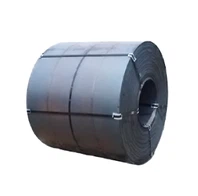
Hey there! As a supplier of Pressure Vessel Plates, I've been getting a lot of questions lately about how surface roughness can impact these plates. So, I thought I'd take some time to break it down for you.
First off, let's talk about what surface roughness actually is. Surface roughness refers to the small, irregular deviations from the ideal smooth surface of a material. These deviations can be caused by a variety of factors, such as machining processes, wear and tear, or environmental conditions.
Now, you might be wondering, why does surface roughness matter when it comes to Pressure Vessel Plates? Well, the answer lies in the fact that surface roughness can have a significant impact on the performance and safety of these plates.
One of the primary ways that surface roughness affects Pressure Vessel Plates is through its impact on corrosion resistance. A rough surface provides more surface area for corrosive agents to come into contact with the plate, which can lead to faster corrosion rates. This is especially problematic in environments where the vessel is exposed to harsh chemicals or high levels of moisture.
For example, in a chemical processing plant, a Pressure Vessel Plate with a rough surface may be more likely to develop corrosion pits or cracks over time. These defects can weaken the plate and compromise its structural integrity, increasing the risk of a catastrophic failure.

Another way that surface roughness can impact Pressure Vessel Plates is through its effect on fatigue life. Fatigue is the process by which a material fails under repeated loading, and it's a major concern in pressure vessel applications. A rough surface can act as stress concentrators, where the stress levels are higher than in the surrounding areas. These stress concentrations can accelerate the formation and growth of fatigue cracks, reducing the overall fatigue life of the plate.
Let's say you have a pressure vessel that's subjected to cyclic loading, such as in a steam boiler. A plate with a rough surface may experience fatigue failure more quickly than a plate with a smooth surface, even if both plates are made of the same material and have the same thickness.
In addition to corrosion and fatigue, surface roughness can also affect the weldability of Pressure Vessel Plates. When welding two plates together, a smooth surface is generally preferred because it allows for better contact between the plates and the welding electrode. A rough surface can make it more difficult to achieve a good weld joint, which can lead to welding defects such as porosity, lack of fusion, or cracking.
For instance, if you're welding a [link text="SA516GR70" url="/pressure-vessel-plate/sa516gr70-factory.html"]SA516GR70[/link] Pressure Vessel Plate with a rough surface, you may encounter problems with the quality of the weld. These defects can weaken the weld joint and reduce the overall strength of the vessel.
So, how can you ensure that your Pressure Vessel Plates have the appropriate surface roughness? Well, it starts with choosing the right manufacturing process. For example, processes like grinding or polishing can be used to achieve a smoother surface finish. Additionally, proper inspection and testing should be carried out to ensure that the surface roughness meets the required standards.
At our company, we understand the importance of surface roughness in Pressure Vessel Plates. That's why we use state - of - the - art manufacturing techniques to produce plates with the optimal surface finish. We also conduct rigorous quality control checks to make sure that every plate we supply meets or exceeds the industry standards.
We offer a wide range of Pressure Vessel Plates, including [link text="astm a537 16Mo3" url="/pressure-vessel-plate/16mo3.html"]astm a537 16Mo3[/link] and [link text="SA387GR11 A387 steel plate" url="/pressure-vessel-plate/sa387gr11.html"]SA387GR11 A387 steel plate[/link]. These plates are known for their high strength, excellent corrosion resistance, and good weldability. And of course, we pay close attention to the surface roughness to ensure that they perform at their best in your applications.
If you're in the market for Pressure Vessel Plates and want to learn more about how surface roughness can impact your choice, or if you have any other questions about our products, don't hesitate to reach out. We're here to help you make the right decision for your project. Whether you're building a new pressure vessel or replacing an existing plate, we can provide you with the high - quality products and expert advice you need.
In conclusion, surface roughness is a critical factor that can have a significant impact on the performance, safety, and durability of Pressure Vessel Plates. By understanding how surface roughness affects these plates and taking the necessary steps to control it, you can ensure that your pressure vessels operate reliably and efficiently for years to come.
If you're interested in purchasing Pressure Vessel Plates or want to discuss your specific requirements, feel free to contact us. We're eager to start a conversation and help you find the perfect solution for your needs.
References:
- "Pressure Vessel Design Handbook" by Dennis R. Moss
- "Materials Science and Engineering: An Introduction" by William D. Callister Jr. and David G. Rethwisch
- Industry standards and guidelines related to pressure vessel manufacturing and surface finish requirements.