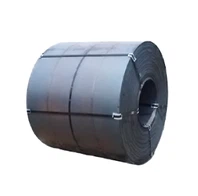
As a supplier of JISG3106 SM490 steel, I've encountered numerous inquiries about the hardness of this material. In this blog post, I'll delve into the intricacies of the hardness of JISG3106 SM490, exploring its characteristics, influencing factors, and significance in various applications.
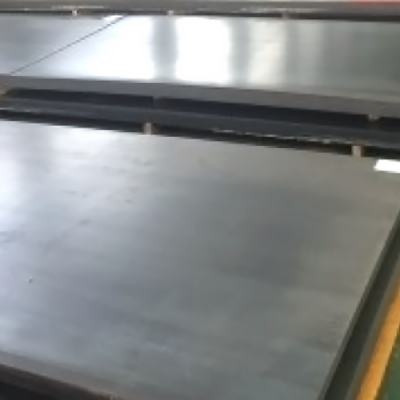
Understanding JISG3106 SM490
JISG3106 SM490 is a high - strength welded structural steel specified by the Japanese Industrial Standards (JIS). It is widely used in construction, bridges, and various engineering structures due to its excellent mechanical properties, including high strength and good weldability. The "SM490" in its name indicates that the steel has a minimum yield strength of 325 MPa and a minimum tensile strength of 490 MPa.
Hardness of JISG3106 SM490
Hardness is a measure of a material's resistance to local deformation, such as indentation or scratching. For JISG3106 SM490, the hardness is influenced by several factors, including its chemical composition, heat treatment, and manufacturing process.
Chemical Composition
The chemical composition of JISG3106 SM490 plays a crucial role in determining its hardness. It typically contains elements such as carbon (C), silicon (Si), manganese (Mn), phosphorus (P), sulfur (S), and trace amounts of other alloying elements. Carbon is one of the most important elements affecting hardness. Generally, an increase in carbon content leads to an increase in hardness. However, excessive carbon can also reduce the steel's weldability and ductility. Silicon and manganese can improve the strength and hardness of the steel by solid - solution strengthening. Phosphorus and sulfur are usually considered impurities, and their content should be strictly controlled to avoid negative effects on the steel's properties.
Heat Treatment
Heat treatment is another significant factor that can alter the hardness of JISG3106 SM490. Processes such as quenching and tempering can be used to adjust the steel's microstructure and, consequently, its hardness. Quenching involves rapid cooling of the steel from a high temperature, which results in the formation of a hard and brittle martensite structure. Tempering is then carried out to reduce the brittleness and improve the toughness of the quenched steel. By carefully controlling the heat treatment parameters, such as the quenching temperature, cooling rate, and tempering temperature, the hardness of JISG3106 SM490 can be tailored to meet specific application requirements.
Manufacturing Process
The manufacturing process of JISG3106 SM490 also affects its hardness. For example, hot - rolling and cold - rolling processes can have different impacts on the steel's microstructure and properties. Hot - rolled steel usually has a more uniform grain structure and lower hardness compared to cold - rolled steel. Cold - rolling can increase the hardness of the steel by work - hardening, which is the result of plastic deformation during the rolling process.
Measuring the Hardness of JISG3106 SM490
There are several methods for measuring the hardness of JISG3106 SM490, including the Brinell hardness test, Rockwell hardness test, and Vickers hardness test.
Brinell Hardness Test
The Brinell hardness test involves pressing a hard ball (usually made of tungsten carbide) into the surface of the steel under a specified load for a certain period of time. The diameter of the indentation left on the surface is then measured, and the Brinell hardness number (BHN) is calculated based on the load and the surface area of the indentation. This method is suitable for measuring the hardness of relatively large and thick specimens.
Rockwell Hardness Test
The Rockwell hardness test uses a diamond cone or a hard steel ball as the indenter. The indenter is first applied with a minor load, and then a major load is added for a short time. The difference in the depth of indentation before and after the application of the major load is measured, and the Rockwell hardness number is determined. This method is quick and convenient, and it is commonly used in industrial applications.
Vickers Hardness Test
The Vickers hardness test uses a square - based diamond pyramid as the indenter. A load is applied to the indenter, and the diagonal length of the indentation left on the surface of the steel is measured. The Vickers hardness number (HV) is calculated based on the load and the surface area of the indentation. This method is suitable for measuring the hardness of small and thin specimens, as well as for micro - hardness testing.

Significance of Hardness in Applications
The hardness of JISG3106 SM490 is of great significance in various applications.

Construction
In the construction industry, JISG3106 SM490 is often used for building structures such as high - rise buildings and bridges. The appropriate hardness ensures that the steel can withstand the stresses and loads during construction and service. For example, in bridge construction, the steel needs to have sufficient hardness to resist the impact and abrasion caused by traffic and environmental factors.
Machinery Manufacturing
In machinery manufacturing, JISG3106 SM490 can be used to manufacture parts such as gears, shafts, and frames. The hardness of the steel affects the wear resistance and fatigue resistance of these parts. A higher hardness can improve the service life of the parts and reduce the maintenance cost.
Comparison with Other Steel Grades
When comparing JISG3106 SM490 with other steel grades, such as P265GH Plate A516 Gr 70, S355JR, and A573GR58 Carbon Steel Plate A283GRC, the hardness characteristics are different. Each steel grade has its own unique chemical composition and manufacturing process, which result in different hardness levels and other mechanical properties. For example, P265GH is a pressure vessel steel, and its hardness is designed to meet the requirements of high - pressure applications. S355JR is a structural steel with good weldability and toughness, and its hardness is also adjusted according to its application scenarios. A573GR58 and A283GRC are carbon steel plates, and their hardness is related to their carbon content and heat treatment.
Conclusion
In conclusion, the hardness of JISG3106 SM490 is a complex property that is influenced by its chemical composition, heat treatment, and manufacturing process. Measuring the hardness accurately is crucial for ensuring the quality and performance of the steel in various applications. As a supplier of JISG3106 SM490, I am committed to providing high - quality steel products with consistent hardness and other mechanical properties.
If you are interested in purchasing JISG3106 SM490 or have any questions about its hardness or other properties, please feel free to contact me for further discussion and negotiation. I look forward to serving you and meeting your steel material needs.
References
- Japanese Industrial Standards (JIS) G3106
- Metallurgy textbooks on high - strength welded structural steels
- Research papers on the mechanical properties of SM490 steel