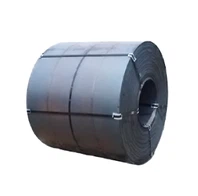
As a heavy plate supplier, I've witnessed firsthand the remarkable advantages that heavy plates offer over other structural materials. In this blog, I'll delve into the reasons why heavy plates are the go - to choice for a wide range of applications, from construction to manufacturing.
Superior Strength and Durability
One of the most significant advantages of heavy plates is their exceptional strength. Heavy plates are designed to withstand high levels of stress and load, making them ideal for use in large - scale construction projects, such as bridges, high - rise buildings, and industrial facilities. For instance, in the construction of a large bridge, heavy plates can support the massive weight of the structure and the traffic it carries.

Compared to other structural materials like wood or some types of light - gauge steel, heavy plates have a much higher tensile and compressive strength. Wood, although a natural and renewable material, has limitations in terms of its load - bearing capacity and resistance to environmental factors. It can rot, warp, or be damaged by pests over time. Light - gauge steel may not be able to handle the same magnitude of stress as heavy plates without additional reinforcement.
Heavy plates are also highly durable. They can resist corrosion, abrasion, and impact, even in harsh environments. For example, in offshore oil rigs, heavy plates are used because they can withstand the corrosive effects of saltwater and the high - energy impacts from waves and equipment. This durability means that structures built with heavy plates have a longer service life, reducing the need for frequent repairs and replacements.
Design Flexibility
Heavy plates offer a great deal of design flexibility. They can be cut, welded, and formed into various shapes and sizes to meet the specific requirements of a project. Whether it's a complex architectural design for a modern building or a custom - made component for a manufacturing process, heavy plates can be tailored to fit.

For example, in the automotive industry, heavy plates can be formed into engine blocks, frames, and other critical components. The ability to shape heavy plates allows manufacturers to optimize the design for performance, weight, and cost. In comparison, some other materials may have limitations in terms of their formability. Concrete, for instance, is more difficult to shape into complex geometries compared to heavy plates, and once it's set, it's very challenging to make changes.
Cost - Effectiveness in the Long Run
While the initial cost of heavy plates may be higher than some other structural materials, they offer significant cost - savings in the long run. As mentioned earlier, their durability means less maintenance and replacement over time. In large - scale projects, the long - term savings can be substantial.
For example, consider a large industrial warehouse. Using heavy plates for the structural framework may require a larger upfront investment compared to using a lighter - weight material. However, over the decades - long lifespan of the warehouse, the reduced need for repairs and the lower risk of structural failures due to the strength and durability of heavy plates result in overall lower costs.
Versatility in Applications
Heavy plates find applications in a wide variety of industries. In the energy sector, they are used in the construction of power plants, both conventional and renewable. For example, in a hydroelectric power plant, heavy plates are used to build the penstocks that carry water to the turbines. In the renewable energy field, heavy plates are also used in the construction of wind turbine towers.
In the manufacturing industry, heavy plates are used to make machinery frames, pressure vessels, and storage tanks. For example, pressure vessels made from heavy plates can safely store high - pressure gases and liquids. In the transportation industry, heavy plates are used in the construction of ships, trains, and trucks.
Quality and Consistency
As a heavy plate supplier, we ensure that the heavy plates we provide meet strict quality standards. Each batch of heavy plates is tested for its mechanical properties, such as strength, hardness, and ductility. This quality control ensures that our customers receive products that are reliable and perform as expected.
Compared to some other structural materials, where the quality can vary widely depending on the source and manufacturing process, heavy plates offer a high level of consistency. For example, natural stone used in construction can have variations in strength and appearance due to differences in the quarry and the way it's extracted.
Availability of Different Grades
We offer a wide range of heavy plate grades to suit different applications. For example, [SM520B](/low - alloy - steel - plate/sm520b.html) is a low - alloy steel plate that offers a good combination of strength and weldability. It's commonly used in general structural applications. [A572GR60](/low - alloy - steel - plate/a572gr60.html) is another popular grade. It has high yield strength and is often used in construction projects where high - strength materials are required. [A573GR58 Carbon Steel Plate A283GRC](/low - alloy - steel - plate/a573gr58 - carbon - steel - plate - a283grc - factory.html) is known for its excellent toughness and is suitable for use in low - temperature environments.
The availability of these different grades allows our customers to choose the most appropriate heavy plate for their specific needs, ensuring optimal performance and cost - effectiveness.
Conclusion
In conclusion, heavy plates offer numerous advantages over other structural materials. Their superior strength, durability, design flexibility, cost - effectiveness in the long run, versatility in applications, quality, and the availability of different grades make them an excellent choice for a wide range of projects.

If you're in the market for heavy plates for your construction, manufacturing, or other projects, I encourage you to get in touch with us. We have the expertise and the product range to meet your requirements. Our team of professionals can assist you in selecting the right heavy plate grade and providing you with the best solutions for your project. Let's start a conversation about how heavy plates can benefit your next venture.
References
- ASM Handbook Committee, “ASM Handbook Volume 1: Properties and Selection: Irons, Steels, and High - Performance Alloys”, ASM International, 2007.
- American Institute of Steel Construction, “Specification for Structural Steel Buildings”, AISC, 2016.
- International Association of Classification Societies, “Rules for the Classification of Steel Ships”, IACS, 2020.