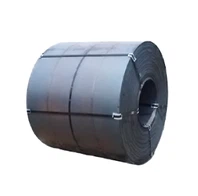
In the world of industrial materials, the 1045 steel plate stands out as a versatile and widely used product. As a supplier of 1045 steel plates, I have witnessed firsthand the crucial role it plays in various industries. One of the most frequently asked questions by our customers is about the hardness of the 1045 steel plate. So, let's delve into this topic in detail.
Understanding 1045 Steel Plate
Before discussing its hardness, it's essential to have a basic understanding of what 1045 steel is. 1045 steel is a medium - carbon steel, which means it contains a moderate amount of carbon (approximately 0.42 - 0.50%) compared to low - carbon and high - carbon steels. This composition gives it a unique set of properties that make it suitable for a wide range of applications.
The addition of carbon to the iron base provides several benefits. It increases the strength and hardness of the steel while also affecting its ductility and toughness. 1045 steel is known for its good machinability, which allows it to be easily cut, shaped, and drilled, making it a popular choice in manufacturing processes.
Factors Affecting the Hardness of 1045 Steel Plate
The hardness of a 1045 steel plate is not a fixed value but is influenced by several key factors.
1. Carbon Content
As mentioned earlier, carbon content is a significant determinant of steel hardness. In the case of 1045 steel, the specific carbon range of 0.42 - 0.50% contributes to its relatively high hardness compared to low - carbon steels. A higher carbon content generally leads to increased hardness because carbon atoms can form hard carbide particles in the steel matrix, which resist deformation.
2. Heat Treatment
Heat treatment is a powerful tool for modifying the hardness of 1045 steel plates. Different heat - treatment processes can be used to achieve various hardness levels according to the requirements of specific applications.
- Annealing: This process involves heating the steel to a specific temperature and then slowly cooling it. Annealing softens the 1045 steel, making it more ductile and easier to machine. The hardness of annealed 1045 steel is typically around 170 - 217 Brinell hardness (HB).
- Normalizing: Normalizing is similar to annealing, but the steel is cooled in air instead of a controlled slow - cooling environment. This results in a more uniform grain structure and a slightly higher hardness than annealed steel. Normalized 1045 steel usually has a hardness of about 187 - 241 HB.
- Quenching and Tempering: Quenching involves rapidly cooling the steel from a high temperature, usually in water or oil. This creates a very hard and brittle structure. To reduce brittleness and improve toughness, the quenched steel is then tempered by reheating it to a lower temperature. Quenched and tempered 1045 steel can achieve a hardness ranging from 229 - 321 HB, depending on the specific quenching and tempering parameters.
3. Cold Working
Cold working, such as rolling, forging, or bending at room temperature, can also increase the hardness of 1045 steel plates. When the steel is deformed plastically during cold working, dislocations are introduced into the crystal structure. These dislocations interact with each other and impede the movement of atoms, making the steel harder. However, excessive cold working can lead to cracking or reduced ductility.
Measuring the Hardness of 1045 Steel Plate
There are several methods available for measuring the hardness of 1045 steel plates.
1. Brinell Hardness Test
The Brinell hardness test involves pressing a hard steel or carbide ball of a specific diameter into the surface of the steel under a known load. The diameter of the indentation left on the surface is measured, and the Brinell hardness number (HB) is calculated based on the load and the indentation diameter. This test is suitable for measuring the hardness of relatively thick and large - grained steel specimens, such as 1045 steel plates.
2. Rockwell Hardness Test
The Rockwell hardness test is another commonly used method. In this test, a diamond cone or a hardened steel ball is pressed into the surface of the steel under a minor load, followed by a major load. The difference in the depth of penetration between the minor and major loads is measured, and the Rockwell hardness number is determined. The Rockwell test is relatively quick and can be used for a wide range of hardness levels.
3. Vickers Hardness Test
The Vickers hardness test uses a square - based pyramid - shaped indenter to press into the steel surface. Similar to the Brinell and Rockwell tests, the size of the indentation is measured, and the Vickers hardness number (HV) is calculated. The Vickers test is particularly useful for measuring the hardness of small or thin specimens and can provide more accurate results for very hard materials.
Applications Based on Hardness
The hardness of 1045 steel plates makes them suitable for a variety of applications in different industries.
1. Machinery Manufacturing
In the machinery manufacturing industry, parts such as shafts, gears, and axles require a combination of strength and hardness. Quenched and tempered 1045 steel plates can be used to manufacture these components because their hardness allows them to withstand high - stress conditions and resist wear.
2. Automotive Industry
In the automotive sector, 1045 steel plates are used in the production of various parts, including connecting rods, crankshafts, and brake components. The appropriate hardness ensures the durability and performance of these parts under the demanding operating conditions of a vehicle.
3. Construction
In construction, 1045 steel plates can be used in structural elements where strength and hardness are crucial. For example, certain types of building frames or support structures may be fabricated from 1045 steel to ensure the stability and safety of the building.
Comparison with Other Steel Products
When considering 1045 steel plates, it's also interesting to compare them with other steel products in terms of hardness. For example, the SA516GR70 is a pressure vessel steel. It has a different composition and heat - treatment process, which result in a different hardness profile compared to 1045 steel. The SA516GR70 is designed to have good weldability and toughness, and its hardness is typically lower than that of the quenched and tempered 1045 steel but higher in some cases than the annealed 1045 steel.
The ASTM A537CL2 SA285GrB is another steel used in pressure vessels. It has its own unique hardness characteristics, which are optimized for its specific application in containing high - pressure fluids. The composition and heat treatment of ASTM A537CL2 SA285GrB are tailored to balance properties such as strength, hardness, and corrosion resistance.
The SA387GR11 A387 steel plate is often used in high - temperature and high - pressure applications, such as in the oil and gas industry. Its hardness is carefully controlled to ensure that it can withstand the harsh operating conditions, including high temperatures and corrosive environments. Compared to 1045 steel, the SA387GR11 A387 steel plate has different alloying elements and heat - treatment requirements, leading to distinct hardness properties.
Conclusion
The hardness of 1045 steel plates is a complex characteristic that is influenced by factors such as carbon content, heat treatment, and cold working. Understanding the hardness of 1045 steel and how it can be modified is crucial for selecting the right material for various applications.
As a supplier of 1045 steel plates, I am committed to providing high - quality products with the desired hardness levels. Whether you need a soft and machinable annealed plate or a hard and strong quenched and tempered plate, we have the expertise and resources to meet your requirements.
If you are interested in purchasing 1045 steel plates or have any questions about their hardness, applications, or other properties, please feel free to contact us for a detailed discussion. We look forward to working with you to find the best solutions for your projects.
References
- ASM Handbook Vol. 1, Properties and Selection: Irons, Steels, and High - Performance Alloys
- Steelmaking and Refining Volume (AISI)
- Standard Handbook of Machine Design, 3rd Edition (Shigley, Mischke, Brown)