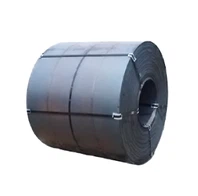
Low alloy steel plates are widely used in various industries due to their excellent mechanical properties and cost - effectiveness. As a supplier of low alloy steel plates, I often encounter inquiries about the formability of these materials. In this blog, I will delve into what formability means for low alloy steel plates, the factors affecting it, and how it impacts different applications.
What is Formability?
Formability refers to the ability of a material to undergo plastic deformation without cracking or failing. In the context of low alloy steel plates, it is the capacity of these plates to be shaped into desired forms through processes such as bending, rolling, stamping, and deep - drawing. Good formability is crucial as it allows manufacturers to create complex and precise components, which are essential in industries like automotive, construction, and machinery manufacturing.
Factors Affecting the Formability of Low Alloy Steel Plates
Chemical Composition
The chemical composition of low alloy steel plates plays a fundamental role in determining their formability. Low alloy steels typically contain small amounts of alloying elements such as manganese, silicon, chromium, nickel, and molybdenum, in addition to carbon.
Carbon is one of the most significant elements. A higher carbon content generally increases the strength of the steel but reduces its ductility and formability. For example, if the carbon content is too high, the steel becomes more brittle, and it is more likely to crack during forming operations. On the other hand, a lower carbon content improves ductility, making the steel easier to form.
Manganese is commonly added to low alloy steels. It helps to improve the strength and hardenability of the steel while also enhancing its formability to some extent. Manganese can combine with sulfur to form manganese sulfide inclusions, which are more ductile than iron sulfide, reducing the risk of cracking during forming.
Silicon is another element that can improve the strength of the steel. However, excessive silicon can lead to the formation of brittle oxides on the surface of the steel, which may negatively affect formability.
Microstructure
The microstructure of low alloy steel plates is closely related to their formability. The most common microstructures in low alloy steels include ferrite, pearlite, bainite, and martensite.
Ferrite is a soft and ductile phase, which is beneficial for formability. A steel with a high ferrite content will generally have better formability. Pearlite, a mixture of ferrite and cementite, has intermediate properties between ferrite and cementite. A fine - grained pearlite structure can provide a good balance between strength and formability.
Bainite and martensite are harder and stronger phases but have lower ductility compared to ferrite. If a large amount of bainite or martensite is present in the steel, the formability will be significantly reduced. Heat treatment processes can be used to control the microstructure of the steel. For example, normalizing can refine the grain size and improve the formability by promoting a more uniform distribution of ferrite and pearlite.
Plate Thickness
The thickness of the low alloy steel plate also affects its formability. Thinner plates generally have better formability than thicker ones. This is because thinner plates require less force to deform, and the stress distribution during forming is more uniform. When forming a thick plate, the outer layers may experience higher stresses than the inner layers, which can lead to cracking or uneven deformation.
Surface Condition
The surface condition of the low alloy steel plate is important for formability. A smooth and clean surface reduces friction during forming operations, allowing the plate to deform more easily. Surface defects such as scratches, pits, or scale can act as stress concentrators, increasing the risk of cracking. Therefore, proper surface treatment, such as descaling and pickling, is often necessary before forming.
Formability in Different Applications
Automotive Industry
In the automotive industry, low alloy steel plates are used to manufacture various components such as body panels, chassis parts, and engine components. Good formability is essential for producing complex - shaped body panels with smooth surfaces. For example, deep - drawing processes are used to form door panels and fenders. Low alloy steel plates with high formability can be drawn into these complex shapes without cracking, ensuring the quality and appearance of the final product.
The SM490C low alloy steel plate is often used in automotive applications. It has a good balance of strength and formability, making it suitable for forming parts that require both structural integrity and complex shapes.
Construction Industry
In the construction industry, low alloy steel plates are used for building structures, bridges, and other infrastructure projects. Formability is important for fabricating structural components such as beams, columns, and trusses. Bending and rolling operations are commonly used to shape these components.


The A573GR58 Carbon Steel Plate A283GRC is a popular choice in the construction industry. It has sufficient strength and good formability, allowing it to be bent and welded into various structural shapes. This steel plate can be easily formed into the required profiles, which are then assembled to build large - scale structures.
Machinery Manufacturing
In machinery manufacturing, low alloy steel plates are used to make machine parts such as gears, shafts, and housings. Different forming processes, such as forging and stamping, are used to create these parts. Good formability ensures that the parts can be manufactured with high precision and without defects.
The A572GR55 Heavy Plate is widely used in machinery manufacturing. Its formability allows it to be shaped into complex machine parts, and its high strength ensures the durability and reliability of the machinery.
Testing and Evaluation of Formability
There are several methods to test and evaluate the formability of low alloy steel plates. One of the most common methods is the tensile test. The elongation and reduction of area obtained from the tensile test can provide an indication of the ductility of the steel, which is closely related to formability. A higher elongation and reduction of area generally indicate better formability.
The Erichsen test is another widely used method for evaluating the deep - drawing formability of steel plates. In this test, a punch is used to press a circular blank of the steel plate into a die until a crack appears. The maximum depth of the punch penetration before cracking is measured, which is called the Erichsen value. A higher Erichsen value indicates better deep - drawing formability.
Conclusion
The formability of low alloy steel plates is a complex property that is influenced by multiple factors, including chemical composition, microstructure, plate thickness, and surface condition. Understanding these factors is crucial for both steel suppliers and manufacturers. As a low alloy steel plate supplier, I am committed to providing high - quality products with excellent formability.
If you are in need of low alloy steel plates for your specific applications, whether it is for the automotive, construction, or machinery manufacturing industry, I encourage you to contact me for further discussion. We can work together to select the most suitable steel grade and ensure that the plates meet your formability requirements. By leveraging our expertise and the high - quality materials we offer, you can achieve efficient and cost - effective production processes.
References
- ASM Handbook Volume 1: Properties and Selection: Irons, Steels, and High - Performance Alloys.
- Deformation Processing of Metals and Alloys by G. E. Dieter.
- Steel: Processing, Structure, and Performance by B. C. De Cooman.