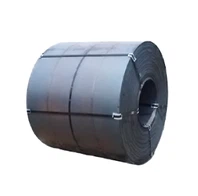
Calculating the load - bearing capacity of heavy plates in a structure is a crucial aspect in engineering and construction projects. As a heavy plate supplier, I understand the significance of this calculation for our clients. In this blog, I will share some key methods and considerations for calculating the load - bearing capacity of heavy plates.
Understanding the Basics of Load - Bearing Capacity
The load - bearing capacity of a heavy plate refers to the maximum amount of load that the plate can safely support without experiencing excessive deformation or failure. This capacity is influenced by several factors, including the material properties of the plate, its dimensions, and the type of loading it is subjected to.
Material Properties
The material of the heavy plate plays a fundamental role in determining its load - bearing capacity. Different materials have different mechanical properties such as yield strength, ultimate strength, and modulus of elasticity. For example, SM520B is a low - alloy steel plate known for its good strength and toughness. Its yield strength and ultimate strength values are important parameters in load - bearing capacity calculations. Similarly, A573GR70 is another type of steel plate with specific mechanical properties that affect its ability to carry loads. The SM490A JISG3106 SM490 is also a popular choice, and its material characteristics need to be carefully considered.
Dimensions of the Plate
The thickness, width, and length of the heavy plate are critical factors. A thicker plate generally has a higher load - bearing capacity than a thinner one, assuming the same material. The width and length also affect how the load is distributed across the plate. For example, a wider plate may distribute the load more evenly, reducing the stress concentration at any single point.
Type of Loading
Heavy plates can be subjected to different types of loading, such as static loading, dynamic loading, and impact loading. Static loading is a constant load that does not change over time, like the weight of a structure resting on the plate. Dynamic loading, on the other hand, involves loads that change with time, such as vibrations or moving machinery. Impact loading is a sudden and intense load, like a heavy object dropping on the plate. Each type of loading requires a different approach to calculate the load - bearing capacity.
Calculation Methods
Analytical Methods
One of the most common ways to calculate the load - bearing capacity of heavy plates is through analytical methods based on engineering mechanics. For a simply supported rectangular plate under uniform static loading, the maximum bending stress in the plate can be calculated using the following formula:
[ \sigma=\frac{3qL^{2}}{2t^{2}} ]
where (\sigma) is the bending stress, (q) is the uniform load per unit area, (L) is the span of the plate, and (t) is the thickness of the plate.
The load - bearing capacity is then determined by comparing the calculated bending stress with the allowable stress of the plate material. The allowable stress is usually a fraction of the yield strength of the material, taking into account factors such as safety margins and the type of application.
For more complex loading conditions and plate geometries, advanced analytical methods based on plate theory, such as the Kirchhoff - Love plate theory or the Reissner - Mindlin plate theory, can be used. These theories consider the deformation and stress distribution in the plate in more detail, taking into account factors like shear deformation and transverse shear stress.
Numerical Methods
In cases where the plate geometry is irregular or the loading conditions are complex, numerical methods such as the finite element method (FEM) are often used. FEM divides the plate into a large number of small elements and analyzes the behavior of each element under the applied load. This method can accurately predict the stress and deformation distribution in the plate, taking into account factors such as material nonlinearity, geometric nonlinearity, and contact conditions.
To use FEM, a detailed 3D model of the plate and the surrounding structure needs to be created. The material properties, loading conditions, and boundary conditions are then defined. The FEM software then solves a system of equations to calculate the stress and deformation in the plate. The results can be visualized in the form of stress and deformation maps, which help engineers understand the behavior of the plate under load.
Considerations in Calculation
Safety Factors
Safety factors are an important consideration in load - bearing capacity calculations. These factors account for uncertainties in material properties, manufacturing processes, and loading conditions. A typical safety factor for static loading in structural applications is around 1.5 - 2.0, which means that the plate is designed to carry a load that is 1.5 - 2.0 times the expected maximum load. For dynamic or impact loading, higher safety factors may be required.
Environmental Conditions
The environmental conditions in which the heavy plate will be used can also affect its load - bearing capacity. For example, exposure to high temperatures can reduce the strength of the plate material. Corrosion can also weaken the plate over time, reducing its cross - sectional area and load - bearing capacity. Therefore, appropriate measures such as corrosion protection and temperature - resistant coatings may need to be considered in the design.
Importance for Our Clients
As a heavy plate supplier, understanding the load - bearing capacity of our products is essential for our clients. Engineers and contractors rely on accurate load - bearing capacity calculations to ensure the safety and reliability of their structures. By providing high - quality heavy plates and technical support in load - bearing capacity calculations, we can help our clients make informed decisions about the selection and use of our products.
Whether it is a building, a bridge, or an industrial equipment, the proper calculation of the load - bearing capacity of heavy plates is crucial for the success of the project. Our team of experts can assist clients in choosing the right type of heavy plate based on their specific requirements and provide detailed technical advice on load - bearing capacity calculations.

Contact Us for Purchase and Consultation
If you are in need of heavy plates for your project and require more information about load - bearing capacity calculations, we are here to help. Our experienced team can provide you with detailed product information, technical support, and assistance in selecting the most suitable heavy plates for your application. We invite you to contact us for further discussion and to start the procurement process.
References
- Timoshenko, S. P., & Woinowsky - Krieger, S. (1959). Theory of plates and shells. McGraw - Hill.
- Boresi, A. P., Schmidt, R. J., & Sidebottom, O. M. (1993). Advanced mechanics of materials. Wiley.
- Zienkiewicz, O. C., & Taylor, R. L. (2000). The finite element method: Volume 1: The basis. Butterworth - Heinemann.