

Products
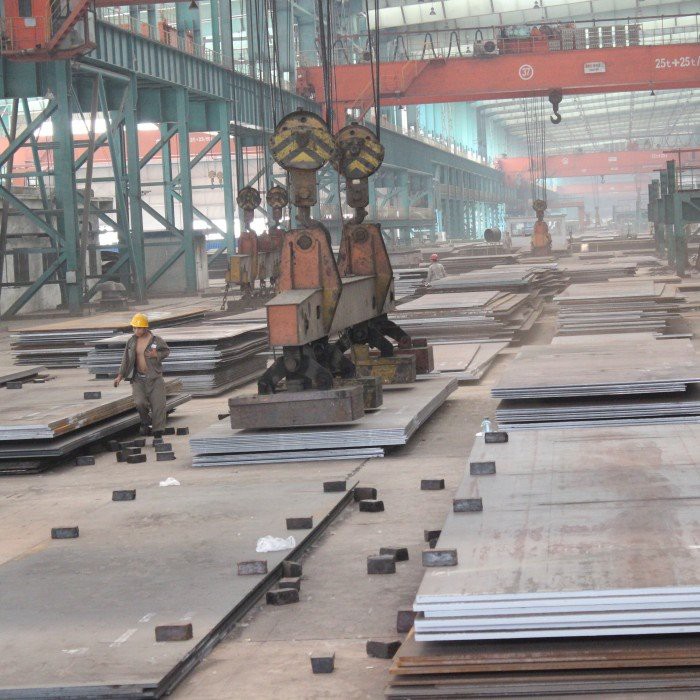

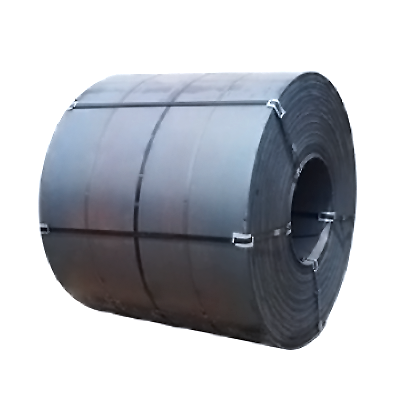
S460QL1 690ql Plate
Product introduction
S460QL1 690QL steel plate is a high-strength low-alloy steel plate, mainly used in heavy machinery and equipment, crane booms, mining machinery, wind power towers and high-strength structural parts, especially suitable for extreme climate conditions and high-stress environments. "690" means that the yield strength of the steel plate reaches 690 MPa, which is the core symbol of its high-strength performance; "QL" means that the steel plate has been processed by quenching and tempering, so that it has excellent impact resistance in low-temperature environments.
Product Characteristics
|
Chemical composition % max |
|||||||||||||||
|
Grade |
C |
Mn |
Si |
P |
S |
N |
B |
Cr |
Cu |
Mo |
Nb |
Ni |
Ti |
V |
Zr |
|
S460QL1 |
0.22 |
1.80_ |
0.86 |
0.025 |
0.012 |
0.016 |
0.006 |
1.6 |
0.55 |
0.74 |
0.07 |
2.1 |
0.07 |
0.14 |
0.17 |
EN10025-6 S460QL1 Carbon and Low-alloy High-strength Steel Plate Mechanical Property
|
S460QL1 Mechanical properties min |
||||||
|
Yield strength (Mpa) |
Tensile strength (Mpa) |
Elongation % |
||||
|
>3 ≤50 |
>50≤100 |
>100≤150 |
>3 ≤50 |
>50≤100 |
>100≤150 |
|
|
460 |
440 |
400 |
550-720 |
550-720 |
500-670 |
17 |
Product features
High-strength Performance
The yield strength of 690QL steel plates usually reaches 690 MPa, and the tensile strength ranges from 760 to 940 MPa, which is more than 1.5 times the strength of ordinary carbon steel. This high-strength characteristic is mainly due to the quenching and tempering process (QT) it adopts. Quenching is the process of heating steel to a high temperature and then cooling it rapidly. This process changes the internal structure of the steel and forms a hard and brittle metal structure. Subsequently, the quenched steel is heated and cooled by tempering to release the internal stress and appropriately reduce its brittleness while retaining its high strength. This makes 690QL steel plates suitable for scenes that need to withstand heavy loads and high stresses, such as crane booms, bridges and mining machinery parts, greatly improving the safety and durability of the structure.
Wear Resistance
The surface hardness of 690QL steel plates is high, reaching 300 to 400 Brinell hardness (HB), while ordinary carbon steel is usually only 150 to 200 HB. This is because it contains chromium and manganese elements. These elements form hard carbide particles in the steel, which are distributed on the surface and inside of the steel plate, which can effectively reduce the material loss of the surface during friction and improve the scratch resistance. This feature is particularly important in occasions such as mining machinery, conveying equipment and engineering vehicles that need to frequently contact hard particles or friction, which can significantly extend the service life and reduce maintenance costs.
Good Welding Performance
690QL steel plate has good welding performance, good welding fusion and no obvious cracks. This is because the carbon content of 690QL steel plate is usually less than 0.2%, while the carbon content of ordinary high-strength steel is usually 0.3%-0.4%. The low carbon content reduces the precipitation of carbides during processing, making the steel less brittle after processing, thereby reducing the possibility of fracture. This performance is particularly suitable for welding pressure equipment with complex structures, such as multi-layer storage tank welding, which can ensure that the weld and the parent material have consistent strength, thereby ensuring the overall reliability of the equipment.
Corrosion Resistance
In a salt spray environment, the corrosion resistance life of the painted 690QL steel plate exceeds 1,200 hours, while ordinary steel has a corrosion resistance life of about 700 hours. Its corrosion resistance comes from its low sulfur and phosphorus content and surface treatment processes such as sandblasting and coating. The low sulfur and phosphorus content (≤0.025%) in the 690QL steel plate significantly reduces the precipitated inclusions, which easily form corrosion points in the corrosive medium, thus greatly improving the corrosion resistance. In addition, sandblasting can remove oxide scale and impurities on the surface, allowing the coating to adhere more evenly to the surface of the steel plate; the coating further extends the corrosion cycle of the steel plate by isolating oxygen and moisture. In coastal environments, such as marine engineering equipment and storage tanks, the corrosion cycle of 690QL steel plates is approximately 1.7 times longer than that of ordinary carbon steel, significantly reducing the frequency and cost of equipment maintenance and improving overall economic benefits.
FAQs
Q: What does the name of 690QL steel plate mean?
A: "690" means that the yield strength of the steel plate is 690 MPa, and "QL" means that the steel plate has been quenched and tempered.
Q: How to store 690QL steel plate to ensure quality?
A: It should be stored in a dry and ventilated environment to avoid moisture and chemical corrosion, and it is recommended to be placed vertically to prevent the plate from bending and deformation.
Q: What is the quenching and tempering process of 690QL steel plate?
A: The quenching and tempering process is to heat the steel plate to a high temperature and then cool it rapidly to form a high-hardness martensite, and then release the internal stress through tempering heating to improve the toughness and stability of the material.
Q: How is the wear resistance of 690QL steel plate?
A: 690QL steel plate forms hard carbide particles by adding chromium and manganese, which makes its wear resistance about 30% higher than that of ordinary steel plate, especially suitable for high-friction scenes such as mining machinery and conveying equipment.
Q: Can 690QL steel plate withstand low temperature environment?
A: Yes, 690QL steel plate can still maintain good impact toughness at low temperatures of -40°C to -60°C, and is suitable for applications such as wind power generation and heavy machinery in extremely cold areas.
Q: What are the typical application scenarios of 690QL steel plate?
A: Its typical applications include crane booms, bridge structures, mining machinery, wind power towers and high-strength structural parts of heavy equipment.
Hot Tags: S460QL1 690ql Plate, China S460QL1 690ql Plate manufacturers, suppliers, factory, weldable steel plate, pressure vessel plate market standards, wear plate for hoists, standard wear plate, formable steel plate, square steel plate


