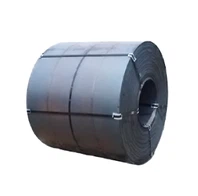
As a supplier of Plate A516 Gr 70, I often encounter inquiries from customers about the differences between hot - rolled and cold - rolled Plate A516 Gr 70. Understanding these differences is crucial for customers to make informed decisions when purchasing steel plates for their specific applications. In this blog, I will delve into the key disparities between hot - rolled and cold - rolled Plate A516 Gr 70.
Manufacturing Process
The primary difference between hot - rolled and cold - rolled Plate A516 Gr 70 lies in the manufacturing process.
Hot - rolled Plate A516 Gr 70 is produced at extremely high temperatures, typically above the recrystallization temperature of the steel, which is around 900°C (1652°F). At this high temperature, the steel is malleable and can be easily shaped. The steel is first heated in a furnace until it reaches the appropriate temperature and then passed through a series of rolling mills to reduce its thickness and shape it into the desired dimensions. This process is relatively fast and cost - effective, making hot - rolled steel a popular choice for many general applications.
On the other hand, cold - rolled Plate A516 Gr 70 is made from hot - rolled steel that has been further processed at room temperature. After the initial hot - rolling process, the steel is cooled and then undergoes additional rolling operations to achieve a more precise thickness and better surface finish. Cold - rolling involves compressing the steel between rollers at a lower temperature, which work - hardens the steel and improves its mechanical properties. However, this process is more time - consuming and expensive compared to hot - rolling.

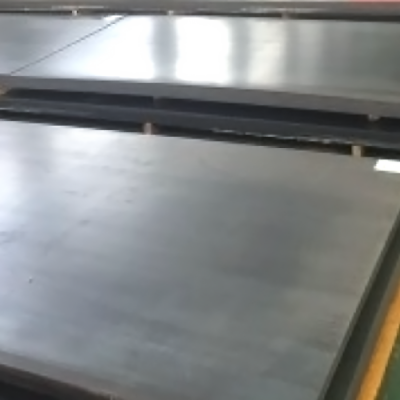
Surface Finish
The surface finish of hot - rolled and cold - rolled Plate A516 Gr 70 is another significant difference.
Hot - rolled plates usually have a rough surface finish due to the oxidation that occurs during the high - temperature rolling process. A layer of scale forms on the surface of the steel as it cools in the air after rolling. This scale can be removed through processes such as pickling or shot - blasting, but even after removal, the surface may still have a slightly uneven texture. Despite the rough surface, hot - rolled plates are suitable for applications where the appearance is not a critical factor, such as in construction, structural support, and general manufacturing.
Cold - rolled plates, in contrast, have a smooth and shiny surface finish. The cold - rolling process at room temperature allows for more precise control of the plate's dimensions and surface quality. The surface is free of scale and has a more consistent thickness, making it ideal for applications where a high - quality finish is required, such as in automotive parts, appliances, and decorative items. For example, if you are looking for a steel plate to be used in the production of a high - end kitchen appliance, a cold - rolled Plate A516 Gr 70 would be a better choice due to its superior surface finish.
Dimensional Accuracy
Dimensional accuracy is an important consideration when choosing between hot - rolled and cold - rolled Plate A516 Gr 70.
Hot - rolled plates generally have less precise dimensions compared to cold - rolled plates. The high - temperature rolling process can cause some variations in thickness and width due to the thermal expansion and contraction of the steel. These dimensional tolerances are typically larger, which may not be suitable for applications that require tight dimensional specifications. However, for many structural and general - purpose applications, the dimensional variations of hot - rolled plates are acceptable.
Cold - rolled plates offer much higher dimensional accuracy. The cold - rolling process at room temperature allows for more precise control of the plate's thickness, width, and flatness. The dimensional tolerances are much smaller, which is essential for applications such as precision machinery, aerospace components, and high - end manufacturing where exact dimensions are critical. If you need a steel plate for a project that requires very tight tolerances, a cold - rolled Plate A516 Gr 70 would be the preferred option.
Mechanical Properties
The mechanical properties of hot - rolled and cold - rolled Plate A516 Gr 70 also differ significantly.
Hot - rolled plates have a more uniform grain structure due to the recrystallization that occurs during the high - temperature rolling process. This results in good ductility and toughness, making them suitable for applications that require the steel to be formed or welded. Hot - rolled Plate A516 Gr 70 can withstand large amounts of deformation without cracking, which is important in applications such as bridge construction and heavy machinery manufacturing.
Cold - rolled plates, on the other hand, are work - hardened during the cold - rolling process. This increases their strength and hardness compared to hot - rolled plates. However, the work - hardening process also reduces the ductility of the steel. Cold - rolled Plate A516 Gr 70 is more brittle than its hot - rolled counterpart and may crack if subjected to excessive deformation. Therefore, cold - rolled plates are often used in applications where high strength and a smooth surface finish are required, such as in the production of springs and automotive body panels.
Cost
Cost is a major factor for many customers when choosing between hot - rolled and cold - rolled Plate A516 Gr 70.
Hot - rolled plates are generally more cost - effective than cold - rolled plates. The high - temperature rolling process is faster and less energy - intensive compared to cold - rolling. Additionally, the rough surface finish and larger dimensional tolerances of hot - rolled plates mean that less secondary processing is required, further reducing the cost. This makes hot - rolled Plate A516 Gr 70 a popular choice for large - scale construction projects and general manufacturing where cost is a primary concern.
Cold - rolled plates are more expensive due to the additional processing steps involved. The cold - rolling process at room temperature is slower, requires more energy, and involves more precise equipment. The higher dimensional accuracy and better surface finish also contribute to the increased cost. However, for applications where the superior properties of cold - rolled steel are essential, the additional cost may be justified.
Applications
The differences in surface finish, dimensional accuracy, mechanical properties, and cost between hot - rolled and cold - rolled Plate A516 Gr 70 lead to different applications for each type of plate.
Hot - rolled Plate A516 Gr 70 is commonly used in construction, including building frames, bridges, and structural supports. Its good ductility and toughness make it suitable for withstanding the stresses and loads in these applications. It is also widely used in general manufacturing, such as in the production of pipes, tanks, and machinery parts. The rough surface finish is not a problem in these applications, as the focus is on the structural integrity and functionality of the steel.
Cold - rolled Plate A516 Gr 70 is often used in applications where a high - quality surface finish and precise dimensions are required. It is commonly used in the automotive industry for body panels, interior components, and engine parts. In the appliance industry, cold - rolled steel is used for the production of refrigerators, washing machines, and other household appliances. The smooth surface finish and high strength of cold - rolled plates make them ideal for these applications. Additionally, cold - rolled steel is also used in the aerospace and electronics industries for components that require tight tolerances and high precision.
If you are in the market for Plate A516 Gr 70, whether it is hot - rolled or cold - rolled, I can provide you with high - quality products that meet your specific requirements. I also supply other related steel products such as S355JR, A573GR70, and NM450 Abrasion Resistant Wear Plates. If you have any questions or would like to discuss your procurement needs, please feel free to contact me for further details and a personalized quotation.
References
- ASME Boiler and Pressure Vessel Code, Section II, Part A - Ferrous Materials
- ASTM International standards for A516 Gr 70 steel
- "Steel Rolling Technology" by various industry experts in metallurgy and steel manufacturing