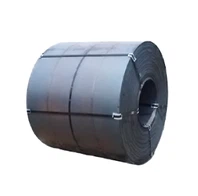
Hey there! I'm a supplier of pipeline plate X60, and today I wanna chat about how work - hardening affects the performance of this awesome pipeline plate.
First off, let's get a basic understanding of what work - hardening is. Work - hardening, also known as strain hardening, happens when we deform a metal, like our pipeline plate X60, plastically. When we bend, roll, or stretch the plate, the dislocations in the metal's crystal structure start to move around. As they move, they interact with each other and get tangled up. This makes it harder for new dislocations to move, and as a result, the metal becomes stronger and harder.
So, how does this work - hardening thing impact the performance of pipeline plate X60?
1. Strength and Hardness
One of the most obvious effects of work - hardening on pipeline plate X60 is the increase in strength and hardness. When we process the plate through cold - rolling or other forming operations, the yield strength and ultimate tensile strength go up. This is a big plus for pipelines because they need to withstand high internal pressures and external loads. For example, in oil and gas pipelines, the fluid flowing inside can exert a huge amount of pressure. A work - hardened X60 plate can handle this pressure better than a non - work - hardened one, reducing the risk of pipeline failure.
The hardness increase also means that the plate is more resistant to wear and abrasion. In a pipeline environment, there could be particles in the fluid that flow through, like sand or small rocks. A harder pipeline plate X60 can resist the wear caused by these particles, which extends the service life of the pipeline.
2. Ductility and Toughness
On the flip side, work - hardening reduces the ductility and toughness of pipeline plate X60. Ductility is the ability of a material to deform plastically before it breaks. When we work - harden the plate, the dislocations are locked in place, and it becomes more difficult for the material to deform. This means that if the pipeline is subjected to sudden impacts or large deformations, it may crack more easily.
Toughness is related to a material's ability to absorb energy before fracturing. As work - hardening reduces the ductility, the toughness of the plate also decreases. In a pipeline, this can be a problem in areas where there might be seismic activity or where the pipeline needs to bend around obstacles. A less tough pipeline plate X60 may not be able to absorb the energy from these events, leading to fractures.
3. Fatigue Resistance
Fatigue is another important factor in pipeline performance. Pipelines are often subjected to cyclic loading, like the start - stop of fluid flow or the change in pressure over time. Work - hardening can have both positive and negative effects on the fatigue resistance of pipeline plate X60.
On one hand, the increased strength due to work - hardening can improve the fatigue limit of the plate. The fatigue limit is the maximum stress that a material can withstand for an infinite number of cycles without failing. A work - hardened X60 plate can handle higher cyclic stresses, which is beneficial for long - term pipeline operation.
On the other hand, the reduced ductility and toughness can make the plate more susceptible to fatigue crack initiation. Once a crack starts, it can propagate more easily in a work - hardened material, leading to fatigue failure. So, we need to find a balance when work - hardening the pipeline plate X60 to optimize its fatigue resistance.
4. Weldability
Weldability is crucial for pipeline construction because pipelines are usually made by welding individual plates together. Work - hardening can affect the weldability of pipeline plate X60. The hardened structure of the work - hardened plate can lead to increased residual stresses in the weld area. These residual stresses can cause cracking in the weld or in the heat - affected zone.
Also, the change in the microstructure due to work - hardening can make it more difficult to achieve a good weld joint. For example, the fusion between the base metal (the work - hardened X60 plate) and the filler metal may not be as good, which can reduce the strength and integrity of the weld.
As a pipeline plate X60 supplier, we need to carefully control the work - hardening process to ensure that the performance of the plate meets the requirements of different pipeline applications. We can use heat treatment methods after work - hardening to relieve the residual stresses and improve the ductility and toughness of the plate.
If you're in the market for high - quality pipeline plate X60, you can check out our Pipe Line Plate Factory. We also offer other types of pipeline plates, like LX70 and LX65, which have their own unique properties and advantages.


If you have any questions about our products or if you're interested in a purchase, feel free to reach out to us. We're always happy to have a chat and discuss how our pipeline plates can meet your specific needs. Whether you're building a small - scale pipeline or a large - scale infrastructure project, we've got the right solution for you.
References
- ASM Handbook Volume 8: Mechanical Testing and Evaluation. ASM International.
- "Pipeline Design and Construction: A Practical Approach for Engineers and Constructors" by John S. Carson.
- Research papers on the mechanical properties of pipeline steels published in journals like "Materials Science and Engineering A".