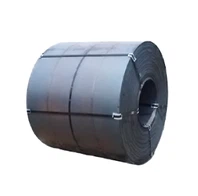
Hey there! As a supplier of plate ASTM A516 Gr 70, I often get asked whether this plate is suitable for the oil and gas industry. Well, let's dig deep into this topic and find out the ins and outs of using ASTM A516 Gr 70 in the oil and gas sector.
First off, let's talk a bit about what ASTM A516 Gr 70 is. ASTM A516 is a standard specification for pressure vessel plates made from carbon steel. Grade 70 specifically has a minimum tensile strength of 70,000 psi (pounds per square inch). This grade is known for its excellent notch toughness, which means it can withstand sudden impacts without cracking easily. It's also weldable, which is a huge plus in many industrial applications.
In the oil and gas industry, there are some pretty tough requirements. The equipment used in this industry has to handle extreme conditions, like high pressures, high temperatures, and exposure to corrosive substances. So, does ASTM A516 Gr 70 cut it?
Strength and Pressure Resistance
One of the most important aspects in the oil and gas industry is the ability to handle high pressures. Oil and gas are often extracted and transported under significant pressure, and the materials used need to be strong enough to contain this pressure safely. ASTM A516 Gr 70 has a good balance of strength. Its minimum yield strength of around 38,000 psi (or 262 MPa for you SI unit fans) and a tensile strength in the range of 70,000 - 90,000 psi (483 - 620 MPa) makes it suitable for many pressure - vessel applications. For example, it can be used in the construction of storage tanks, which are a common sight in oil refineries and gas processing plants. These tanks need to hold large volumes of oil or gas at various pressures, and ASTM A516 Gr 70 can provide the necessary structural integrity.
Temperature Resistance
The oil and gas industry also deals with a wide range of temperatures. During the extraction process, fluids can be at high temperatures, especially in deep - well drilling where the heat from the Earth's crust can be significant. On the other hand, in cold regions or during transportation in cold climates, the materials need to remain tough and ductile at low temperatures. ASTM A516 Gr 70 has a good temperature range. It can be used at moderate to low temperatures, and with proper heat treatment, its performance can be optimized for different temperature conditions. For instance, in Arctic oil exploration, where the temperatures can drop well below freezing, the notch toughness of ASTM A516 Gr 70 helps prevent brittle fracture, ensuring the safety of the equipment.


Corrosion Resistance
Corrosion is a major concern in the oil and gas industry. The fluids being transported or processed often contain corrosive elements like sulfur compounds and saltwater. While ASTM A516 Gr 70 is a carbon steel and not inherently corrosion - resistant like stainless steel, it can be protected through various methods. Coatings and linings can be applied to the plates to prevent corrosion. For example, epoxy coatings are commonly used to create a barrier between the steel and the corrosive environment. Also, cathodic protection systems can be installed to further safeguard the plates from rust and corrosion.
Weldability
Weldability is crucial in the oil and gas industry because most of the equipment is fabricated by welding different parts together. ASTM A516 Gr 70 has excellent weldability. It can be welded using common welding processes like shielded metal arc welding (SMAW), gas metal arc welding (GMAW), and submerged arc welding (SAW). This means that it's easy to fabricate complex structures like pipelines and pressure vessels. The ability to weld the plates without significant loss of strength or introducing defects is a big advantage in large - scale projects.
Comparison with Other Materials
There are other materials available in the market for the oil and gas industry. For example, ASTM A537CL2 SA285GrB and astm a537 16Mo3 and SA285GrC A387GR11CL2. Each of these materials has its own properties. ASTM A516 Gr 70, compared to some of these, offers a good balance between cost and performance. It may not have the same high - end corrosion resistance as some alloy steels, but it's more affordable and still meets many of the basic requirements in the oil and gas industry.
Limitations
Of course, ASTM A516 Gr 70 isn't a one - size - fits - all solution. In extremely corrosive environments where the level of sulfur or other corrosive agents is very high, it may not be the best choice without extensive corrosion protection measures. Also, in applications where extremely high temperatures are involved for long periods, other high - temperature alloys might be more suitable.
Conclusion
So, is ASTM A516 Gr 70 suitable for the oil and gas industry? The answer is a resounding yes in many cases. Its strength, temperature resistance, weldability, and the ability to be protected against corrosion make it a viable option for a wide range of applications in this industry. Whether it's for building storage tanks, pipelines, or other pressure - containing equipment, ASTM A516 Gr 70 can do the job.
If you're in the oil and gas industry and are looking for a reliable plate material, I'd highly recommend considering ASTM A516 Gr 70. We, as a supplier, can provide high - quality ASTM A516 Gr 70 plates that meet all the relevant standards. If you're interested in purchasing or just want to have a chat about your specific requirements, feel free to reach out for a procurement discussion.
References
- ASTM International standards on A516 Gr 70
- Industry reports on materials used in the oil and gas industry
- Technical literature on pressure vessel design and fabrication