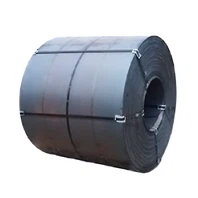
How to predict the fatigue life of pipe line plate X60?
As a trusted supplier of Pipe Line Plate X60, I understand the critical importance of predicting the fatigue life of this essential material. In the oil and gas industry, pipelines are constantly subjected to cyclic loading due to factors such as pressure fluctuations, temperature changes, and external vibrations. Accurately predicting the fatigue life of Pipe Line Plate X60 is crucial for ensuring the safety, reliability, and cost - effectiveness of pipeline systems.
Understanding Fatigue in Pipe Line Plate X60
Fatigue is a phenomenon where a material fails under repeated or cyclic loading, even when the applied stress is below the material's ultimate tensile strength. In the case of Pipe Line Plate X60, fatigue can occur due to various reasons. For example, when a pipeline is transporting fluids, the internal pressure may vary periodically, causing the pipe wall to experience cyclic stress. Additionally, environmental factors such as seismic activity or wind - induced vibrations can also contribute to cyclic loading.
The fatigue life of Pipe Line Plate X60 is influenced by several factors. Material properties play a significant role. The chemical composition of X60 steel, which typically contains elements like carbon, manganese, silicon, and small amounts of alloying elements, affects its strength, toughness, and fatigue resistance. A well - controlled chemical composition and proper heat treatment can enhance the material's ability to withstand cyclic loading.
The geometry of the pipeline is another important factor. Stress concentrations can occur at locations such as welds, joints, and areas with sudden changes in cross - section. These stress concentrations can significantly reduce the fatigue life of the pipe. For instance, a poorly welded joint can create high - stress regions that are more prone to fatigue cracking.
The operating environment also has a major impact on fatigue life. Corrosive environments, such as those with high levels of moisture, salt, or acidic substances, can accelerate the initiation and propagation of fatigue cracks. The presence of hydrogen in the pipeline, which can be generated during corrosion processes, can also lead to hydrogen - induced cracking and further reduce the fatigue life.
Methods for Predicting Fatigue Life
Stress - Life Approach
The stress - life (S - N) approach is one of the most commonly used methods for predicting the fatigue life of Pipe Line Plate X60. This method is based on the relationship between the applied stress amplitude and the number of cycles to failure. In the S - N approach, a series of fatigue tests are conducted on specimens of Pipe Line Plate X60 under different stress levels. The results are then plotted on a graph with the stress amplitude on the y - axis and the number of cycles to failure on the x - axis, typically using a logarithmic scale.
The S - N curve can be divided into two regions: the high - cycle fatigue region and the low - cycle fatigue region. In the high - cycle fatigue region, the applied stress is relatively low, and the number of cycles to failure is high. In the low - cycle fatigue region, the stress is higher, and the number of cycles to failure is lower. By knowing the stress level that the pipeline will experience in service and referring to the S - N curve, an estimate of the fatigue life can be made.
However, the S - N approach has some limitations. It assumes that the stress is constant throughout the life of the component, which may not be the case in real - world applications. Also, it does not take into account the effects of stress concentrations and material inhomogeneities very well.
Strain - Life Approach
The strain - life approach is more suitable for predicting fatigue life in situations where the plastic deformation is significant, such as in low - cycle fatigue. This approach is based on the relationship between the total strain amplitude and the number of cycles to failure. The total strain can be divided into elastic and plastic components.
In the strain - life approach, fatigue tests are conducted to measure the strain - life relationship of Pipe Line Plate X60. The Coffin - Manson equation is often used to describe this relationship:
$\Delta\epsilon_{t}/2=\Delta\epsilon_{e}/2+\Delta\epsilon_{p}/2 = \sigma_{f}'(2N_{f})^{b}/E+\epsilon_{f}'(2N_{f})^{c}$
where $\Delta\epsilon_{t}$ is the total strain amplitude, $\Delta\epsilon_{e}$ is the elastic strain amplitude, $\Delta\epsilon_{p}$ is the plastic strain amplitude, $\sigma_{f}'$ is the fatigue strength coefficient, $\epsilon_{f}'$ is the fatigue ductility coefficient, $b$ is the fatigue strength exponent, $c$ is the fatigue ductility exponent, $N_{f}$ is the number of cycles to failure, and $E$ is the modulus of elasticity.
The strain - life approach can provide a more accurate prediction of fatigue life in cases where plastic deformation occurs, but it requires more complex testing and analysis compared to the stress - life approach.

Fracture Mechanics Approach
The fracture mechanics approach is used to predict the growth of existing cracks in Pipe Line Plate X60. This approach is based on the concept of stress intensity factor ($K$), which describes the stress field near the crack tip. The Paris law is commonly used to describe the crack growth rate:
$da/dN = C(\Delta K)^{m}$
where $da/dN$ is the crack growth rate per cycle, $\Delta K$ is the range of the stress intensity factor, $C$ and $m$ are material constants.
To use the fracture mechanics approach for predicting the fatigue life of Pipe Line Plate X60, the initial crack size needs to be known or estimated. Non - destructive testing methods such as ultrasonic testing, radiographic testing, or magnetic particle testing can be used to detect and measure the size of existing cracks. By integrating the Paris law over the crack growth from the initial crack size to the critical crack size (the size at which the crack will cause catastrophic failure), the number of cycles to failure can be calculated.
Our Role as a Pipe Line Plate X60 Supplier
As a Pipe Line Plate X60 supplier, we play a crucial role in ensuring the quality and fatigue resistance of the material. We carefully control the production process to ensure that the chemical composition and mechanical properties of the Pipe Line Plate X60 meet the relevant standards. Our advanced manufacturing facilities and strict quality control procedures help to produce plates with uniform properties and high - quality weldability.
We also provide technical support to our customers. We can assist in the selection of the appropriate Pipe Line Plate X60 based on the specific application requirements, such as the operating pressure, temperature, and environmental conditions. Our team of experts can offer advice on fatigue life prediction methods and help customers to develop strategies for ensuring the long - term reliability of their pipeline systems.
In addition to Pipe Line Plate X60, we also offer other related products, such as LX56 Pipe Line Plate X60, LX52 Pipe Line Plate X52, and LX42 Pipe Line Plate. These products are designed to meet different performance requirements and can be used in a variety of pipeline applications.
Contact for Procurement
If you are interested in purchasing Pipe Line Plate X60 or any of our other pipeline products, we invite you to contact us for further discussion. We are committed to providing high - quality products and excellent customer service. Whether you need assistance with fatigue life prediction, product selection, or have any other questions, our team is ready to help. Let's work together to ensure the success of your pipeline projects.
References
- ASTM A678/A678M - 19 Standard Specification for High - Strength Carbon - Manganese Steel Plates of Structural Quality for Welded, Bolted, or Riveted Construction.
- Barsom, J. M., & Rolfe, S. T. (1999). Fracture and fatigue control in structures: applications of fracture mechanics. Prentice Hall.
- Dowling, N. E. (2012). Mechanical behavior of materials: engineering methods for deformation, fracture, and fatigue. Pearson.