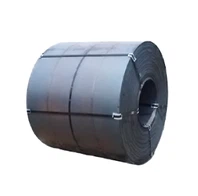
As a supplier of A387GR11CL2, I understand the critical role that optimizing heat input plays during the welding process. A387GR11CL2 is a chrome-moly alloy steel plate primarily used in pressure vessels operating at elevated temperatures. The welding of this material requires careful consideration of heat input to ensure the integrity and performance of the welded joints. In this blog, I will share some insights on how to optimize the heat input during the welding of A387GR11CL2.
Understanding Heat Input in Welding
Heat input is a crucial parameter in welding that directly affects the quality of the weld. It is defined as the amount of energy transferred from the welding arc to the base metal per unit length of the weld. The heat input is influenced by several factors, including the welding current, voltage, and travel speed. An appropriate heat input is essential to achieve a sound weld with good mechanical properties, such as strength, toughness, and corrosion resistance.
Importance of Optimizing Heat Input for A387GR11CL2
A387GR11CL2 has specific properties that make it sensitive to heat input during welding. Excessive heat input can lead to several problems, such as grain growth, reduced toughness, and the formation of brittle phases. On the other hand, insufficient heat input may result in incomplete fusion, lack of penetration, and poor weld bead appearance. Therefore, optimizing the heat input is crucial to maintain the desired microstructure and mechanical properties of the welded joints.
Factors Affecting Heat Input
Welding Current
The welding current is one of the most significant factors affecting heat input. An increase in the welding current leads to a higher heat input, as more energy is transferred from the welding arc to the base metal. However, too high a current can cause excessive melting, spatter, and distortion. It is important to select the appropriate welding current based on the thickness of the A387GR11CL2 plate and the welding process being used.
Welding Voltage
The welding voltage also affects the heat input. A higher voltage results in a longer arc length, which increases the heat input. However, an excessive voltage can lead to instability in the welding arc and poor weld quality. The welding voltage should be carefully adjusted to maintain a stable arc and the desired heat input.
Travel Speed
The travel speed is the rate at which the welding torch moves along the joint. A slower travel speed increases the heat input, as the welding arc is in contact with the base metal for a longer time. Conversely, a faster travel speed reduces the heat input. It is important to find the optimal travel speed to ensure proper fusion and penetration without overheating the base metal.
Methods to Optimize Heat Input
Preheating
Preheating the A387GR11CL2 plate before welding is an effective way to control the heat input. Preheating reduces the temperature gradient between the weld and the base metal, which helps to prevent cracking and improve the weld quality. The preheating temperature should be determined based on the thickness of the plate and the welding process. Generally, a preheating temperature of 150 - 200°C (302 - 392°F) is recommended for A387GR11CL2.
Interpass Temperature Control
The interpass temperature is the temperature of the weld area between consecutive weld passes. Controlling the interpass temperature is important to prevent excessive heat buildup and maintain the desired microstructure. The interpass temperature should be kept within a specified range, typically below 250°C (482°F) for A387GR11CL2.
Welding Process Selection
Choosing the right welding process can also help to optimize the heat input. Some welding processes, such as gas tungsten arc welding (GTAW) and gas metal arc welding (GMAW), offer better control over the heat input compared to others. GTAW is a precise welding process that allows for low heat input and excellent weld quality, making it suitable for thin A387GR11CL2 plates. GMAW, on the other hand, is a faster welding process that can be used for thicker plates, but it requires careful control of the welding parameters to maintain the desired heat input.
Welding Parameter Optimization
Optimizing the welding parameters, such as the welding current, voltage, and travel speed, is essential to achieve the desired heat input. This can be done through a combination of theoretical calculations and practical experimentation. It is recommended to conduct welding trials using different parameter settings to determine the optimal heat input for a specific application.
Monitoring and Quality Control
Monitoring the heat input during the welding process is crucial to ensure that it remains within the specified range. This can be done using temperature sensors and welding data loggers. Regular inspection of the welded joints is also necessary to detect any defects, such as cracks, porosity, or lack of fusion. Non-destructive testing methods, such as ultrasonic testing and radiographic testing, can be used to evaluate the quality of the welds.
Conclusion
Optimizing the heat input during the welding of A387GR11CL2 is essential to ensure the quality and performance of the welded joints. By understanding the factors affecting heat input, implementing appropriate methods to control it, and monitoring the welding process, we can achieve high-quality welds with excellent mechanical properties. As a supplier of A387GR11CL2, I am committed to providing our customers with the best possible products and technical support. If you are interested in purchasing A387GR11CL2 or have any questions about welding optimization, please feel free to contact us for further discussion. We look forward to working with you on your next project.
In addition to A387GR11CL2, we also supply other high-quality pressure vessel plates, such as P335GH Pressure Plate SA516GR70 and P335GH. If you are in need of ASTM A537CL2 SA285GrB, we can also provide you with the right solutions.
References
- Welding Handbook, American Welding Society.
- ASME Boiler and Pressure Vessel Code, Section IX - Welding and Brazing Qualifications.
- Material Properties and Welding of A387GR11CL2, Technical Report.