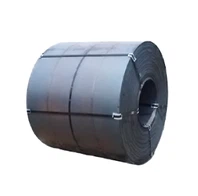
Hey there! As a supplier of abrasion plates, I've seen firsthand how the design of these plates can have a huge impact on their performance. In this blog post, I'm gonna break down the key design factors that affect an abrasion plate's performance and why they matter.
Material Composition
The material that an abrasion plate is made from is the first and most fundamental aspect of its design. Different materials have different properties, and these properties directly influence how well the plate can resist abrasion.
For instance, we offer NM600 Abrasion Steel Plate. This plate is made from a high - strength steel alloy. The high carbon content in NM600 gives it excellent hardness, which is crucial for abrasion resistance. When a hard object rubs against the plate, the high - hardness surface can withstand the wear and tear better than a softer material.
On the other hand, NM360 Abrasion Resistant Plate has a different composition. It's designed to offer a good balance between hardness and toughness. While it may not be as hard as NM600, it has better ductility. This means that it can absorb some of the impact energy without cracking, which is useful in applications where there are sudden impacts along with abrasion.
Plate Thickness
The thickness of an abrasion plate is another important design factor. A thicker plate generally offers better abrasion resistance. When a thick plate is subjected to abrasion, there is more material available to wear away before the plate fails.
However, thicker plates also have some drawbacks. They are heavier, which can be a problem in applications where weight is a concern, like in the automotive or aerospace industries. Also, they can be more expensive due to the increased amount of material used.
So, when designing an abrasion plate, we need to find the right balance. For example, in a conveyor system where there is continuous abrasion but weight isn't a major issue, a relatively thick plate might be the best choice. But for a small - scale machinery part where weight needs to be kept low, a thinner plate with just enough thickness to withstand the expected abrasion would be more appropriate.
Surface Finish
The surface finish of an abrasion plate can significantly affect its performance. A smooth surface finish can reduce friction between the plate and the abrasive material. When there is less friction, there is less wear on the plate.
We can achieve a smooth surface finish through various manufacturing processes such as grinding and polishing. A polished surface also helps in preventing the accumulation of abrasive particles. If particles get stuck on the surface, they can act as additional abrasives and cause more wear.
On the other hand, in some cases, a textured surface might be beneficial. For example, in applications where the plate needs to grip the abrasive material, like in a mining chute, a textured surface can improve the overall performance by providing better traction.
Edge Design
The edges of an abrasion plate are often the first parts to experience wear. So, the edge design is crucial. A well - designed edge can prevent premature failure of the plate.
One common edge design is a beveled edge. A beveled edge helps to distribute the stress more evenly along the edge of the plate. This reduces the concentration of stress at a single point, which can lead to cracking or chipping.
Another option is a rounded edge. Rounded edges are less likely to catch on abrasive materials, which can reduce the wear on the edges. In addition, rounded edges can also improve the safety of the plate during handling and installation.
Holes and Cutouts
If an abrasion plate has holes or cutouts in its design, these can also affect its performance. Holes and cutouts can create stress concentrations around their edges. This can make the plate more prone to cracking under abrasion and impact.
To minimize the negative effects of holes and cutouts, we can use techniques such as chamfering the edges of the holes. Chamfering helps to smooth out the transition between the hole and the plate surface, reducing stress concentrations.
In some cases, the holes and cutouts are necessary for the functionality of the plate. For example, in a filtration system, the holes are used to allow the passage of fluids. In such cases, we need to carefully design the size, shape, and distribution of the holes to ensure that the plate still maintains its abrasion resistance.
Application - Specific Design
The performance of an abrasion plate also depends on how well its design matches the specific application. Different industries have different requirements for abrasion plates.
In the mining industry, for example, abrasion plates are exposed to extremely harsh conditions. The plates need to be able to withstand the abrasion from hard rocks and minerals. So, we might design a plate with a very high - hardness material and a thick cross - section for this application.
In the food processing industry, on the other hand, the requirements are different. The plates need to be made from food - grade materials and have a smooth surface finish to prevent the growth of bacteria. Also, they need to be corrosion - resistant as they are often in contact with water and various chemicals.
Testing and Quality Control
Once we've designed an abrasion plate, it's essential to test it to ensure that it meets the required performance standards. We use a variety of testing methods, such as abrasion testing machines. These machines simulate the real - world abrasion conditions and measure how much material is worn away from the plate over a certain period of time.
We also conduct hardness testing to ensure that the plate has the right hardness for the intended application. And we perform visual inspections to check for any surface defects or cracks.
Quality control is an ongoing process. We continuously monitor the production process to make sure that every plate we produce meets the same high - quality standards.
Conclusion
In conclusion, the design of an abrasion plate is a complex process that involves considering multiple factors. Material composition, plate thickness, surface finish, edge design, holes and cutouts, and application - specific requirements all play a role in determining the plate's performance.
As a supplier, we work closely with our customers to understand their specific needs and design the most suitable abrasion plates for them. Whether you need a NM600 Abrasion Steel Plate for high - wear applications or a NM360 Abrasion Resistant Plate for a more balanced performance, we've got you covered.
If you're in the market for abrasion plates and want to discuss your requirements, feel free to reach out to us. We're always happy to help you find the perfect solution for your abrasion - related needs.

References
- "Materials Science and Engineering: An Introduction" by William D. Callister Jr. and David G. Rethwisch
- Industry reports on abrasion - resistant materials and their applications