

Products
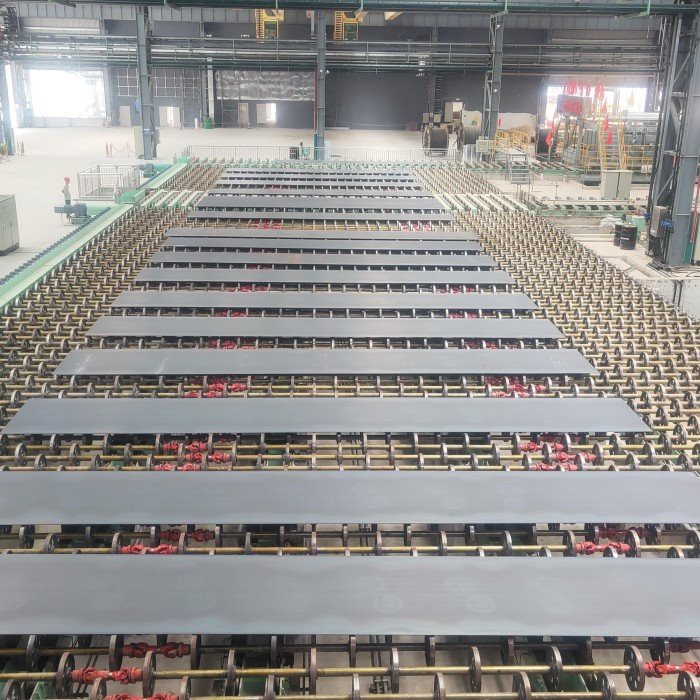
NM360 Abrasion Resistant Plate
Qinhuangdao Aotong was founded in 2004,it is a geoup management enterprises with the collection of trade ,steel further processing and warehousing logistics .The three major business sector include the Aotong metal center and the Aotong logistics center .The factory covers an area of 202000 square meters.The company has established Chenggang Wuyang and other major steel mills and traders across the country.The main products include medium and heavy steel plates,hot rolled coils, cold rolled pickled plates ,profiles building materials,etc.,with annual sales of more than 300 thousand tons.In addition to serving many domestic end-users and large and medium-sized projects,the products are exported to Europe,South America and Southeast Asia.
Why Choose Us
Factory strength
Wuhan building material lndustry design & research institute co., ltd., subordinated to cnbm was established in 1965. Lt is the leading company in fiber cement board / calcium silicate board machinery industry, and has sold more than 200 lines all over the world.
Rich experience
Wuhan institute has been deeply engaged in the calcium silicate board / fiber cement board industry for more than 40 years, so far, it has cooperated with many large group companies such as shera, saint-gobain, ask, conch cement, etc., and has cooperated in more than 200 production lines in the world.
Professional team
400 employees, including 16 professor-level senior engineers, 70 senior engineers, 90 engineers with medium-grade professional title or above, and 310 technical staff with other majors.
Quality control
The company also has modern laboratories to help the customers to choose the most suitable rawmaterials and production formula through the testing of raw materials and final products.

NM550 is a high-strength wear-resistant steel plate that offers exceptional resistance to abrasion and impact. It is specifically designed for applications requiring enhanced durability in harsh environments, such as mining, construction, and heavy machinery industries. With its superior hardness and toughness, NM550 provides excellent protection against wear and contributes to extended equipment lifespan.

NM500 Wear Steel Plate is a high-strength, wear-resistant steel plate known for its excellent abrasion resistance and impact toughness.

NM400 Abrasion Plate is a high-strength, wear-resistant steel plate with a hardness of 400 HBW (Brinell Hardness).

NM600 is a highly durable and wear-resistant steel plate known for its exceptional strength and hardness. It is specifically engineered to withstand extreme abrasion and impact, making it suitable for demanding applications in industries such as mining, construction, and material handling. NM600 offers excellent protection against wear and extends the lifespan of equipment, reducing maintenance costs and downtime.

NM360 Abrasion Resistant Plate
NM360 Abrasion Resistant Plate is a high-strength steel plate known for its hardness of 360 HBW (Brinell Hardness).
NM360 Abrasion Resistant Plate is a plate which is high in carbon and alloyed with a range of different elements such as carbon and boron. Abrasion resistant steel plate is usually produced using a quenching process, which increases the hardness of the steel and forms a unique grain structure.Abrasion is a process in which the surface of a material is worn away from friction. This happens where surfaces are scratched, scuffed or slowly worn away by contact with different components or materials. In heavy-industry this is a common issue but it can also be an issue for machinery that has high duty cycles or difficult operating conditions. Lubrication of materials can enhance performance, however using abrasion-resistant materials is preferable.
Durability
NM360 Abrasion Resistant Plate are designed to withstand high levels of abrasion and impact, making them a durable option. These plates outlast traditional materials by resisting wear and tear, friction, and vibration. This resistance to wear and tear helps increase the longevity of heavy equipment, saves you money, and reduces downtime.
Cost-Effective
While NM360 Abrasion Resistant Plate may seem more expensive than their traditional counterparts, they save businesses money in the long run. The durability of these plates means they don't need to be replaced as frequently as traditional materials, resulting in lower costs for purchasing replacement parts and less machinery downtime. You'll also save on labor costs because you won't need to constantly replace damaged parts.
Improved Safety
The harsh conditions workers face daily in the construction, mining, and excavating industries can be hazardous. Using NM360 Abrasion Resistant Plate in heavy equipment reduces the likelihood of operators being injured while working with damaged equipment. These plates help prevent equipment failure, decrease the frequency of malfunctions that can lead to dangerous accidents, and allow for safer working conditions.
Efficiency
NM360 Abrasion Resistant Plate can help improve the efficiency of heavy equipment by providing smooth and consistent operation. Traditional materials can produce uneven wear, but NM360 Abrasion Resistant Plate guarantee even wear across the plate, resulting in smoother and more efficient operations. These plates also reduce friction, leading to less energy consumption and increasing equipment efficiency.
Versatility
NM360 Abrasion Resistant Plate can be used in various industries and applications, making them a versatile option for heavy equipment. They can be used in the mining industry on bucket liners, chutes, hoppers, and on blades in construction equipment. Additionally, NM360 Abrasion Resistant Plate can be used in components subject to a moderate impact as an effective way to extend the service life of that machinery.
Application of NM360 Abrasion Resistant Plate
Transportation and Automotive Industry:
Wear-resistant steel plates also find their use in the transportation industry. Many parts of vehicles, such as bulldozers, lorries, trailers, and dump trucks, are exposed to harsh conditions, requiring frequent repairs. Wear resistant plate can significantly reduce maintenance costs in the transportation and automotive industry.
Agriculture and Farming Industry:
The agricultural industry involves heavy machinery and equipment that is regularly used. Wear-resistant steel plate can be utilized in machinery parts such as crop harvester blades and chutes that receive heavy impact, soil tilling equipment and plowshares that experience high resistance levels. These plates help prolong the lifespan of machinery parts, and thus, they benefit the agriculture and farming industry by keeping the cost of maintenance low.
Energy and Power Generation Industry:
The energy and power generation industry also benefits from using wear-resistant plate. Regular wear and tear of the machinery are the main concerns of this industry. The parts, such as boiler blades, turbines and hoppers, can experience corrosion and wear due to constant use. The use of wear-resistant plate helps reduce downtime, increases the lifespan of equipment, increases productivity, and keeps maintenance costs low.
Steel and Cement Industry:
The steel and cement industry works with high temperatures, heavy machines, and heavy materials, hence the need for high-strength wear-resistant plates that withstand such pressures. These steel plates are used in cement and steel mills' liners, buckets, hoppers, and chutes. They help reduce downtime and repairs and increase the lifespan of machinery and equipment.
Performance Properties of NM360 Abrasion Resistant Plate
Hardness Wear-resistant steel for construction machinery, it is required to have high performance characteristics such as high wear resistance, high toughness, impact resistance, easy welding, and easy forming. The main indicator of wear resistance is surface hardness. The higher the hardness, the better the wear resistance. Compared with NM450 and Q345B, the hardness is only increased by 3 times, but under the same working conditions, the average service life is increased by 6-8 times.
Wear resistance test Compared with the ring block wear test (ASTM G77-05), the wear volume of Q345B is 30 times that of NM400. That is to say, the 30mm thick Q345B steel plate is worn through, and the NM400 is worn away by 1mm. It can be seen that if there is only sliding friction, no impact and other wear, the wear-resistant steel has extremely strong wear resistance.
Impact resistance Since the impact is mentioned, the NM wear-resistant steel plate has good impact toughness, and the ability to resist dents is significantly better than that of ordinary structural steel when subjected to heavy impact. This property is suitable for the production of dump truck compartments and is suitable for thinning of steel plates. According to the comparison and design of different models, the wear-resistant steel is used as the dumping car body, and the car body is reduced by 30-50%.
How to Choose NM360 Abrasion Resistant Plate
Usage environment
Different usage environments have different performance requirements for wear-resistant steel plates. It is necessary to select the appropriate steel plate according to the actual situation.
Wear resistance
Different wear-resistant steel plates have different wear-resistant properties. It is necessary to select the appropriate steel plate according to the working intensity and wear degree of the equipment.
Installation and use methods
The installation and use methods of wear-resistant steel plates also need to be selected according to the actual situation to ensure the normal operation of the equipment.

NM360 Abrasion Resistant Plate Properties
Magnetic Properties
High Magnetic Permeability: NM360 Abrasion Resistant Plate exhibits high magnetic permeability, which allows it to support efficient magnetic flux conduction, making it suitable for use in transformers and motors.Low Core Losses: Core losses are a combination of hysteresis and eddy current losses in the steel. NM360 Abrasion Resistant Plate has low core losses at high frequencies, which makes it effective in applications involving alternating current (AC).Low Coercivity: This property means that less energy is required to magnetize and demagnetize the steel, which contributes to the efficiency of the devices in which it is used.
Mechanical Properties
Yield Strength: NM360 Abrasion Resistant Plate typically has a moderate yield strength, adequate for its applications, which is usually not a primary concern for its typical uses in electrical applications.Ductility: It offers reasonable ductility, which allows it to be shaped into thin sheets without breaking, essential for manufacturing electrical cores.
Physical Properties
Density: The density of NM360 Abrasion Resistant Plate is approximately 7,650 kg/m³, which is typical for steels but slightly higher due to the presence of silicon.Thermal Conductivity: NM360 Abrasion Resistant Plate has a moderate level of thermal conductivity, which helps in the dissipation of heat generated during operation in electrical applications.
Electrical Properties
Electrical Resistivity: The resistivity of NM360 Abrasion Resistant Plate is higher than that of carbon steels, largely due to the silicon content. High resistivity is advantageous in reducing eddy current losses in materials used in the cores of transformers and motors.

Quenching
The process of quenching involves heating the material (usually to 1,300 – 1,650°F) followed by rapid cooling with water.This increases the hardness of the steel and forms a crystal-like structure within it.
Tempering
Done after quenching, the metal is re-heated to a below-critical temperature (roughly 300-700°F) and then cooled naturally at room temperature.The heating breaks down the previously formed crystal structure, which then forms again during the cooling stage. The majority of the strength and hardness will be retained while increasing the ductility of the steel. Through-hardening is a term that refers to the structural change in the grain from this process.
TIP NO. 1
Pre-heat the base material. Pre-heating the base material is one way to prevent rapid cooling, reduce hydrogen levels, and prevent cracking. Welding operators should always follow pre-heating recommendations for the base material to which the AR plate is being welded.
TIP NO. 2
Take the joint and weld designs into consideration. Whenever possible, do not locate the weld joint in a highly restrained area that constricts the base material, AR plate, or weldment from expanding and contracting freely. Also, by welding shorter, smaller fillet welds, welding operators can reduce the heat input and overall residual stresses on the AR plate.
TIP NO. 3
Choose the right filler metal. Filler metal selection should be based on the tensile strength of the base metal to which the AR plate will be welded. A filler metal with the least amount of hydrogen content and the lowest tensile strength that still provides a high enough impact value can help welding operators combat the potential for cracking. As always, operators should check AR plate manufacturer recommendations, based on the grade of base metal, before making a final filler metal selection.
TIP NO. 4
Consider using a low-hydrogen stick electrode in the field. When repairing or replacing an AR plate equipment that has been in service, a low-hydrogen stick electrode with a basic slag system, such as an American Welding Society (AWS) E7018 product, works well. This stick electrode can deliver exceptional as-welded mechanical properties and toughness properties, and also offer high resistance to hydrogen pickup. In addition, it can weld through contaminants such as mud, rust, dirt, and oil, which tend to accumulate on used equipment. Since stick electrodes are portable, lightweight, and do not require shielding gas, they are ideal for field repairs. A few downsides to note: Stick electrodes can be inefficient for large AR plate repairs; they may lower quality bead appearance; they require frequent electrode changes; and the slag they produce must be removed between passes and after welding.
Our Factory


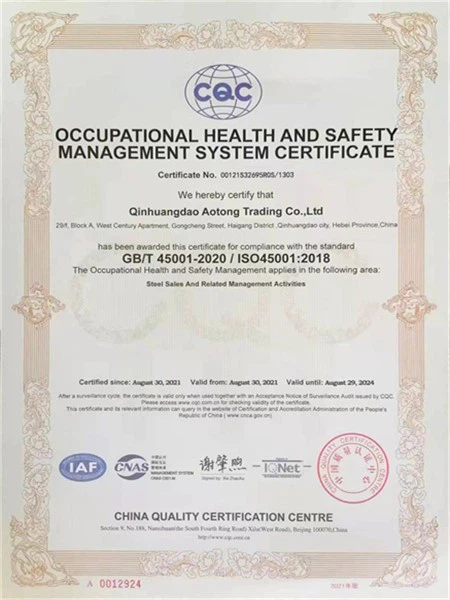
Our certificate


FAQ
Hot Tags: nm360 abrasion resistant plate, China nm360 abrasion resistant plate manufacturers, suppliers, factory, thin wear plate, wear plate for screening machinery, wear plate for hoists, wear plate for blasting equipment, standard wear plate, high wear plate


