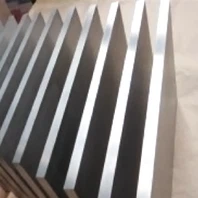
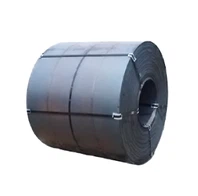
In the realm of pipeline construction, the choice of pipeline plates is a critical decision that significantly impacts the efficiency, durability, and safety of the entire system. Among the various grades of pipeline plates available in the market, X52 and X60 are two commonly used options. As a supplier of pipeline plate X52, I have witnessed firsthand the importance of understanding the performance differences between these two grades to help clients make informed decisions. In this blog post, I will delve into a detailed comparison of pipeline plate X52 with X60 in terms of their performance characteristics.
Chemical Composition
The chemical composition of pipeline plates plays a fundamental role in determining their mechanical properties and performance. Pipeline plate X52 typically has a carbon content ranging from 0.12% to 0.20%, which provides a good balance between strength and weldability. It also contains elements such as manganese (0.90% - 1.65%), phosphorus (max 0.035%), sulfur (max 0.035%), and small amounts of other alloying elements like silicon, copper, and nickel.
On the other hand, pipeline plate X60 has a slightly different chemical composition. It generally has a lower carbon content, usually in the range of 0.08% - 0.18%, which enhances its weldability and reduces the risk of cracking during welding. The manganese content in X60 is also in a similar range as X52, but it may have a more optimized combination of alloying elements to achieve higher strength. For example, X60 may contain more nickel and chromium, which contribute to its improved corrosion resistance and toughness.
Mechanical Properties
One of the most significant differences between X52 and X60 lies in their mechanical properties, particularly in terms of strength and toughness.
Yield Strength and Tensile Strength
The yield strength of pipeline plate X52 is typically around 365 MPa (53,000 psi), while its tensile strength ranges from 460 - 605 MPa (67,000 - 87,700 psi). These values indicate the amount of stress the material can withstand before it begins to deform plastically (yield strength) and the maximum stress it can bear before breaking (tensile strength).
In contrast, pipeline plate X60 has a higher yield strength, usually around 415 MPa (60,200 psi), and a tensile strength ranging from 520 - 655 MPa (75,400 - 95,000 psi). The higher strength of X60 makes it more suitable for applications where the pipeline will be subjected to high internal pressures or external loads, such as in long - distance oil and gas transmission pipelines.


Toughness
Toughness is another crucial mechanical property, especially in cold environments or where the pipeline may be exposed to impact loads. Pipeline plate X52 has a certain level of toughness, which allows it to absorb energy without fracturing under normal operating conditions. However, X60 generally exhibits better toughness, particularly at low temperatures. This is due to its optimized chemical composition and microstructure, which can better resist crack propagation and brittle fracture.
Weldability
Weldability is a key consideration in pipeline construction, as most pipelines are assembled by welding individual pipe sections together. Pipeline plate X52 has good weldability due to its relatively low carbon equivalent. The carbon equivalent is a measure of the hardenability of steel and is calculated based on the chemical composition. A lower carbon equivalent means less risk of hardening and cracking during welding.
X60 also has excellent weldability, thanks to its lower carbon content and the careful selection of alloying elements. In fact, modern manufacturing processes have made it possible to produce X60 plates with very good weldability, even in large - scale pipeline projects. However, when welding X60, proper welding procedures and pre - and post - weld heat treatments may be required to ensure the integrity of the weld joints, especially in high - stress applications.
Corrosion Resistance
Corrosion is a major concern in pipeline systems, especially those transporting corrosive fluids such as oil and gas. Both X52 and X60 have some degree of corrosion resistance, but X60 generally offers better performance in this regard.
The addition of alloying elements like nickel and chromium in X60 enhances its ability to form a passive oxide layer on the surface, which protects the steel from further corrosion. In contrast, X52 may require additional corrosion protection measures, such as coating or cathodic protection, especially in harsh environments.
Cost - effectiveness
When it comes to cost - effectiveness, X52 has an advantage over X60. Since X52 has lower strength requirements and a relatively simpler chemical composition, it is generally less expensive to produce. This makes it a more economical choice for applications where the pipeline does not need to withstand extremely high pressures or loads.
However, in situations where the long - term performance and reliability of the pipeline are of utmost importance, the higher cost of X60 may be justified. For example, in offshore pipelines or pipelines in remote areas where maintenance and repair are difficult and costly, the superior strength, toughness, and corrosion resistance of X60 can result in lower overall life - cycle costs.
Applications
The performance differences between X52 and X60 also influence their applications.
Pipeline plate X52 is commonly used in medium - pressure pipelines, such as distribution pipelines for natural gas in urban areas or short - distance oil pipelines. Its relatively lower cost and good weldability make it a practical choice for these applications.
On the other hand, X60 is often employed in high - pressure, long - distance transmission pipelines for oil and gas. Its high strength and excellent toughness make it capable of withstanding the harsh operating conditions over long distances. Additionally, X60 is also suitable for use in pipelines in cold regions, where its superior low - temperature toughness is essential.
Conclusion
In conclusion, the choice between pipeline plate X52 and X60 depends on a variety of factors, including the specific requirements of the pipeline project, the operating conditions, and the budget. As a supplier of pipeline plate X52, I understand that X52 offers a cost - effective solution for many medium - scale pipeline applications. It provides a good balance of strength, weldability, and cost.
However, for projects that demand higher performance, such as high - pressure long - distance pipelines or those in harsh environments, X60 may be the better choice. Its superior strength, toughness, and corrosion resistance can ensure the long - term reliability and safety of the pipeline system.
If you are considering purchasing pipeline plates for your project, I encourage you to carefully evaluate your needs and consult with experts in the field. Whether you choose X52 or are interested in exploring other options like LX560, LX42 Pipe Line Plate, or LX65, I am here to assist you. Feel free to reach out to me for more information and to discuss your procurement requirements. I am committed to providing high - quality pipeline plates and excellent customer service to help you achieve a successful pipeline project.
References
- ASME B31.4 - 2019, Pipeline Transportation Systems for Liquid Hydrocarbons and Other Liquids.
- API 5L - 45th Edition, Specification for Line Pipe.
- ASTM A20/A20M - 20, Standard Specification for General Requirements for Steel Plates, Sheets, and Strip.