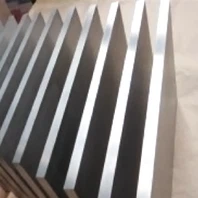
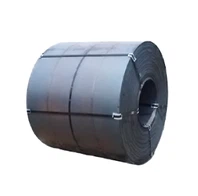
Hey there! As a supplier of ASME SA516, I've been getting a lot of questions lately about how this material performs in acoustic applications. So, I thought I'd take some time to break it down for you all.
First off, let's talk a bit about what ASME SA516 is. It's a standard specification for pressure vessel plates, carbon steel, for moderate - and lower - temperature service. But its properties also make it an interesting candidate for acoustic applications.
Physical Properties and Acoustics
One of the key factors in how a material behaves acoustically is its density. ASME SA516 has a relatively high density. This density can play a crucial role in acoustic applications. In soundproofing, for example, denser materials are often better at blocking sound waves. When sound waves hit a dense material like ASME SA516, they have a harder time passing through. This is because the molecules in the material are more closely packed, and the sound energy has to work harder to move these molecules and propagate through the material.
Another important aspect is the material's internal structure. ASME SA516 has a fine - grained structure. This fine - grained nature can affect how sound waves travel through the material. Fine - grained materials tend to scatter sound waves more. When a sound wave encounters the boundaries between the grains in the material, it gets redirected. This scattering can help in reducing the intensity of the sound wave as it travels through the material, which is useful in applications where you want to dampen sound.
Applications in Acoustic Enclosures
Acoustic enclosures are used to isolate noisy equipment from the surrounding environment. ASME SA516 can be a great choice for building these enclosures. For instance, in industrial settings where there are large compressors or generators that produce a lot of noise, an enclosure made of ASME SA516 can significantly reduce the noise level outside the enclosure.


The material's strength is also an advantage here. Since acoustic enclosures need to be durable and able to withstand the forces exerted by the equipment inside, ASME SA516's high strength ensures that the enclosure remains intact over time. It can handle the vibrations and impacts that might occur during the operation of the equipment without deforming or breaking, which is essential for maintaining the acoustic performance of the enclosure.
Comparison with Other Materials
When comparing ASME SA516 with other materials commonly used in acoustic applications, it holds its own. For example, let's take a look at A572GR55 Heavy Plate. While A572GR55 is also a strong and durable material, ASME SA516 has better acoustic damping properties in some cases. The fine - grained structure of ASME SA516 allows it to scatter sound waves more effectively than A572GR55, which might have a coarser grain structure.
Another material is S355JR and S355JR. S355JR is a popular low - alloy steel, but it may not be as dense as ASME SA516. In applications where sound blocking is the primary goal, the higher density of ASME SA516 gives it an edge. However, S355JR might be more cost - effective in some situations, so the choice between the two depends on the specific requirements of the acoustic application.
Manufacturing Considerations
When using ASME SA516 in acoustic applications, manufacturing processes also matter. Welding is a common method of joining the plates to form an acoustic enclosure or other acoustic structures. Proper welding techniques are crucial to maintain the acoustic performance of the final product. If the welding is not done correctly, it can create defects in the material that might affect how sound waves interact with the structure.
For example, if there are voids or inclusions in the weld area, sound waves might be able to pass through more easily, reducing the overall soundproofing ability of the structure. So, it's important to work with experienced welders who understand the properties of ASME SA516 and can ensure high - quality welds.
Installation and Maintenance
The installation of ASME SA516 in acoustic applications also needs to be done carefully. The joints between the plates should be sealed properly to prevent sound leakage. Gaskets or sealants can be used to ensure a tight seal.
In terms of maintenance, ASME SA516 is relatively low - maintenance. However, regular inspections are still necessary. Check for any signs of corrosion or damage, as these can affect the acoustic performance of the material. If corrosion occurs, it can change the surface properties of the material and reduce its ability to block or dampen sound.
Cost - Benefit Analysis
When considering using ASME SA516 in acoustic applications, a cost - benefit analysis is essential. The initial cost of ASME SA516 might be higher compared to some other materials. But when you factor in its long - term performance, durability, and superior acoustic properties, it can be a cost - effective choice in the long run.
For example, an acoustic enclosure made of ASME SA516 might last longer and require less maintenance than an enclosure made of a cheaper but less durable material. This means fewer replacement costs and less downtime for repairs, which can save money over the life of the application.
Conclusion
In conclusion, ASME SA516 has some great potential in acoustic applications. Its density, fine - grained structure, and strength make it suitable for building acoustic enclosures and other structures where sound blocking and damping are important. While it may not be the cheapest option out there, its long - term performance and durability can make it a smart investment.
If you're interested in using ASME SA516 for your acoustic projects, I'd love to talk to you about it. Whether you need more information about the material, a quote, or advice on the best way to use it in your application, don't hesitate to reach out. Let's have a chat and see how we can work together to meet your acoustic needs.
References
- ASTM International. "ASTM A516/A516M - 21 Standard Specification for Pressure Vessel Plates, Carbon Steel, for Moderate - and Lower - Temperature Service."
- Various industry reports on acoustic materials and their applications in industrial settings.