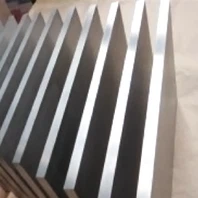
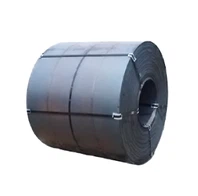
Determining the durability of a steel plate to wear is a crucial aspect, especially for a wear steel plate supplier like me. Wear resistance is a key factor that customers consider when purchasing steel plates for various applications, such as mining, construction, and manufacturing. In this blog, I will share some methods and considerations on how to assess the wear durability of steel plates.
Understanding the Types of Wear
Before delving into the determination of wear durability, it is essential to understand the different types of wear that steel plates may encounter. There are several common types of wear, including abrasion wear, impact wear, and fatigue wear.
- Abrasion Wear: This is the most common type of wear, which occurs when a hard rough surface slides or rubs against the steel plate. For example, in mining operations, the steel plates used in conveyor systems are subject to abrasion from the movement of rocks and minerals.
- Impact Wear: Impact wear happens when the steel plate is subjected to sudden and high - force impacts. In the construction industry, steel plates used in heavy - equipment buckets may experience impact wear when they scoop up large amounts of material.
- Fatigue Wear: Fatigue wear is caused by repeated cyclic loading. Over time, the stress cycles can lead to the formation and propagation of cracks in the steel plate, eventually resulting in failure.
Material Composition and Hardness
The material composition of a steel plate plays a significant role in its wear resistance. Different alloying elements are added to the steel to enhance its properties. For instance, chromium can improve the hardness and corrosion resistance of the steel, while nickel can increase its toughness.

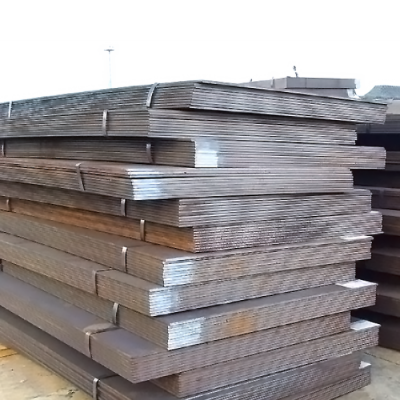
Hardness is one of the most important factors related to wear resistance. Generally, a harder steel plate will have better wear resistance. We can measure the hardness of a steel plate using various methods, such as the Brinell hardness test, Rockwell hardness test, or Vickers hardness test.
For example, our NM500 Wear Steel Plate has a high hardness value, which gives it excellent abrasion resistance. The high - carbon content and specific alloying elements in NM500 contribute to its hardness and, consequently, its good performance in wear - prone environments. Similarly, the NM600 Abrasion Steel Plate has an even higher hardness than NM500, making it suitable for applications with extremely high wear requirements.
Microstructure Analysis
The microstructure of the steel plate also affects its wear durability. A fine - grained microstructure often provides better wear resistance compared to a coarse - grained one. Fine grains can prevent the propagation of cracks and provide more resistance to deformation.
Microstructure analysis can be carried out using techniques such as optical microscopy and scanning electron microscopy (SEM). By examining the microstructure, we can identify the phases present in the steel, such as ferrite, pearlite, or martensite. Martensitic microstructures, for example, are known for their high hardness and good wear resistance.
Wear Testing
In addition to analyzing the material composition and microstructure, wear testing is an effective way to determine the wear durability of a steel plate. There are several types of wear tests, each simulating different real - world wear conditions.
- Pin - on - Disk Test: In this test, a pin made of a hard material is pressed against the rotating steel plate. The wear rate of the steel plate is measured by weighing the mass loss of the plate after a certain number of rotations. This test is suitable for simulating mild - to - moderate abrasion wear.
- Abrasion Test: Abrasion tests can be carried out using equipment such as an abrasive wheel. The steel plate is rubbed against the abrasive wheel under a specific load, and the wear depth or volume loss is measured. This test is useful for evaluating the abrasion resistance of steel plates in applications where they are in contact with abrasive materials.
- Impact Wear Test: Impact wear tests involve dropping a weight onto the steel plate from a certain height. The damage to the plate, such as the formation of craters or cracks, is then evaluated. This test can simulate the impact conditions that the steel plate may encounter in real - world applications.
By comparing the results of wear tests for different steel plates, we can rank their wear durability. For our NM500 Wear Steel Plate, we conduct comprehensive wear tests in our laboratories to ensure that it meets or exceeds industry standards for wear resistance.
Consideration of the Working Environment
The working environment of the steel plate must also be taken into account when determining its wear durability. Factors such as temperature, humidity, and the presence of corrosive substances can all affect the wear performance of the steel plate.
- Temperature: High temperatures can cause the softening of the steel, reducing its wear resistance. In applications with high - temperature environments, such as in some industrial ovens or furnaces, special heat - resistant steel plates should be used.
- Humidity and Corrosion: In humid environments or when in contact with corrosive substances, the steel plate may be subject to both corrosion and wear. Corrosion can weaken the surface of the steel plate, making it more susceptible to wear. Therefore, in such environments, corrosion - resistant coatings or stainless steel plates may be preferred.
Surface Finish and Coating
The surface finish of the steel plate can also influence its wear durability. A smooth surface can reduce friction and wear. We can improve the surface finish of the steel plate through processes such as grinding or polishing.
Coatings can also be applied to the steel plate to enhance its wear resistance. Some common types of coatings include ceramic coatings, polymer coatings, and hard - chrome plating. These coatings can provide an extra layer of protection to the steel plate and improve its performance in wear - prone environments.
Case Studies
Let's take a look at some real - world case studies to illustrate how the above factors affect the wear durability of steel plates.
In a mining project, a company was using ordinary steel plates in their conveyor chutes. These plates had a relatively low hardness and a coarse - grained microstructure. After a few months of operation, the plates showed significant wear and needed frequent replacement. After switching to our NM500 Wear Steel Plate, which has a high hardness and a fine - grained microstructure, the wear rate was significantly reduced. The plates lasted much longer, resulting in lower maintenance costs and increased productivity.
Another case is in a construction company. They were using steel plates in their excavator buckets. The buckets were subject to both impact and abrasion wear. By choosing our NM600 Abrasion Steel Plate, which is designed to withstand high - impact loads and has excellent abrasion resistance, the performance of the buckets was greatly improved. The buckets could operate for a longer time without suffering severe damage.
Conclusion
Determining the durability of a steel plate to wear is a complex process that involves considering multiple factors, including material composition, hardness, microstructure, wear testing, the working environment, and surface finish. As a wear steel plate supplier, we use a combination of these methods to ensure that our products, such as the NM500 Wear Steel Plate, NM600 Abrasion Steel Plate, and NM500 Wear Steel Plate, meet the high - quality standards required for various wear - resistant applications.
If you are in need of wear - resistant steel plates for your project, please contact us for more detailed product information and to discuss your specific requirements. We are committed to providing you with the best solutions and high - performance steel plates.
References
- Callister, W. D., & Rethwisch, D. G. (2016). Materials Science and Engineering: An Introduction. Wiley.
- ASTM International. (2018). Standards for wear testing of materials. ASTM Publications.
- Totemeier, T. C. (2007). Understanding and Preventing Equipment Wear. Wiley - Interscience.