In the vast expanse of human exploration and technological advancement, the question of whether one can wear a steel plate in a vacuum environment is not only intriguing but also has practical implications, especially for us as a wear steel plate supplier. Let's embark on a scientific journey to explore this topic in detail.
The Nature of a Vacuum Environment
A vacuum environment is characterized by an extremely low pressure, where the number of gas molecules is significantly reduced compared to the Earth's atmosphere. In space, for example, the pressure can be as low as $10^{-6}$ to $10^{-12}$ Pa. This low - pressure environment brings several unique physical phenomena that need to be considered when discussing wearing a steel plate.

One of the most prominent effects of a vacuum is outgassing. Any material, including steel plates, contains small amounts of volatile substances such as water vapor, lubricants, and other contaminants. In a vacuum, these volatile substances will evaporate and escape from the material's surface. For a steel plate, outgassing can lead to the formation of a thin layer of contaminants on nearby surfaces, which may affect the performance of other equipment in the vacuum environment.
Another important aspect is thermal management. In a vacuum, there is no air to conduct heat through convection. Heat transfer occurs mainly through radiation. A steel plate in a vacuum will radiate heat according to the Stefan - Boltzmann law, $P=\epsilon\sigma AT^{4}$, where $P$ is the power radiated, $\epsilon$ is the emissivity of the steel surface, $\sigma$ is the Stefan - Boltzmann constant ($5.67\times10^{-8}Wm^{-2}K^{-4}$), $A$ is the surface area, and $T$ is the absolute temperature. This means that the temperature of the steel plate can change rapidly depending on its exposure to heat sources (such as the sun in space) and its own internal heat generation.
Properties of Steel Plates
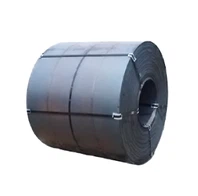
Steel plates, such as NM500 Wear Steel Plate and NM600 Abrasion Steel Plate, are known for their high strength and wear - resistance. These properties are crucial in many industrial applications, but they also need to be evaluated in the context of a vacuum environment.
The mechanical properties of steel, including its strength and ductility, can be affected by the vacuum environment. For instance, at extremely low pressures, the absence of oxygen can prevent the formation of a protective oxide layer on the steel surface. This may lead to increased susceptibility to corrosion and embrittlement over time. However, modern steel manufacturing techniques can produce plates with special coatings or alloying elements that can mitigate these effects.
The thermal expansion coefficient of steel is another factor to consider. When the temperature of the steel plate changes in a vacuum, it will expand or contract according to its thermal expansion coefficient. If the steel plate is attached to other structures, this thermal expansion and contraction can cause stress and potentially lead to mechanical failure.
Wearing a Steel Plate in a Vacuum: Practical Considerations
From a practical perspective, wearing a steel plate in a vacuum would require a well - designed system. First, the steel plate needs to be properly attached to the wearer. In a vacuum, traditional fasteners may not work as effectively due to the lack of air pressure to provide friction. Specialized vacuum - compatible fasteners, such as those made of high - strength polymers or with self - locking mechanisms, would be required.
Secondly, the human body needs to be protected from the extreme conditions of the vacuum. A steel plate alone cannot provide life - support functions such as oxygen supply and pressure regulation. A spacesuit, which combines a pressure - resistant layer, thermal insulation, and a life - support system, is necessary. The steel plate could potentially be integrated into the outer layer of the spacesuit to provide additional protection against micrometeoroids and debris.
In addition, the weight of the steel plate is a significant consideration. In a microgravity environment, weight is not a major issue for movement, but the mass of the steel plate still affects the inertia of the wearer. A heavy steel plate may make it difficult to maneuver and could increase the energy consumption of the wearer.
Applications and Benefits
There are several potential applications for wearing a steel plate in a vacuum environment. In space exploration, astronauts may need extra protection when performing extra - vehicular activities (EVAs) near asteroids or in areas with high debris density. A steel plate can act as a shield against small impacts from micrometeoroids, which can travel at high speeds and cause significant damage to unprotected surfaces.
In the field of space construction, workers may wear steel - reinforced suits to protect themselves from sharp edges and debris during the assembly of large space structures. The wear - resistance of NM500 Wear Steel Plate makes it particularly suitable for such applications, as it can withstand repeated impacts and abrasions.
Our Role as a Wear Steel Plate Supplier
As a wear steel plate supplier, we understand the importance of providing high - quality products that meet the specific requirements of different environments. Our NM500 and NM600 steel plates are manufactured using advanced technology and strict quality control measures to ensure their performance in various conditions, including vacuum environments.
We work closely with our customers to understand their needs and provide customized solutions. Whether it's for space exploration, industrial vacuum chambers, or other applications, we can offer the right type of steel plate with the appropriate thickness, coating, and mechanical properties.
If you are interested in our wear steel plates for use in vacuum - related applications or any other industrial needs, we encourage you to contact us for further discussions. Our team of experts is ready to assist you in selecting the best product for your project and providing technical support throughout the procurement process.
References
- Halliday, D., Resnick, R., & Walker, J. (2014). Fundamentals of Physics. Wiley.
- Kittel, C. (1996). Introduction to Solid State Physics. Wiley.
- NASA Technical Reports Server. (Various reports on space materials and environments).
In conclusion, while wearing a steel plate in a vacuum environment presents several challenges, with proper design and the right choice of materials, it is indeed possible. Our company is committed to providing the best wear steel plates to meet the diverse needs of our customers in this and other demanding applications. Contact us today to start your procurement journey.