Can 690ql Plate Be Used in Marine Environments?
Hey there! I'm a supplier of 690ql plates, and I often get asked whether this type of plate can be used in marine environments. It's a great question, and one that I'm more than happy to dive into.
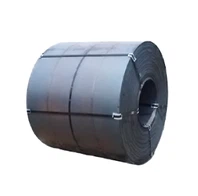
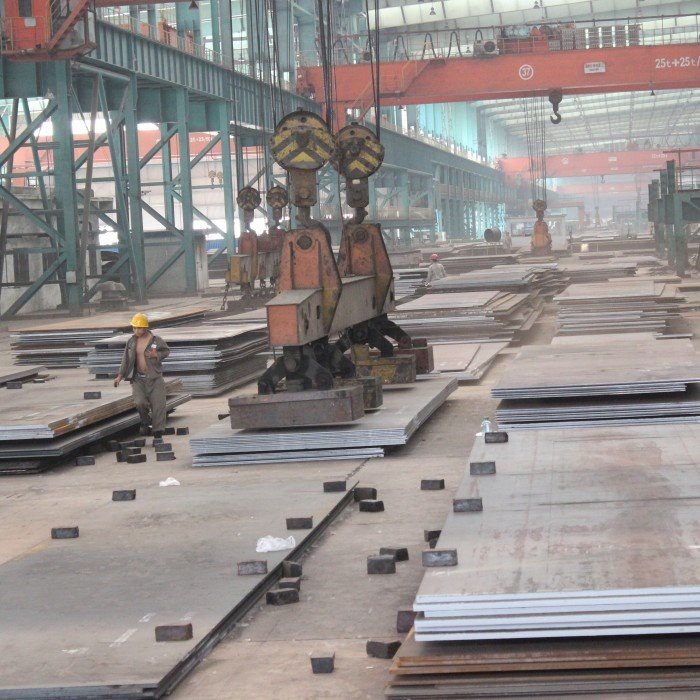
First off, let's talk a bit about what 690ql plates are. These plates are high - strength quenched and tempered steel plates. They're known for their excellent mechanical properties, such as high yield strength and good toughness. They're used in a variety of industries, from construction to heavy machinery. But when it comes to the marine world, things get a bit more complicated.
The marine environment is a harsh one. It's full of saltwater, which is extremely corrosive. Saltwater contains ions that can accelerate the corrosion process of metals. When metal is exposed to saltwater, an electrochemical reaction occurs. The metal acts as an anode, and the saltwater is the electrolyte. This leads to the formation of rust and can significantly weaken the structure of the metal over time.
So, can 690ql plates withstand this kind of environment? Well, 690ql plates do have some corrosion resistance on their own. The quenching and tempering process gives them a certain level of stability. However, the natural corrosion resistance of 690ql plates is not enough to handle the long - term exposure to saltwater in a marine environment.
One option is to use protective coatings. There are various types of coatings available that can be applied to 690ql plates to increase their corrosion resistance. For example, epoxy - based coatings are quite popular. These coatings create a barrier between the plate and the saltwater, preventing the electrochemical reaction from taking place. But it's important to note that the application of these coatings needs to be done correctly. Any flaws in the coating can lead to areas where corrosion can start.

Another factor to consider is the mechanical stress in a marine environment. Ships are constantly moving, and the plates are subject to various forces such as waves, wind, and the weight of the cargo. 690ql plates are strong, but the combination of mechanical stress and corrosion can be a double - whammy. If the corrosion weakens the plate, it may not be able to handle the mechanical stress as well, leading to potential failures.
Let's compare 690ql plates with some other high - strength plates that are also used in different industries. For instance, the S960QL is another high - strength quenched and tempered steel. It has even higher strength than 690ql in some cases. However, like 690ql, it also needs proper protection in a marine environment. The A514GRE Astm A514 is also a well - known high - strength steel. It's often used in applications where high strength is required, but again, the marine environment poses challenges for it too.
The S460QL1 690ql Plate has some similarities with the 690ql plate. It has good mechanical properties, but when it comes to the marine world, it's in the same boat (pun intended). All these plates need to be carefully considered in terms of their suitability for marine use.
Now, if you're thinking about using 690ql plates in a marine project, here are some things to keep in mind. First, work with experts in the field. They can help you assess the specific requirements of your project, such as the location of the marine operation (different areas may have different levels of salinity and pollution), the type of vessel or structure you're building, and the expected lifespan of the project.
Second, make sure you have a proper maintenance plan. Even with the best coatings, regular inspections are necessary. You need to check for any signs of coating damage or corrosion and take immediate action if any issues are found.
In conclusion, while 690ql plates have the potential to be used in marine environments, they require proper protection and maintenance. With the right approach, they can be a viable option for marine projects. If you're interested in purchasing 690ql plates for your marine or other projects, I'd love to have a chat with you. Let's discuss how we can make sure these plates meet your specific needs. Whether it's about the right coating, the quantity you need, or the delivery schedule, I'm here to help. Reach out and let's start the conversation about your project.
References
- "Corrosion in Marine Environments" - A textbook on the science of corrosion in saltwater.
- "High - Strength Steels: Properties and Applications" - A comprehensive guide on different types of high - strength steels including 690ql.