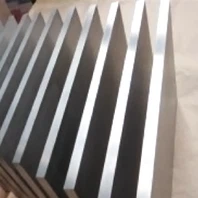
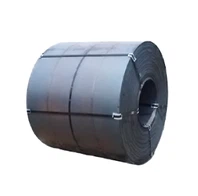
As a supplier of Pipe Line Plate X60, I often encounter inquiries about the most suitable welding methods for this particular type of steel plate. Pipe Line Plate X60 is widely used in the construction of pipelines due to its excellent mechanical properties, including high strength and good toughness. Selecting the appropriate welding method is crucial to ensure the integrity and performance of the pipeline. In this blog post, I will discuss several welding methods that are well - suited for Pipe Line Plate X60.
Shielded Metal Arc Welding (SMAW)
Shielded Metal Arc Welding, also known as stick welding, is one of the oldest and most widely used welding processes. It is a manual welding method that uses a consumable electrode coated with flux. When the electrode is struck against the workpiece, an arc is formed, melting both the electrode and the base metal. The flux coating on the electrode decomposes, producing a shielding gas that protects the molten metal from atmospheric contamination.
One of the advantages of SMAW for Pipe Line Plate X60 is its portability. It can be easily used in remote locations where access to power sources may be limited. Additionally, SMAW equipment is relatively inexpensive and easy to set up. This makes it a popular choice for on - site pipeline repairs and small - scale welding jobs.
However, SMAW also has some limitations. The welding speed is relatively slow compared to other methods, and the quality of the weld can be highly dependent on the skill of the welder. In addition, the slag produced during the welding process needs to be removed between passes, which can increase the overall welding time.
Gas Metal Arc Welding (GMAW)
Gas Metal Arc Welding, commonly referred to as MIG (Metal Inert Gas) or MAG (Metal Active Gas) welding, is a semi - automatic or automatic welding process. It uses a continuous solid wire electrode that is fed through a welding gun. A shielding gas is used to protect the molten weld pool from oxidation and contamination.
For Pipe Line Plate X60, GMAW offers several advantages. It has a high welding speed, which can significantly reduce the overall welding time, especially for large - scale pipeline projects. The weld quality is generally high, with good bead appearance and low levels of porosity. GMAW also allows for better control of the welding parameters, resulting in more consistent welds.
There are two main types of GMAW: pulsed and non - pulsed. Pulsed GMAW is often preferred for welding Pipe Line Plate X60 because it can reduce the heat input, which helps to minimize the risk of distortion and cracking. However, GMAW equipment is more complex and expensive than SMAW, and it requires a stable power supply and a source of shielding gas.
Flux - Cored Arc Welding (FCAW)
Flux - Cored Arc Welding is similar to GMAW, but it uses a tubular wire electrode filled with flux. The flux inside the wire provides the shielding gas and deoxidizers, eliminating the need for an external shielding gas in some cases.
FCAW is a versatile welding method that can be used in various positions, making it suitable for pipeline welding. It has a high deposition rate, which means that more metal can be deposited in a shorter time compared to SMAW. This makes it a good choice for thick - walled Pipe Line Plate X60.
There are two types of FCAW: self - shielded and gas - shielded. Self - shielded FCAW is often used in outdoor applications where wind may disperse the shielding gas in GMAW. Gas - shielded FCAW, on the other hand, provides better weld quality and is suitable for more critical applications.
Submerged Arc Welding (SAW)
Submerged Arc Welding is an automatic welding process that uses a continuous solid wire electrode and a granular flux. The arc is submerged under the flux, which protects the weld pool from the atmosphere and also provides a slag layer that helps to control the heat input and shape of the weld bead.
SAW is well - suited for welding thick - walled Pipe Line Plate X60. It has a very high deposition rate, which makes it ideal for large - diameter pipelines and long - length welding jobs. The weld quality is excellent, with high strength and good toughness. SAW also produces a clean weld with minimal spatter.
However, SAW is a relatively complex process that requires a high - power welding machine and a well - trained operator. It is mainly used in factory settings where the pipeline sections can be welded in a controlled environment.
Comparison of Welding Methods
When choosing a welding method for Pipe Line Plate X60, several factors need to be considered. These include the thickness of the plate, the welding position, the quality requirements, the available equipment, and the cost.
For thin - walled Pipe Line Plate X60, SMAW or GMAW may be more suitable due to their lower heat input and better control of the welding process. For thick - walled plates, FCAW or SAW can be used to achieve high deposition rates and excellent weld quality.
In terms of welding position, SMAW and FCAW are more flexible and can be used in all positions, while SAW is mainly limited to flat and horizontal positions.
The quality requirements of the weld also play a crucial role. If high - quality welds with low porosity and excellent mechanical properties are required, GMAW or SAW may be the better choices.


Cost is another important factor. SMAW is generally the most cost - effective option for small - scale projects, while GMAW, FCAW, and SAW may be more suitable for large - scale pipeline construction.
Conclusion
In conclusion, there are several welding methods that are suitable for Pipe Line Plate X60, each with its own advantages and disadvantages. As a supplier of LX56 Pipe Line Plate X60, I understand the importance of choosing the right welding method to ensure the quality and performance of the pipeline. Whether you are working on a small - scale repair job or a large - scale pipeline project, it is essential to consider the specific requirements of your application and select the welding method that best meets those needs.
If you are interested in purchasing LX56 Pipe Line Plate X60, or if you have any questions about welding methods or other related topics, please feel free to contact us. We are committed to providing high - quality products and professional technical support to help you achieve the best results in your pipeline projects. We also supply LX52 Pipe Line Plate X52 and LX65 for different pipeline requirements.
References
- AWS Welding Handbook, American Welding Society.
- "Welding Metallurgy" by John C. Lippold and David K. Matlock.
- "Pipeline Welding Technology" by various industry experts.