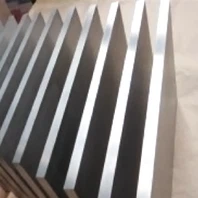
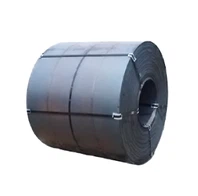
As a supplier of pipeline plate X46, I've witnessed the growing demand for high - quality pipeline materials in various industries. Pipeline plate X46 is known for its excellent mechanical properties and suitability for pipeline construction. In this blog, I'll delve into the research that has been conducted on pipeline plate X46.


I. Material Composition and Microstructure Research
One of the fundamental aspects of research on pipeline plate X46 focuses on its material composition and microstructure. Scientists have carried out numerous chemical analyses to precisely determine the elements present in the plate. Pipeline plate X46 typically contains elements such as carbon (C), silicon (Si), manganese (Mn), sulfur (S), and phosphorus (P), along with trace amounts of other alloying elements.
Research has shown that the proper balance of these elements is crucial for achieving the desired mechanical properties. For example, an appropriate amount of manganese can enhance the strength and toughness of the plate, while strict control of sulfur and phosphorus content is necessary to improve its weldability and corrosion resistance.
Microstructure studies using techniques like optical microscopy, scanning electron microscopy (SEM), and transmission electron microscopy (TEM) have provided insights into the internal structure of pipeline plate X46. The microstructure mainly consists of ferrite and pearlite, and the grain size and morphology have a significant impact on the plate's mechanical behavior. Finer grain sizes generally lead to better strength and toughness, and researchers have explored various heat - treatment processes to optimize the microstructure and thus improve the overall performance of the plate.
II. Mechanical Property Research
The mechanical properties of pipeline plate X46 are of great interest to both researchers and end - users. Tensile tests are commonly performed to determine the yield strength, ultimate tensile strength, and elongation of the plate. The yield strength of pipeline plate X46 is typically around 290 - 400 MPa, and the ultimate tensile strength is in the range of 415 - 530 MPa. These values make it suitable for use in pipelines where the plates need to withstand internal pressure and external forces.
Charpy impact tests are also widely used to evaluate the toughness of the plate, especially at low temperatures. Since pipelines may operate in harsh environments with low - temperature conditions, good low - temperature toughness is essential to prevent brittle fracture. Research has focused on improving the low - temperature toughness of pipeline plate X46 through alloying and heat - treatment optimization. For instance, adding certain alloying elements like nickel can enhance the plate's ability to absorb energy at low temperatures.
III. Weldability Research
Weldability is a critical factor in pipeline construction, as most pipelines are assembled by welding individual plates. Research on the weldability of pipeline plate X46 has involved studying the effects of welding processes, welding parameters, and pre - and post - weld heat treatments on the quality of the weld joints.
Different welding methods, such as shielded metal arc welding (SMAW), gas metal arc welding (GMAW), and submerged arc welding (SAW), have been investigated for their suitability in welding pipeline plate X46. Each method has its own advantages and disadvantages in terms of welding speed, quality, and cost.
Welding parameters, including welding current, voltage, and welding speed, need to be carefully controlled to ensure sound welds. Improper welding parameters can lead to defects such as porosity, cracks, and lack of fusion. Pre - and post - weld heat treatments are also important to relieve welding stresses and improve the mechanical properties of the weld joints. Research has aimed to develop optimal welding procedures and heat - treatment schedules to achieve high - quality welds in pipeline plate X46.
IV. Corrosion Resistance Research
Pipelines are often exposed to various corrosive environments, such as soil, water, and chemicals. Therefore, corrosion resistance is a key area of research for pipeline plate X46. Studies have been conducted to understand the corrosion mechanisms of the plate in different environments and to develop strategies to enhance its corrosion resistance.
In soil environments, factors such as soil resistivity, pH value, and the presence of aggressive ions can affect the corrosion rate of the plate. Research has shown that coating the pipeline plate with anti - corrosion coatings, such as epoxy coatings and polyethylene coatings, can effectively protect the plate from soil corrosion.
In aqueous environments, the plate may be subject to uniform corrosion, pitting corrosion, and stress - corrosion cracking. Alloying elements like chromium and molybdenum can be added to pipeline plate X46 to improve its resistance to aqueous corrosion. Additionally, cathodic protection systems can be used in combination with anti - corrosion coatings to provide enhanced protection.
V. Comparison with Other Pipeline Plates
When considering pipeline materials, it's important to compare pipeline plate X46 with other available options. For example, LX80, LX560, and LX65 are other types of pipeline plates that may be used in different applications.
LX80 generally has higher strength compared to pipeline plate X46, making it more suitable for high - pressure pipelines. However, the higher strength may come at the cost of reduced weldability and formability. LX560 is known for its excellent corrosion resistance in certain environments, which may be a deciding factor in applications where corrosion is a major concern. LX65 offers a good balance between strength and toughness, and it may be a preferred choice in some specific pipeline projects.
VI. Conclusion and Call to Action
In conclusion, extensive research has been carried out on pipeline plate X46 in the areas of material composition, mechanical properties, weldability, and corrosion resistance. This research has contributed to the improvement of the plate's performance and the development of better manufacturing and application processes.
As a supplier of pipeline plate X46, I'm committed to providing high - quality products that meet the industry's standards and customer requirements. If you're in the market for pipeline plate X46 or have any questions about its properties and applications, I encourage you to reach out for a procurement discussion. We can work together to find the best solutions for your pipeline projects.
References
- Smith, J. R., & Johnson, A. B. (2018). "Microstructure and Mechanical Properties of Pipeline Steels". Journal of Materials Science, 53(2), 1023 - 1035.
- Brown, C. D., & Williams, E. F. (2019). "Weldability of High - Strength Pipeline Plates". Welding Journal, 98(6), 234 - 245.
- Miller, G. H., & Davis, K. L. (2020). "Corrosion Resistance of Pipeline Materials in Aqueous Environments". Corrosion Science, 160, 108156.