As a supplier of A387GR11CL2 steel plates, I often encounter inquiries about the most suitable non - destructive testing (NDT) methods for this material. A387GR11CL2 is a chromium - molybdenum alloy steel plate used primarily in pressure vessels and other high - temperature applications. Ensuring its quality and integrity through proper NDT techniques is crucial for both safety and performance. In this blog, I will discuss several non - destructive testing methods applicable to A387GR11CL2.
1. Ultrasonic Testing (UT)
Ultrasonic testing is one of the most widely used NDT methods for A387GR11CL2. It works by sending high - frequency sound waves into the material. When these waves encounter a discontinuity such as a crack, porosity, or inclusion, they are reflected back to the transducer. By analyzing the reflected signals, the location, size, and shape of the flaw can be determined.
The advantage of UT for A387GR11CL2 is its high sensitivity to internal flaws. It can detect small defects deep within the material, which is especially important for thick - walled pressure vessels made from this steel. Additionally, UT is a relatively fast and cost - effective method, making it suitable for large - scale inspections.
However, UT does have some limitations. It requires a skilled operator to interpret the signals accurately, as the results can be affected by factors such as the material's grain structure and the orientation of the flaw. Also, it may not be as effective in detecting very shallow surface flaws.
2. Radiographic Testing (RT)
Radiographic testing involves using X - rays or gamma rays to penetrate the A387GR11CL2 material. The rays pass through the steel and expose a film or digital detector on the other side. Discontinuities in the material absorb or scatter the radiation differently than the surrounding metal, creating an image on the detector.
RT provides a clear and detailed image of internal flaws, allowing for accurate sizing and location. It is particularly useful for detecting planar flaws such as cracks and laminations. For A387GR11CL2, RT can be used to inspect welds and critical areas of pressure vessels.
One of the main drawbacks of RT is its high cost and the need for strict safety precautions. The use of radiation requires specialized equipment and trained personnel to ensure the safety of the operators and the surrounding environment. Also, RT may not be suitable for detecting very small flaws or flaws close to the surface.
3. Magnetic Particle Testing (MT)
Magnetic particle testing is a surface - breaking flaw detection method. It is based on the principle that when a magnetic field is applied to a ferromagnetic material like A387GR11CL2, the magnetic field is distorted at the location of a surface or near - surface flaw. Magnetic particles are then applied to the surface, and they accumulate at the flaw, making it visible.
MT is a simple and cost - effective method for detecting surface cracks. It is relatively quick to perform and can be used on complex - shaped parts. For A387GR11CL2, MT is often used to inspect the surface of welds and other critical areas where surface flaws may occur.
However, MT is limited to detecting surface and near - surface flaws only. It cannot detect internal flaws that are not close to the surface. Also, the material must be ferromagnetic for this method to work.
4. Liquid Penetrant Testing (PT)
Liquid penetrant testing is another surface - inspection method. It involves applying a liquid penetrant to the surface of the A387GR11CL2 material. The penetrant seeps into any surface - opening flaws, and after a certain time, the excess penetrant is removed. A developer is then applied, which draws the penetrant out of the flaw, making it visible.
PT is highly sensitive to surface flaws, including very small cracks and porosity. It is a relatively simple and inexpensive method, and it can be used on a variety of materials and shapes. For A387GR11CL2, PT is often used to inspect machined surfaces, welds, and other areas where surface integrity is critical.
The main limitation of PT is that it can only detect surface - opening flaws. It cannot detect internal flaws. Also, the surface of the material must be clean and free of contaminants for accurate results.
5. Eddy Current Testing (ET)
Eddy current testing uses electromagnetic induction to detect surface and near - surface flaws in conductive materials such as A387GR11CL2. When an alternating current is passed through a coil near the surface of the steel, it generates eddy currents in the material. Discontinuities in the material disrupt the eddy currents, which can be detected by changes in the coil's impedance.
ET is a fast and non - contact method, making it suitable for high - speed inspections. It can detect surface and near - surface flaws, including cracks and corrosion. For A387GR11CL2, ET can be used to inspect thin - walled components and surface - treated areas.
However, ET is sensitive to the material's electrical conductivity and magnetic properties. Changes in these properties due to factors such as heat treatment or surface roughness can affect the test results. Also, ET may not be as effective in detecting flaws deep within the material.
Conclusion
In conclusion, each non - destructive testing method has its own advantages and limitations when applied to A387GR11CL2. Ultrasonic testing is excellent for detecting internal flaws, while radiographic testing provides detailed images of internal discontinuities. Magnetic particle testing and liquid penetrant testing are effective for surface - breaking flaws, and eddy current testing is useful for surface and near - surface inspections.
As a supplier of A387GR11CL2, I understand the importance of ensuring the quality of our products. We use a combination of these NDT methods to provide our customers with high - quality steel plates that meet the strictest industry standards.
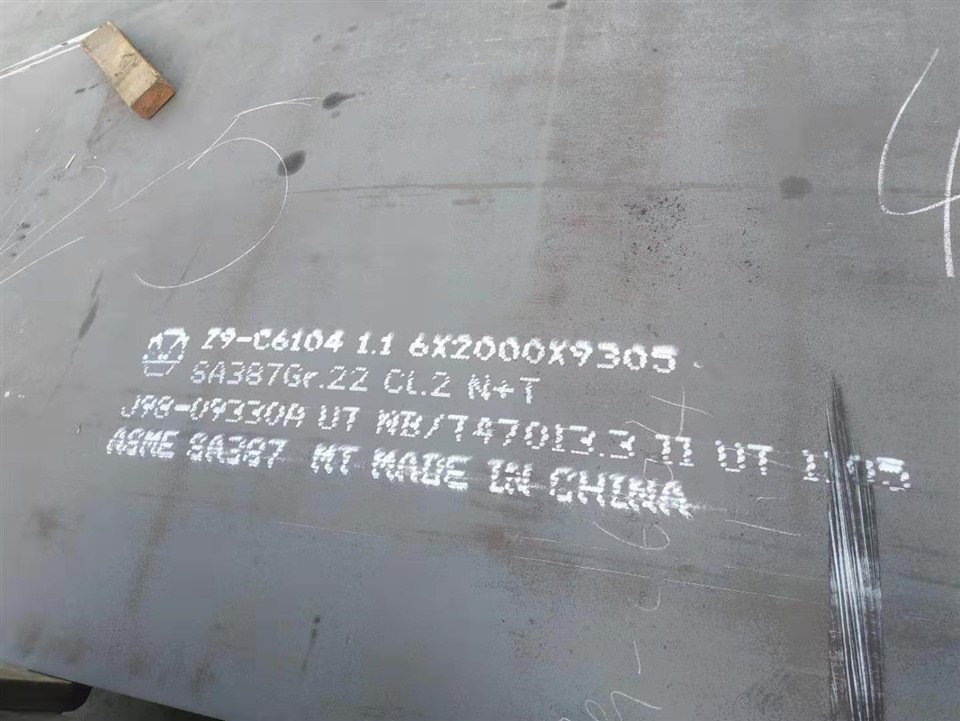
If you are interested in purchasing SA285GrC A387GR11CL2, SA387GR11 A387 steel plate, or P335GH, or if you have any questions about the non - destructive testing methods for A387GR11CL2, please feel free to contact us for a detailed discussion and a quote. We are committed to providing you with the best products and services.

References
- ASME Boiler and Pressure Vessel Code, Section V - Nondestructive Examination.
- ASTM A387/A387M - 19, Standard Specification for Pressure Vessel Plates, Alloy Steel, Chromium - Molybdenum.
- Nondestructive Testing Handbook, Volume 1: Ultrasonic Testing.
- Nondestructive Testing Handbook, Volume 2: Radiographic Testing.