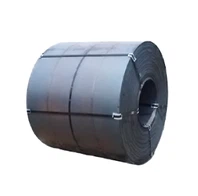
Hey there! As a supplier of ASTM A514, I've been thinking a lot about how we can take this high-strength steel to the next level. ASTM A514 is already pretty awesome, known for its high yield strength and excellent weldability, making it a top choice for applications like construction equipment, bridges, and offshore structures. But in this fast - paced world of technology, there's always room for improvement. So, let's dive into some new technologies that could be applied to enhance ASTM A514.
Advanced Heat Treatment Technologies
One area where we can make a big difference is in heat treatment. Traditional heat treatment methods have served us well, but new technologies are emerging that offer more precise control and better results.
Laser Heat Treatment
Laser heat treatment is a game - changer. Instead of heating the entire piece of steel, lasers can target specific areas with high precision. This means we can create customized microstructures in different parts of the ASTM A514 plate. For example, in areas that need extra wear resistance, we can use the laser to harden the surface without affecting the overall toughness of the steel.
The laser can be programmed to heat the steel to a very high temperature in a short period, followed by rapid cooling. This process can refine the grain structure of the steel, leading to improved mechanical properties. In addition, laser heat treatment is a non - contact process, which reduces the risk of surface damage compared to traditional methods.
Ultrasonic - Assisted Heat Treatment
Ultrasonic - assisted heat treatment is another exciting technology. When ultrasonic waves are applied during the heat treatment process, they can enhance the diffusion of atoms within the steel. This helps in achieving a more uniform distribution of alloying elements, which in turn improves the overall performance of ASTM A514.
The ultrasonic waves create a cavitation effect in the molten or semi - molten steel. This cavitation helps to break up any impurities or inhomogeneities in the steel, resulting in a cleaner and more consistent material. It also promotes the formation of finer grains, which can increase the strength and ductility of the steel.
Nanotechnology in ASTM A514
Nanotechnology is revolutionizing many industries, and the steel industry is no exception. By introducing nanomaterials into ASTM A514, we can significantly improve its properties.
Nanoparticle Reinforcement
Adding nanoparticles to the steel matrix can enhance its strength, hardness, and wear resistance. For example, carbon nanotubes or ceramic nanoparticles can be dispersed throughout the ASTM A514 steel. These nanoparticles act as reinforcements, preventing the movement of dislocations within the steel structure.
When a load is applied to the steel, the nanoparticles help to distribute the stress more evenly, reducing the likelihood of crack initiation and propagation. This can lead to a significant increase in the fatigue life of ASTM A514 components, which is crucial for applications that are subjected to cyclic loading, such as crane booms and bridge girders.


Nanocoatings
Nanocoatings can also be applied to the surface of ASTM A514 to improve its corrosion resistance. These coatings are made up of nanoscale particles that form a dense and uniform layer on the steel surface. The nanocoating acts as a barrier, preventing moisture and oxygen from reaching the steel and causing corrosion.
Some nanocoatings can also have self - healing properties. If the coating is damaged, the nanoparticles can migrate to the damaged area and repair the coating, providing long - term protection for the steel.
3D Printing and ASTM A514
3D printing, also known as additive manufacturing, has the potential to transform the way we produce ASTM A514 components.
Custom - Designed Components
With 3D printing, we can create ASTM A514 components with complex geometries that are difficult or impossible to achieve using traditional manufacturing methods. This allows for more efficient designs, reducing weight without sacrificing strength.
For example, in the aerospace industry, 3D - printed ASTM A514 parts can be designed to have internal lattice structures that provide high strength - to - weight ratios. These parts can be customized to fit specific applications, improving the overall performance of the equipment.
On - Demand Production
3D printing enables on - demand production of ASTM A514 components. Instead of keeping a large inventory of pre - fabricated parts, manufacturers can produce parts as needed. This reduces inventory costs and lead times, making the supply chain more efficient.
In addition, 3D printing can use less material compared to traditional manufacturing methods. The additive nature of 3D printing means that material is only added where it is needed, reducing waste and making the production process more sustainable.
Comparison with Similar High - Strength Steels
When considering the improvements to ASTM A514, it's also interesting to compare it with other high - strength steels like S890QL1, S460QL, and S550QL Astm A514 Steel Plate.
S890QL1 is a very high - strength steel with excellent toughness. However, by applying the new technologies we've discussed to ASTM A514, we can potentially match or even exceed its performance in certain aspects. For example, with nanotechnology and advanced heat treatment, we can improve the strength and corrosion resistance of ASTM A514 to a level comparable to S890QL1.
S460QL is a widely used high - strength steel. While it has good mechanical properties, ASTM A514 has a higher yield strength. By further enhancing ASTM A514 with new technologies, we can widen the gap in performance and make it an even more attractive option for high - stress applications.
S550QL Astm A514 Steel Plate is also a high - strength option. But with the application of 3D printing and other new technologies, we can create ASTM A514 components with unique properties and geometries that are not possible with S550QL.
Conclusion
In conclusion, there are many new technologies that can be applied to improve ASTM A514. Advanced heat treatment technologies like laser heat treatment and ultrasonic - assisted heat treatment can enhance the mechanical properties of the steel. Nanotechnology, in the form of nanoparticle reinforcement and nanocoatings, can improve strength, wear resistance, and corrosion resistance. 3D printing offers the possibility of custom - designed components and on - demand production.
As a supplier of ASTM A514, I'm excited about the potential of these technologies. I believe that by incorporating them into our production process, we can provide our customers with even better - quality ASTM A514 products.
If you're interested in learning more about how these new technologies can benefit your ASTM A514 applications or if you're looking to purchase high - quality ASTM A514, don't hesitate to get in touch. We're always happy to discuss your specific needs and find the best solutions for you.
References
- "Advanced Heat Treatment Technologies for Metals" - Journal of Materials Science
- "Nanotechnology in the Steel Industry" - Nanomaterials Research Journal
- "3D Printing in Manufacturing: Current Trends and Future Prospects" - Manufacturing Technology Review