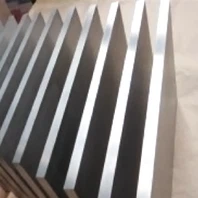
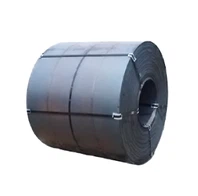
Residual stress is a critical factor in the performance and reliability of Plate A516 Gr 70, a widely used material in various industries. As a supplier of Plate A516 Gr 70, I have witnessed firsthand the importance of understanding residual stress and its implications for our customers. In this blog post, I will delve into the concept of residual stress in Plate A516 Gr 70, its causes, effects, and how we can manage it to ensure the highest quality products.
What is Residual Stress?
Residual stress refers to the stress that remains within a material after the external forces that caused its deformation have been removed. These stresses are self - equilibrating within the material and can significantly affect its mechanical properties, dimensional stability, and fatigue life. In the case of Plate A516 Gr 70, residual stress can be introduced during various manufacturing processes such as rolling, heat treatment, welding, and machining.
Causes of Residual Stress in Plate A516 Gr 70
Manufacturing Processes
- Rolling: During the rolling process of Plate A516 Gr 70, the material is subjected to large plastic deformations. The non - uniform distribution of deformation across the thickness and width of the plate can lead to the development of residual stresses. For example, the outer layers of the plate may experience different strain rates compared to the inner layers, resulting in internal stress imbalances.
- Heat Treatment: Heat treatment operations like quenching and tempering are commonly used to improve the mechanical properties of Plate A516 Gr 70. However, rapid cooling during quenching can cause significant temperature gradients within the plate. These temperature differences lead to non - uniform thermal expansion and contraction, which in turn generate residual stresses. The faster cooling rate on the surface compared to the interior can create tensile stresses on the surface and compressive stresses in the core.
- Welding: Welding is another major source of residual stress in Plate A516 Gr 70. The intense heat input during welding causes local melting and subsequent solidification of the material. The rapid heating and cooling cycles result in thermal expansion and contraction, leading to high residual stresses in the weld zone and the adjacent heat - affected zone.
Service Conditions
- Mechanical Loading: If Plate A516 Gr 70 is subjected to excessive mechanical loads during service, it can cause plastic deformation. When the load is removed, some of the deformation may be retained, resulting in residual stress. For instance, in pressure vessels made of Plate A516 Gr 70, repeated pressure cycles can introduce residual stresses over time.
Effects of Residual Stress in Plate A516 Gr 70
Dimensional Instability
Residual stresses can cause the plate to warp or distort over time. This is particularly problematic in applications where precise dimensions are required. For example, in the construction of large - scale structures or machinery components, dimensional changes due to residual stress can lead to assembly difficulties and reduced functionality.
Fatigue Life Reduction
Tensile residual stresses can act in combination with applied cyclic loads, increasing the effective stress range on the material. This can significantly reduce the fatigue life of Plate A516 Gr 70. In applications such as bridges or offshore platforms, where the material is subjected to repeated loading, a reduction in fatigue life can pose a serious safety risk.
Corrosion Susceptibility
Residual stresses can also enhance the susceptibility of Plate A516 Gr 70 to corrosion. Tensile residual stresses can promote the initiation and propagation of cracks, which can act as sites for corrosion. In corrosive environments, such as marine or chemical processing plants, the presence of residual stress can accelerate the corrosion process and lead to premature failure of the material.


Measuring Residual Stress in Plate A516 Gr 70
There are several methods available for measuring residual stress in Plate A516 Gr 70.
- Destructive Methods: One of the most common destructive methods is the hole - drilling method. In this method, a small hole is drilled into the material, and the relaxation of the residual stress around the hole is measured using strain gauges. Another destructive method is the sectioning method, where the plate is cut into sections, and the resulting stress relaxation is measured.
- Non - Destructive Methods: Non - destructive methods are preferred in many cases as they do not damage the material. Ultrasonic testing can be used to measure residual stress based on the change in the velocity of ultrasonic waves in the material. X - ray diffraction is another non - destructive technique that can determine the residual stress by analyzing the lattice spacing of the material.
Managing Residual Stress in Plate A516 Gr 70
Stress Relief Heat Treatment
One of the most effective ways to reduce residual stress in Plate A516 Gr 70 is through stress relief heat treatment. This involves heating the plate to a specific temperature below its critical transformation temperature and holding it for a certain period of time to allow the residual stresses to relax. After that, the plate is slowly cooled to room temperature.
Shot Peening
Shot peening is a mechanical surface treatment method that can be used to introduce compressive residual stresses on the surface of Plate A516 Gr 70. Small spherical shots are projected onto the surface of the plate at high velocity, causing plastic deformation and generating compressive stresses. These compressive stresses can counteract the tensile residual stresses and improve the fatigue resistance of the material.
Our Commitment as a Plate A516 Gr 70 Supplier
As a supplier of Plate A516 Gr 70, we are committed to providing high - quality products with minimal residual stress. We carefully control our manufacturing processes to reduce the generation of residual stress. For example, we optimize our rolling and heat treatment parameters to ensure uniform deformation and temperature distribution. We also perform strict quality control measures, including residual stress testing, to ensure that our plates meet the highest standards.
In addition to Plate A516 Gr 70, we also offer a wide range of other high - quality steel plates, such as High Strength Plate, SM520C, and A633GRD Low Alloy Steel Plate. Our team of experts is always ready to provide technical support and advice to our customers on the selection and use of these materials.
If you are interested in purchasing Plate A516 Gr 70 or any of our other products, we invite you to contact us for a detailed discussion. We can provide you with customized solutions based on your specific requirements and ensure that you receive the best value for your investment.
References
- ASM Handbook Volume 11: Failure Analysis and Prevention. ASM International.
- "Residual Stress: Measurement by Diffraction and Interpretation". K. J. Miller, A. J. E. Foreman.
- "Fundamentals of Welding Metallurgy". John C. Lippold, David A. Kotecki.