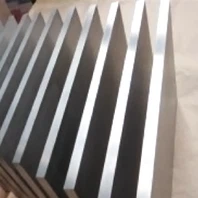
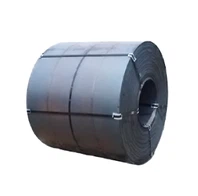
Hey there! As a supplier of low alloy steel plates, I've been getting a lot of questions lately about impact toughness. So, I thought I'd take a few minutes to break it down and explain what it means for our products.
First off, let's talk about what impact toughness is. In simple terms, it's the ability of a material to absorb energy and deform plastically without fracturing when it's subjected to a sudden impact. Think of it like a car bumper. When you get into a fender bender, you want that bumper to absorb the shock and bend a bit, rather than shattering into pieces. That's impact toughness in action.
Now, why is impact toughness so important for low alloy steel plates? Well, these plates are used in a wide range of applications, from construction and infrastructure to heavy machinery and transportation. In many of these scenarios, the steel plates are likely to encounter sudden impacts or dynamic loads. For example, in a bridge, the plates need to withstand the force of vehicles passing over them, as well as the effects of wind and earthquakes. In a mining truck, the plates have to endure the impact of rocks and debris.
If the low alloy steel plates don't have sufficient impact toughness, they could crack or break under these conditions, which could lead to serious safety hazards and costly repairs. That's why we pay such close attention to this property when we're manufacturing and testing our products.
So, what factors affect the impact toughness of low alloy steel plates? There are several key ones, and I'll go through them one by one.
Chemical Composition
The chemical composition of the steel plays a huge role in determining its impact toughness. Low alloy steels typically contain small amounts of alloying elements like manganese, nickel, chromium, and molybdenum, in addition to the basic iron and carbon. These elements can have a significant impact on the microstructure and properties of the steel.
For example, manganese helps to improve the hardenability of the steel, which can enhance its strength and toughness. Nickel is known for its ability to increase the ductility and toughness of the steel, especially at low temperatures. Chromium and molybdenum can improve the corrosion resistance and high - temperature strength of the steel, which can also indirectly affect its impact toughness.
Heat Treatment
Heat treatment is another crucial factor. Processes like quenching and tempering can significantly alter the microstructure of the steel and improve its impact toughness. Quenching involves rapidly cooling the steel from a high temperature to form a hard martensitic structure. However, martensite is often very brittle on its own. That's where tempering comes in. Tempering involves reheating the quenched steel to a lower temperature for a certain period of time. This process helps to relieve internal stresses and transform some of the martensite into a more ductile and tough structure, such as tempered martensite or bainite.
Grain Size
The grain size of the steel also matters a great deal. Generally, a finer grain size leads to better impact toughness. Smaller grains act as barriers to crack propagation, making it more difficult for cracks to grow and spread through the material. We can control the grain size through various methods, including the choice of alloying elements and the heat treatment process.
Testing Impact Toughness
We use a few different methods to test the impact toughness of our low alloy steel plates. One of the most common tests is the Charpy impact test. In this test, a notched specimen of the steel is placed in a testing machine, and a pendulum is swung to strike the specimen at a specific velocity. The energy absorbed by the specimen during the impact is measured, and this value is used to evaluate the impact toughness of the steel.
Now, let me tell you about some of the popular low alloy steel plate grades we offer and their impact toughness characteristics.
One of our best - selling grades is A572GR50. This grade is widely used in construction and structural applications. It has excellent strength and good impact toughness, especially when it's properly heat - treated. The alloying elements in A572GR50 are carefully balanced to provide a combination of high strength and toughness, making it suitable for use in buildings, bridges, and other infrastructure projects.
Another popular grade is S355JR. This grade is known for its good weldability and impact toughness at room temperature. It's commonly used in general construction, machinery manufacturing, and transportation industries. The impact toughness of S355JR makes it reliable for applications where the steel may be subjected to dynamic loads or sudden impacts.
We also offer A633GRD, which is designed for use in low - temperature environments. This grade has enhanced impact toughness at low temperatures, making it ideal for applications in cold regions or where the steel will be exposed to sub - zero temperatures. It's often used in the construction of storage tanks, pipelines, and other structures that need to withstand cold conditions.
In conclusion, impact toughness is a critical property for low alloy steel plates. It ensures the safety and reliability of the structures and products made from these plates, especially in applications where they may encounter sudden impacts or dynamic loads. At our company, we take every step to ensure that our low alloy steel plates meet the highest standards of impact toughness.


If you're in the market for high - quality low alloy steel plates with excellent impact toughness, I'd love to talk to you. Whether you have a specific project in mind or just need some advice on the right grade of steel for your application, don't hesitate to reach out. We're here to help you find the perfect solution for your needs.
References
- ASM Handbook, Volume 1: Properties and Selection: Irons, Steels, and High - Performance Alloys. ASM International.
- "Metallurgy of Low - Alloy Steels" by J. C. Lippold and D. L. Klarstrom.
- Standards and specifications related to low alloy steel plates, such as ASTM, EN, etc.