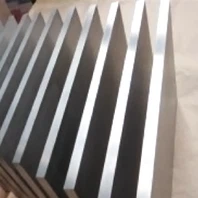
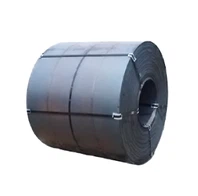
Erosion - corrosion is a complex degradation process that involves the combined action of mechanical wear due to the movement of a fluid (erosion) and chemical attack (corrosion) on a material's surface. In the context of vessel plate A516GR70, understanding its erosion - corrosion resistance is crucial for ensuring the long - term performance and safety of vessels in various industrial applications.
Composition and Properties of Vessel Plate A516GR70
Vessel plate A516GR70 is a carbon steel plate that is widely used in the construction of pressure vessels. Its chemical composition mainly consists of carbon (C), manganese (Mn), phosphorus (P), sulfur (S), silicon (Si), and small amounts of other elements. The carbon content in A516GR70 is typically around 0.30% maximum, which provides a good balance between strength and weldability. Manganese, usually in the range of 0.79 - 1.30%, helps to improve the strength and hardness of the steel.
The mechanical properties of A516GR70 are also remarkable. It has a minimum yield strength of 250 MPa (36 ksi) and a minimum tensile strength of 485 MPa (70 ksi). These properties make it suitable for withstanding high pressures and loads in pressure vessel applications.
Factors Affecting Erosion - Corrosion Resistance of A516GR70
Fluid Velocity
One of the key factors influencing the erosion - corrosion of A516GR70 is the velocity of the fluid flowing over its surface. Higher fluid velocities increase the impact force of the fluid and any entrained particles on the steel surface. As the fluid velocity rises, the rate of material removal due to erosion increases. At the same time, the faster - flowing fluid can also enhance the mass transfer of corrosive species to the steel surface, accelerating the corrosion process. For example, in a high - speed water - based system with suspended solid particles, the erosion - corrosion rate of A516GR70 can be significantly higher compared to a low - velocity system.
Particle Characteristics
The characteristics of entrained particles in the fluid, such as size, shape, and hardness, also play a vital role in the erosion - corrosion of A516GR70. Larger and harder particles can cause more severe erosion damage to the steel surface. Angular particles are more likely to cause cutting and gouging on the surface compared to round particles. For instance, in a slurry pipeline system where A516GR70 may be used, the presence of sand particles with sharp edges can lead to rapid degradation of the steel plate through the combined action of erosion and corrosion.
Corrosive Environment
The nature of the corrosive environment is another important factor. A516GR70 is more prone to corrosion in environments with high levels of chloride ions, such as seawater. Chloride ions can break down the passive film on the steel surface, making it more susceptible to corrosion. Additionally, acidic or alkaline environments can also accelerate the corrosion process. For example, in a chemical processing plant where A516GR70 vessels are exposed to acidic solutions, the corrosion component of the erosion - corrosion process can be quite significant.
Mechanisms of Erosion - Corrosion in A516GR70
Erosion - Induced Corrosion
Erosion can disrupt the passive film on the surface of A516GR70. The passive film is a thin layer of oxide that forms on the steel surface and provides a certain degree of protection against corrosion. When the fluid flow or entrained particles erode this passive film, fresh metal is exposed to the corrosive environment. This exposed metal reacts with the corrosive species in the fluid, leading to an increased corrosion rate. For example, in a steam - water system, the high - velocity steam flow can erode the passive film on A516GR70, allowing oxygen and other corrosive agents in the water to attack the underlying metal.
Corrosion - Assisted Erosion
Corrosion can also assist the erosion process. The corrosion products formed on the surface of A516GR70 are often less adherent and have lower mechanical strength compared to the base metal. These corrosion products can be easily removed by the fluid flow or particle impact, leading to an increased rate of material removal. Moreover, the corrosion process can weaken the surface layer of the steel, making it more vulnerable to erosion. For example, in a wet - gas pipeline, the corrosion of A516GR70 by the moisture and acidic gases in the gas stream can lead to the formation of a porous corrosion layer. This layer is then easily eroded by the high - velocity gas flow.
Comparison with Other Steel Plates
When considering the erosion - corrosion resistance of A516GR70, it is useful to compare it with other steel plates such as SM570, NM450 Abrasion Resistant Wear Plates, and S355NL.
SM570 is a low - alloy high - strength steel plate. It generally has better strength and toughness compared to A516GR70. In some erosion - corrosion environments, especially those with high - energy impacts, SM570 may offer better resistance due to its higher hardness and strength. However, its corrosion resistance may be similar to A516GR70 in common corrosive environments without special alloying elements for corrosion protection.
NM450 Abrasion Resistant Wear Plates are specifically designed for high - abrasion applications. They have a very high hardness and are excellent at resisting pure abrasion. In erosion - corrosion scenarios where the primary mechanism is abrasion due to particle impact, NM450 may perform better than A516GR70. But in environments where corrosion is a significant factor, the relatively high carbon content in NM450 may make it more prone to corrosion compared to A516GR70.
S355NL is a structural steel with good weldability and toughness. Its erosion - corrosion resistance is comparable to A516GR70 in some general applications. However, A516GR70 is more specialized for pressure vessel applications, and its specific composition and heat treatment may give it an edge in terms of long - term performance in pressure - vessel - related erosion - corrosion environments.
Improving Erosion - Corrosion Resistance of A516GR70
Surface Treatments
Surface treatments can be an effective way to improve the erosion - corrosion resistance of A516GR70. One common method is coating. Organic coatings, such as epoxy coatings, can provide a physical barrier between the steel surface and the corrosive environment. They can prevent the access of corrosive species to the steel and also reduce the impact of fluid flow and particle erosion. Another surface treatment option is galvanizing, which involves coating the steel with a layer of zinc. Zinc acts as a sacrificial anode, corroding in preference to the steel and providing cathodic protection.
Alloying
Adding alloying elements to A516GR70 can also enhance its erosion - corrosion resistance. For example, the addition of chromium (Cr) can improve the corrosion resistance of the steel by forming a more stable and protective passive film. Nickel (Ni) can enhance the toughness and corrosion resistance of the steel, especially in acidic and chloride - containing environments. However, alloying needs to be carefully balanced as it can also affect other properties of the steel, such as weldability.


Importance of Erosion - Corrosion Resistance in Vessel Applications
In pressure vessel applications, the erosion - corrosion resistance of A516GR70 is of utmost importance. Pressure vessels are used in a wide range of industries, including oil and gas, chemical processing, and power generation. These vessels often operate under harsh conditions, with high - pressure fluids and sometimes aggressive corrosive environments. If the erosion - corrosion resistance of the vessel plate is poor, it can lead to thinning of the vessel wall, which may eventually result in leakage or even catastrophic failure. This can not only cause significant economic losses but also pose a serious threat to the safety of personnel and the environment.
Conclusion
The erosion - corrosion resistance of vessel plate A516GR70 is a complex issue influenced by multiple factors such as fluid velocity, particle characteristics, and the corrosive environment. Understanding the mechanisms of erosion - corrosion in A516GR70 and comparing it with other steel plates can help in making informed decisions regarding its use in different applications. By implementing appropriate surface treatments and alloying strategies, the erosion - corrosion resistance of A516GR70 can be improved, ensuring the long - term performance and safety of pressure vessels.
If you are in need of high - quality vessel plate A516GR70 with excellent erosion - corrosion resistance, feel free to contact us for procurement and further discussion. We are dedicated to providing you with the best solutions for your specific requirements.
References
- ASME Boiler and Pressure Vessel Code, Section II, Part A - Ferrous Material Specifications.
- ASTM A516/A516M - 17, Standard Specification for Pressure Vessel Plates, Carbon Steel, for Moderate - and Lower - Temperature Service.
- Literature on corrosion and erosion mechanisms in metallic materials from academic journals such as "Corrosion Science" and "Wear".