Creep resistance is a crucial property for materials used in high - temperature and high - stress applications. As a supplier of ASTM A537, I'm going to delve into what the creep resistance of ASTM A537 is, its significance, and how it compares to other related materials.
Understanding Creep and Creep Resistance
Creep is the slow and progressive deformation of a material under a constant load and elevated temperature over time. This phenomenon occurs because at high temperatures, atoms in the material have enough energy to move and rearrange themselves, causing the material to gradually change shape. Creep resistance, on the other hand, is the ability of a material to resist this type of deformation.
In industrial settings such as power plants, petrochemical refineries, and aerospace applications, components are often exposed to high temperatures and stresses for extended periods. For instance, pressure vessels in a chemical plant may operate at elevated temperatures and pressures continuously. If the material used for these vessels has poor creep resistance, it can lead to deformation, which may ultimately result in structural failure and pose a significant safety risk.
Creep Resistance of ASTM A537
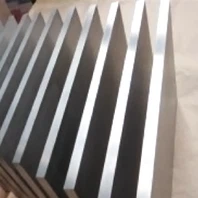
ASTM A537 is a standard specification for pressure vessel plates, heat - treated, carbon - manganese - silicon steel. This material is commonly used in the construction of pressure vessels, storage tanks, and other equipment that operate under pressure and may be exposed to relatively high temperatures.
The creep resistance of ASTM A537 is influenced by several factors. Firstly, its chemical composition plays a vital role. The carbon, manganese, and silicon content in ASTM A537 are carefully controlled to provide a balance of strength and ductility. Carbon helps to increase the strength of the steel, while manganese improves hardenability and toughness. Silicon acts as a deoxidizer and also contributes to the strength of the material. These elements work together to form a microstructure that can withstand the effects of creep.
Secondly, the heat treatment process has a significant impact on the creep resistance of ASTM A537. Heat treatment, such as normalizing and tempering, is used to refine the grain structure of the steel. A fine - grained microstructure provides more grain boundaries, which act as barriers to the movement of dislocations (defects in the crystal lattice of the material). Since creep deformation often occurs through the movement of dislocations, a fine - grained microstructure can effectively impede this process and enhance the creep resistance of the material.


In practical applications, ASTM A537 has shown good creep resistance in the temperature range typically encountered in pressure vessel operations. For example, in a power plant's steam - generating pressure vessels, ASTM A537 plates can maintain their structural integrity over long - term operation at temperatures up to a certain limit. However, it's important to note that the creep resistance of ASTM A537 decreases as the temperature increases. At extremely high temperatures, the material may experience accelerated creep, which could lead to premature failure if not properly accounted for in the design.
Comparison with Other Related Materials
When comparing the creep resistance of ASTM A537 with other materials commonly used in pressure vessel applications, such as ASTM A537CL2 SA285GrB, SA516GR70, and P275NL1, several differences can be observed.
- ASTM A537CL2 SA285GrB: SA285GrB is a carbon steel plate used for general applications in pressure vessels. Compared to ASTM A537, SA285GrB generally has lower creep resistance. This is mainly because ASTM A537 undergoes more specific heat treatment processes and has a more optimized chemical composition for high - temperature and high - stress applications. SA285GrB is more suitable for applications where the operating temperature and stress are relatively low.
- SA516GR70: SA516GR70 is another popular material for pressure vessels, especially those used in the storage of liquid gases. It has good notch toughness and is suitable for low - temperature applications. In terms of creep resistance, SA516GR70 and ASTM A537 are comparable in the medium - temperature range. However, ASTM A537 may have an edge at slightly higher temperatures due to its heat - treated microstructure and chemical composition.
- P275NL1: P275NL1 is a normalized fine - grain steel used in pressure vessel construction. It has good weldability and low - temperature toughness. When it comes to creep resistance, ASTM A537 is often more suitable for high - temperature applications. P275NL1 is designed more for applications where low - temperature performance and ease of fabrication are the main concerns.
Importance of Creep Resistance in ASTM A537 Applications
The creep resistance of ASTM A537 is of utmost importance in its applications. In pressure vessel design, engineers must consider the long - term behavior of the material under operating conditions. A pressure vessel may be expected to operate for decades, and any creep - induced deformation can lead to a reduction in the vessel's wall thickness, which in turn can compromise its safety and performance.
For example, in a petrochemical refinery, a pressure vessel storing high - pressure and high - temperature chemicals must maintain its shape and integrity to prevent leaks and potential disasters. The good creep resistance of ASTM A537 ensures that the vessel can withstand the continuous stress and temperature variations over its service life.
Moreover, in the construction of storage tanks for liquefied natural gas (LNG), where the tanks may be exposed to temperature fluctuations during filling and emptying processes, the creep resistance of ASTM A537 helps to prevent the formation of cracks and other structural defects. This is crucial for ensuring the safe storage and transportation of LNG.
Factors Affecting Creep Resistance Testing
When testing the creep resistance of ASTM A537, several factors need to be carefully considered. The test temperature and stress level must accurately represent the actual operating conditions of the material. A small deviation in the test temperature can significantly affect the creep rate. Additionally, the duration of the test is also important. Creep is a time - dependent phenomenon, and a short - term test may not accurately reflect the long - term creep behavior of the material.
The sample preparation for creep testing is also critical. The sample should be representative of the actual material used in the application, and its surface finish and dimensions should be carefully controlled. Any defects or irregularities in the sample can influence the test results.
Conclusion and Call to Action
In conclusion, the creep resistance of ASTM A537 is a key property that makes it a suitable material for pressure vessel and related applications. Its chemical composition and heat treatment processes contribute to its ability to resist creep deformation under high - temperature and high - stress conditions. Compared to other materials like ASTM A537CL2 SA285GrB, SA516GR70, and P275NL1, ASTM A537 often offers better performance in high - temperature applications.
If you are in the market for high - quality ASTM A537 materials for your pressure vessel or storage tank projects, we are here to provide you with the best products. Our ASTM A537 plates are carefully manufactured to meet the highest industry standards, ensuring excellent creep resistance and overall performance. We understand the importance of choosing the right material for your specific application, and our team of experts can assist you in making the best decision. If you have any questions or would like to discuss your procurement needs, please feel free to reach out to us for a detailed consultation.
References
- ASTM International. "ASTM A537/A537M - 20 Standard Specification for Pressure Vessel Plates, Heat - Treated, Carbon - Manganese - Silicon Steel."
- ASME Boiler and Pressure Vessel Code.
- "Creep of Engineering Materials" by D. Hull and T. H. Courtney.