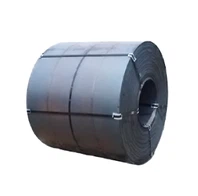
The coefficient of thermal expansion (CTE) is a vital property when it comes to pipeline materials, especially for Pipeline Plate X60. As a well - established supplier of Pipeline Plate X60, I am frequently asked about this critical parameter. In this blog, I will provide in - depth information about the coefficient of thermal expansion of Pipeline Plate X60, its significance in pipeline construction, and how it compares to other pipeline plates.
Understanding the Coefficient of Thermal Expansion
The coefficient of thermal expansion is defined as the fractional change in length or volume of a material per degree change in temperature. For linear expansion, the formula for the change in length $\Delta L$ of a material is given by $\Delta L = L_0\alpha\Delta T$, where $L_0$ is the original length, $\alpha$ is the linear coefficient of thermal expansion, and $\Delta T$ is the change in temperature.
For Pipeline Plate X60, the linear coefficient of thermal expansion typically lies in the range of approximately $11 - 13\times10^{- 6}\ ^{\circ}C^{-1}$ at room temperature. This value can vary slightly depending on factors such as the exact chemical composition of the plate, the manufacturing process, and the heat treatment it has undergone.
Significance of CTE in Pipeline Construction
In pipeline construction, the coefficient of thermal expansion is of utmost importance. Pipelines are often exposed to a wide range of temperatures during their service life. For example, in hot desert regions, the temperature can soar during the day, while at night, it can drop significantly. This temperature variation causes the pipeline to expand and contract.
If the CTE of the pipeline material is not properly considered, it can lead to several problems. One of the most significant issues is the development of thermal stresses. When a pipeline expands or contracts due to temperature changes and is restricted from doing so freely (e.g., by being anchored or connected to other structures), high - magnitude thermal stresses can build up. These stresses can cause deformation, cracking, or even failure of the pipeline over time.
Another aspect is the design of expansion joints. Expansion joints are used in pipelines to accommodate the thermal expansion and contraction. The design of these joints is based on the CTE of the pipeline material. A correct understanding of the CTE of Pipeline Plate X60 allows for the proper sizing and installation of expansion joints, ensuring the long - term integrity and safety of the pipeline.
Comparison with Other Pipeline Plates
Let's compare the coefficient of thermal expansion of Pipeline Plate X60 with some other commonly used pipeline plates, such as LX46 Pipe Line Plate X46, LX80, and LX42 Pipe Line Plate.
LX42 Pipe Line Plate generally has a CTE in the range of $10 - 12\times10^{-6}\ ^{\circ}C^{-1}$, which is slightly lower than that of Pipeline Plate X60. This lower CTE means that LX42 will experience less thermal expansion and contraction for the same temperature change compared to X60. However, X60 has higher strength properties, which may make it more suitable for applications where higher pressure and stress resistance are required.
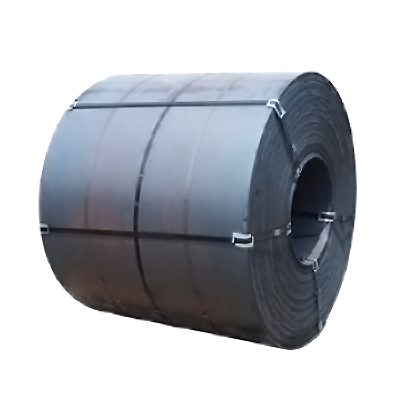
LX46 Pipe Line Plate X46 has a CTE similar to X60, often in the range of $11 - 13\times10^{-6}\ ^{\circ}C^{-1}$. This similarity in CTE can make it a viable alternative to X60 in some applications, especially when cost considerations or specific chemical composition requirements are in play.
LX80, on the other hand, has a relatively higher CTE, typically around $13 - 15\times10^{-6}\ ^{\circ}C^{-1}$. The higher CTE of LX80 means that it will expand and contract more significantly with temperature changes. Therefore, when using LX80, more careful consideration must be given to the design of the pipeline system, especially in terms of expansion joint design and stress management.
Factors Affecting the CTE of Pipeline Plate X60
The coefficient of thermal expansion of Pipeline Plate X60 can be influenced by several factors. The chemical composition is one of the primary factors. Elements such as carbon, manganese, and nickel can affect the atomic structure of the steel, thereby influencing its CTE. For example, an increase in carbon content can increase the hardness of the steel but may also have a minor impact on the CTE.
The manufacturing process also plays a role. Processes such as hot rolling and cold rolling can introduce different internal stresses and grain structures in the plate, which in turn can affect the CTE. Heat treatment processes, such as annealing, quenching, and tempering, can further modify the microstructure of the plate, leading to changes in the CTE.
Importance of Accurate CTE Data for Suppliers
As a supplier of Pipeline Plate X60, it is crucial for us to provide accurate CTE data to our customers. This data helps our customers in the design and engineering of their pipeline systems. By having precise CTE information, they can ensure the safety and reliability of their pipelines, reducing the risk of failures and costly repairs.
We conduct rigorous testing on our Pipeline Plate X60 to determine the most accurate CTE values. Our testing procedures comply with national and international standards, ensuring that the data we provide is trustworthy. We also work closely with our customers to understand their specific requirements and offer customized solutions based on the CTE and other properties of our pipeline plates.
Contact for Purchase and Collaboration
If you are in the market for high - quality Pipeline Plate X60, or if you have any questions about the coefficient of thermal expansion or other related properties, we are here to assist you. Whether you are involved in a small - scale pipeline project or a large - scale industrial application, our team of experts can provide you with the best advice and products. Feel free to reach out for more information and to start a discussion about your procurement needs.
References
- ASME B31.4: Pipeline Transportation Systems for Liquid Hydrocarbons and Other Liquids
- API 5L: Specification for Line Pipe
- ASTM A6/A6M: Standard Specification for General Requirements for Rolled Structural Steel Bars, Plates, Shapes, and Sheet Piling