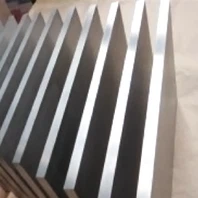
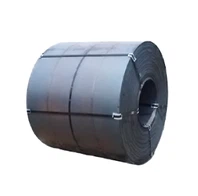
Hey there! As a supplier of plate astm a516 gr 70, I often get asked about the anisotropy of this material. So, I thought I'd write this blog to share some insights on what anisotropy is and how it relates to astm a516 gr 70 plates.
First off, let's talk about what anisotropy means. In simple terms, anisotropy refers to the property of a material having different physical properties in different directions. You can think of it like a piece of wood. Wood is stronger along the grain than across it. That's an example of anisotropy. In the case of astm a516 gr 70 plates, anisotropy can show up in various ways, such as differences in strength, ductility, and toughness depending on the direction in which you measure these properties.
Now, why does anisotropy matter when it comes to astm a516 gr 70 plates? Well, these plates are commonly used in the construction of pressure vessels, boilers, and other critical applications where the integrity of the material is super important. If the plate has significant anisotropy, it can affect how the vessel or structure performs under different loading conditions. For instance, if you're designing a pressure vessel and you don't take into account the anisotropy of the astm a516 gr 70 plate, you might end up with a vessel that has weak spots in certain directions, which could lead to failure.


There are a few factors that can cause anisotropy in astm a516 gr 70 plates. One of the main factors is the manufacturing process. During the rolling process, the grains in the steel are elongated in the rolling direction. This causes the material to have different properties in the rolling direction compared to the transverse direction. The rolling reduction ratio, which is the ratio of the initial thickness to the final thickness of the plate during rolling, also plays a role. A higher rolling reduction ratio can lead to more pronounced anisotropy.
Another factor is the composition of the steel. The presence of certain elements and their distribution in the steel can affect the formation and growth of grains, which in turn can influence anisotropy. For example, elements like sulfur and phosphorus can have a negative impact on the anisotropy of the steel if they are not properly controlled.
So, how can we measure and evaluate the anisotropy of astm a516 gr 70 plates? There are several methods available. One common method is to perform mechanical tests in different directions. Tensile tests are often used to measure the strength and ductility of the material in the rolling and transverse directions. By comparing the results of these tests, we can get an idea of the degree of anisotropy. Impact tests, such as the Charpy V-notch test, can also be used to evaluate the toughness of the material in different directions.
As a supplier, we take anisotropy seriously. We make sure to work closely with our manufacturing partners to control the manufacturing process and ensure that the astm a516 gr 70 plates we supply have acceptable levels of anisotropy. We also provide detailed test reports to our customers, so they can have a clear understanding of the properties of the plates they are purchasing.
If you're in the market for high - quality astm a516 gr 70 plates, you might also be interested in other related materials like astm a537 16Mo3 and SA285GrC A387GR11CL2. These materials are also widely used in pressure vessel and boiler applications and have their own unique properties.
Of course, SA516GR70 remains a top choice for many customers due to its excellent combination of strength, toughness, and weldability. Whether you're a small - scale fabricator or a large industrial company, we can supply you with the right astm a516 gr 70 plates for your specific needs.
If you have any questions about the anisotropy of astm a516 gr 70 plates or if you're interested in purchasing our products, don't hesitate to reach out. We're here to help you make the best choice for your project. We can provide you with more information, samples, and competitive quotes. Let's start a conversation and see how we can work together to meet your requirements.
References
- ASTM International standards for astm a516 gr 70 plates
- Research papers on the anisotropy of steel materials in pressure vessel applications
- Industry reports on the manufacturing and quality control of pressure vessel plates