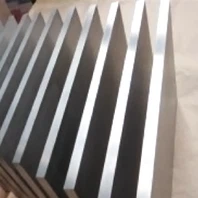
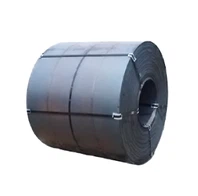
Hey there! I'm a supplier of heavy plates, and today I wanna chat about the mechanical properties of these bad boys. Heavy plates are used in a whole bunch of industries, from construction to manufacturing, and understanding their mechanical properties is super important for getting the right plate for the job.
Let's start with one of the most basic but crucial properties: strength. Strength refers to a material's ability to withstand an applied load without breaking or deforming. There are different types of strength we look at when it comes to heavy plates. Tensile strength is the maximum stress a plate can handle when being pulled apart. It's a key factor, especially in applications where the plate will be under tension, like in bridges or some types of machinery.

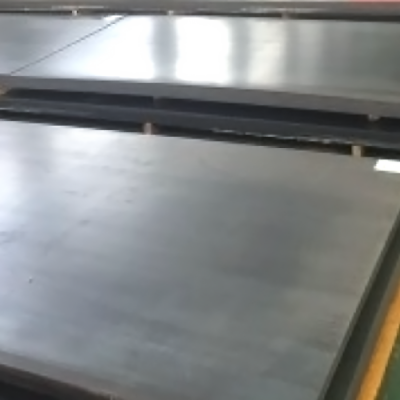
Another important strength measure is yield strength. This is the stress at which a material begins to deform plastically. Once a plate reaches its yield strength, it won't return to its original shape when the load is removed. In many engineering designs, we aim to keep the stress on the plate below its yield strength to ensure long - term durability.
Ductility is also a big deal. Ductility is the ability of a material to be stretched or deformed without breaking. A highly ductile heavy plate can be bent, formed, or drawn into different shapes during the manufacturing process. This is essential in industries where the plate needs to be fabricated into complex structures. For example, in shipbuilding, ductile heavy plates can be shaped to fit the hull's contours.
Hardness is yet another property that matters. Hardness is a measure of a material's resistance to indentation, scratching, or abrasion. A hard heavy plate can resist wear and tear better, making it suitable for applications where it will come into contact with rough surfaces or abrasive materials. For instance, in mining equipment, hard heavy plates are used to withstand the harsh conditions.
Now, let's talk about some specific heavy plate grades and their mechanical properties.
One popular grade is SM570. You can find more details about it SM570. SM570 is a low - alloy steel plate. It has a relatively high tensile strength, which makes it suitable for use in high - stress structures. Its yield strength is also quite good, allowing it to handle significant loads without excessive deformation. In terms of ductility, it can be formed to a certain extent, which is useful in construction projects where custom - shaped components are required.
Another well - known grade is SM490B. Check out SM490B for more information. SM490B has good overall mechanical properties. It offers a good balance between strength and ductility. Its strength makes it suitable for general structural applications, while its ductility allows for easy fabrication. It's often used in buildings, bridges, and other infrastructure projects.
The A633GRD Low Alloy Steel Plate, as detailed in A633GRD Low Alloy Steel Plate, is also a great option. This plate has excellent toughness, which means it can absorb energy without fracturing. This is crucial in applications where the plate may be subjected to impact loads, like in some types of industrial machinery or offshore structures.
The chemical composition of a heavy plate also plays a huge role in determining its mechanical properties. For example, elements like carbon, manganese, and silicon can affect the strength, hardness, and ductility of the plate. A higher carbon content generally increases the strength and hardness but may reduce the ductility. Manganese can improve the hardenability and strength of the steel, while silicon helps with deoxidation and can enhance the strength as well.
The manufacturing process of heavy plates can also impact their mechanical properties. Rolling, heat treatment, and other processes can be adjusted to achieve the desired properties. For example, a controlled rolling process can refine the grain structure of the steel, leading to improved strength and toughness. Heat treatment, such as quenching and tempering, can also be used to enhance the hardness and strength of the plate.
When it comes to choosing the right heavy plate for your project, you need to consider the specific requirements of the application. If you need a plate for a high - stress structure, you'll want to focus on high - strength grades like SM570. For applications where easy fabrication is key, a more ductile grade like SM490B might be a better choice. And if your project involves impact loads, then a tough plate like A633GRD could be the way to go.
As a heavy plate supplier, I've seen firsthand how important it is to match the right plate with the right application. I've worked with many customers, from small - scale manufacturers to large construction companies, and helped them find the perfect heavy plate for their needs. Whether you're building a small shed or a large - scale industrial complex, getting the mechanical properties right is essential for the success and safety of your project.
If you're in the market for heavy plates and need some advice on which grade is best for your application, don't hesitate to reach out. I'm here to help you understand the mechanical properties of different heavy plates and make an informed decision. Whether you need a single plate for a prototype or a large quantity for a major project, I can provide you with high - quality heavy plates at competitive prices.
Contact me to start the procurement process and let's get your project on the right track.
References
- "Steel Plates: Properties, Applications, and Selection" by an industry expert.
- Various technical manuals from steel manufacturers on heavy plate properties.