Forging is a crucial manufacturing process that can significantly enhance the mechanical properties of metals. As a reliable supplier of A387GR11CL2 steel, I often receive inquiries about the forging parameters for this specific grade. In this blog post, I'll delve into the key forging parameters for A387GR11CL2 and explain how they impact the final product quality.

Understanding A387GR11CL2
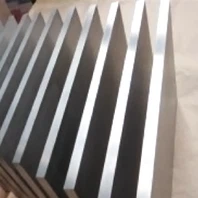
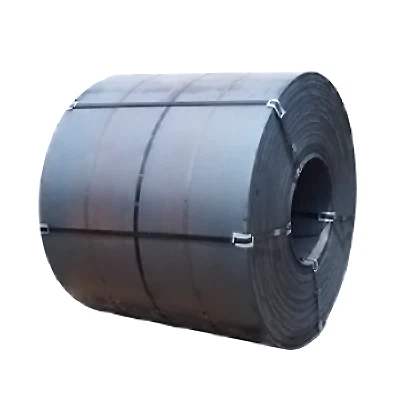
A387GR11CL2 is a chromium-molybdenum alloy steel plate used primarily for pressure vessels in high-temperature service. It offers excellent creep resistance, good notch toughness, and is suitable for applications in industries such as petrochemical, power generation, and refineries. The “GR11” indicates the grade with 1.25% chromium and 0.5% molybdenum, while “CL2” refers to the class with a specified heat treatment condition.
Key Forging Parameters
1. Pre - heating
Pre - heating is the first step in the forging process of A387GR11CL2. It helps to reduce thermal stress during subsequent heating and forging operations, preventing cracking and improving the material's formability.
- Temperature Range: The recommended pre - heating temperature for A387GR11CL2 is typically between 300°C - 400°C (572°F - 752°F). This temperature range allows the material to gradually reach a state where it can withstand the rapid heating in the next stage without significant thermal shock.
- Holding Time: The holding time at the pre - heating temperature depends on the thickness of the workpiece. Generally, a holding time of about 1 hour per 25 mm (1 inch) of thickness is appropriate. For example, if the workpiece is 50 mm (2 inches) thick, a holding time of about 2 hours is recommended.
2. Heating
After pre - heating, the A387GR11CL2 workpiece needs to be heated to the forging temperature.
- Forging Temperature Range: The optimal forging temperature range for A387GR11CL2 is between 1000°C - 1150°C (1832°F - 2102°F). Within this range, the material has sufficient plasticity and low flow stress, which makes it easier to deform during forging. Heating the material to this temperature range also promotes the recrystallization of the grains, which can refine the microstructure and improve the mechanical properties of the final product.
- Heating Rate: A moderate heating rate is crucial. A too - fast heating rate can cause uneven temperature distribution within the workpiece, leading to thermal stress and potential cracking. A heating rate of about 100°C - 150°C per hour (180°F - 270°F per hour) is generally recommended.
- Holding Time at Forging Temperature: Similar to pre - heating, the holding time at the forging temperature is related to the thickness of the workpiece. A holding time of about 0.5 - 1 hour per 25 mm (1 inch) of thickness is usually sufficient to ensure uniform temperature distribution throughout the workpiece.
3. Forging Ratio
The forging ratio is defined as the ratio of the cross - sectional area of the original workpiece to the cross - sectional area of the forged part. It is an important parameter that affects the mechanical properties of the A387GR11CL2 forging.
- Recommended Forging Ratio: A forging ratio of at least 3:1 is generally recommended for A387GR11CL2. A higher forging ratio can break up the original cast structure, refine the grains, and improve the material's density and mechanical properties, such as strength and toughness. However, an excessively high forging ratio may lead to increased energy consumption and longer forging times.
4. Cooling
Proper cooling after forging is essential to obtain the desired microstructure and mechanical properties of A387GR11CL2.
- Controlled Cooling: After forging, the workpiece should be cooled at a controlled rate. Air cooling is a common method for A387GR11CL2. Cooling in still air can help to avoid the formation of martensite, which is a hard and brittle phase that can reduce the toughness of the material.
- Post - Forging Heat Treatment: In some cases, a post - forging heat treatment such as normalizing and tempering may be required. Normalizing at a temperature of about 900°C - 950°C (1652°F - 1742°F) followed by tempering at 650°C - 700°C (1202°F - 1292°F) can further improve the material's mechanical properties and relieve internal stresses.
Impact of Forging Parameters on Product Quality
The forging parameters described above have a direct impact on the quality of the A387GR11CL2 forgings.
- Mechanical Properties: Proper pre - heating, heating, and forging ratios can refine the grain structure of A387GR11CL2, resulting in improved strength, toughness, and ductility. For example, a well - forged A387GR11CL2 part with the right forging ratio and heat treatment can have a higher yield strength and better impact resistance compared to a poorly forged one.
- Microstructure: The forging temperature and cooling rate determine the final microstructure of the material. A correct forging temperature range promotes recrystallization, while controlled cooling helps to form a uniform and fine - grained microstructure, which is essential for the long - term performance of the pressure vessel components made from A387GR11CL2.
- Defects: Incorrect forging parameters can lead to various defects. For instance, if the pre - heating temperature is too low or the heating rate is too fast, cracking may occur during forging. Insufficient forging ratio may result in an incomplete breakdown of the cast structure, leading to inhomogeneous mechanical properties.
Comparison with Other Pressure Vessel Steels
When it comes to pressure vessel steels, A387GR11CL2 is often compared with other grades such as SA285GrC A387GR11CL2, P275NL1, and SA516GR70.
- SA285GrC: SA285GrC is a carbon steel used for lower - temperature pressure vessel applications. Compared to A387GR11CL2, it has lower strength and creep resistance at high temperatures. The forging parameters for SA285GrC are also different, with a lower forging temperature range and less strict requirements for pre - heating and post - forging heat treatment.
- P275NL1: P275NL1 is a normalized fine - grain steel for welded pressure vessels. It has good weldability and toughness at low temperatures. The forging process of P275NL1 may require different cooling rates and heat treatment conditions compared to A387GR11CL2, especially considering its application in low - temperature environments.
- SA516GR70: SA516GR70 is a carbon steel widely used in moderate - temperature pressure vessel applications. It has good notch toughness and is suitable for welded structures. The forging parameters for SA516GR70 are generally less complex than those for A387GR11CL2, as it does not contain alloying elements like chromium and molybdenum.
Conclusion
As a supplier of A387GR11CL2, I understand the importance of proper forging parameters in producing high - quality pressure vessel components. By carefully controlling the pre - heating, heating, forging ratio, and cooling processes, we can ensure that the A387GR11CL2 forgings meet the strict requirements of various industries. If you are in the market for A387GR11CL2 or have questions about its forging process, I encourage you to contact me for further discussion and potential procurement. Whether you need small - scale or large - scale orders, I am committed to providing you with the best quality products and professional technical support.
References
- ASME Boiler and Pressure Vessel Code, Section II, Part A - Ferrous Material Specifications
- ASTM A387/A387M - 19 Standard Specification for Pressure Vessel Plates, Alloy Steel, Chromium - Molybdenum