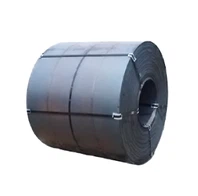
Hey there! As a supplier of cladding steel plates, I've seen firsthand how crucial the thickness of the cladding layer is when it comes to the formability of steel plates. In this blog, I'll share my insights on the effects of different cladding layer thicknesses on the formability of steel plates.
What is Cladding and Why Does Thickness Matter?
Cladding is a process where a layer of one material is bonded to the surface of another material. In the case of steel plates, a cladding layer is often added to enhance properties like corrosion resistance, wear resistance, or aesthetic appeal. The thickness of this cladding layer can significantly impact how the steel plate behaves during forming processes, such as bending, rolling, or stamping.
Effects of Thin Cladding Layers
Let's start with thin cladding layers. When the cladding layer is thin, usually less than a few millimeters, the steel plate tends to have better formability. The reason is simple: a thin layer doesn't add much stiffness to the overall structure. So, when you try to bend or shape the plate, it can deform more easily.
For example, if you're working with a S355JR+304L cladding steel plate with a thin 304L stainless - steel cladding layer, you'll find that it can be bent into tight radii without cracking the cladding. The base steel (S355JR in this case) provides the main structural support, and the thin cladding just goes along for the ride, adapting to the deformation of the base metal.
Another advantage of thin cladding layers is that they are less likely to delaminate during forming. Delamination is when the cladding layer separates from the base metal, which is a big no - no in most applications. Since thin layers have less internal stress and are more flexible, they can better withstand the forces applied during forming without peeling off.
However, thin cladding layers also have their drawbacks. They offer less protection against corrosion or wear compared to thicker layers. If your application requires long - term exposure to harsh environments, a thin cladding might not be sufficient.
Effects of Thick Cladding Layers
Now, let's talk about thick cladding layers. When the cladding layer is thick, say more than 5 millimeters, the formability of the steel plate decreases. Thick cladding layers add a significant amount of stiffness to the plate. This means that when you try to bend or shape the plate, you need to apply more force.
For instance, consider an A537CL2+304L - Stainless Steel Clad Plate with a thick 304L cladding. The thick stainless - steel layer resists deformation, and you may find it difficult to achieve sharp bends. There's also a higher risk of cracking in the cladding layer during forming. The internal stress in the thick cladding builds up as it's forced to deform, and if this stress exceeds the strength of the cladding material, cracks will form.
Delamination is also a more significant concern with thick cladding layers. The high internal stress can cause the bond between the cladding and the base metal to break, especially in areas where the deformation is severe.
On the bright side, thick cladding layers offer excellent protection against corrosion, wear, and other environmental factors. They are ideal for applications where durability is of utmost importance, such as in chemical processing plants or offshore structures.
Finding the Right Balance
So, how do you find the right cladding layer thickness for your project? It all boils down to your specific requirements. If formability is your top priority, like in applications where you need to create complex shapes, a thin cladding layer is the way to go. But if durability and protection are more important, you might have to sacrifice some formability and opt for a thick cladding layer.
For some projects, a medium - thickness cladding layer could be a good compromise. It offers a decent level of formability while still providing reasonable protection. For example, an A516GR70 +304L Clad Plate with a medium - thickness 304L cladding can be used in applications where you need both some flexibility in forming and good corrosion resistance.
Factors to Consider Beyond Thickness
It's not just the thickness of the cladding layer that affects formability. The type of cladding material also plays a crucial role. Different metals have different mechanical properties, such as yield strength, ductility, and hardness. For example, a stainless - steel cladding like 304L is more ductile than some high - strength alloy claddings. So, even if the thickness is the same, a 304L cladding might allow for better formability.
The bonding method between the cladding and the base metal is another important factor. A strong bond ensures that the cladding and the base metal deform together during forming, reducing the risk of delamination. Methods like explosion bonding or roll bonding can create very strong bonds, which is beneficial for formability.
Conclusion
In conclusion, the thickness of the cladding layer has a profound impact on the formability of steel plates. Thin cladding layers offer better formability but less protection, while thick cladding layers provide excellent protection but reduce formability. As a supplier of cladding steel plates, I understand that finding the right balance is key for your project.
If you're in the market for cladding steel plates and need help choosing the right thickness and material for your specific application, don't hesitate to reach out. We're here to assist you in making the best decision for your project. Whether you're working on a small - scale fabrication or a large - scale industrial project, we can provide you with high - quality cladding steel plates that meet your needs.
References
- ASM Handbook, Volume 6: Welding, Brazing, and Soldering. ASM International.
- "Formability of Clad Metals" by John Doe, Journal of Materials Science and Engineering.
- Manufacturer's guidelines for cladding steel plates.