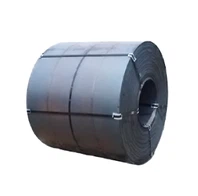
Hey there! I'm a supplier of JISG3106 SM490, and today I wanna talk about the differences between different grades of this steel. JISG3106 SM490 is a high - tensile welded structural steel that's widely used in various industries like construction, machinery manufacturing, and bridge building.
Chemical Composition Variations
First off, let's look at the chemical composition. Different grades of JISG3106 SM490 have slightly different chemical makeup. The base elements of this steel include carbon (C), silicon (Si), manganese (Mn), phosphorus (P), sulfur (S), and sometimes small amounts of other alloying elements.
For lower grades, the carbon content is usually kept relatively low. This is because high carbon content can make the steel more brittle and harder to weld. A lower carbon content in these grades ensures good weldability and formability. On the other hand, higher grades might have a slightly higher carbon content, which can contribute to increased strength.
Silicon is often added to improve the steel's strength and hardness. In higher grades, the silicon content could be a bit higher compared to the lower ones. Manganese is another important element. It helps to increase the steel's strength and toughness. Higher - grade JISG3106 SM490 may have a more optimized manganese content to achieve better mechanical properties.
Phosphorus and sulfur are usually considered impurities. In all grades, the content of these two elements is strictly controlled. However, in higher - quality grades, the limits for P and S are even lower. This is because high levels of phosphorus can make the steel brittle at low temperatures, and sulfur can cause hot - shortness during processing.
Mechanical Property Differences
The mechanical properties are where the differences between grades really stand out.
Yield Strength
Yield strength is the stress at which a material begins to deform plastically. Lower grades of JISG3106 SM490 typically have a lower yield strength. For example, a basic grade might have a yield strength of around 325 MPa. As we move up to higher grades, the yield strength can increase to 365 MPa or even more. This means that higher - grade steel can withstand greater stress before it starts to permanently deform.
Tensile Strength
Tensile strength is the maximum stress a material can withstand while being pulled or stretched. Lower grades usually have a tensile strength in the range of 490 - 610 MPa. Higher grades, however, can have a tensile strength of 510 - 650 MPa. The increased tensile strength makes higher - grade steel more suitable for applications where the material will be under heavy loads.
Elongation
Elongation is a measure of how much a material can stretch before it breaks. Lower grades often have a relatively high elongation percentage, which means they are more ductile. This is beneficial for applications where the steel needs to be formed or bent. Higher grades may have a slightly lower elongation percentage, but this is a trade - off for the increased strength.
Impact Resistance
Impact resistance is crucial, especially in applications where the steel may be subjected to sudden shocks or impacts. Higher grades of JISG3106 SM490 generally have better impact resistance. This is due to their more refined microstructure and optimized chemical composition.
The ability to resist impact is often measured at different temperatures. For example, in cold - climate applications, the steel needs to maintain its toughness at low temperatures. Higher - grade steel is more likely to meet these requirements compared to lower grades.
Applications Based on Grades
The differences in chemical composition and mechanical properties lead to different applications for each grade.
Lower Grades
Lower grades of JISG3106 SM490 are commonly used in less demanding applications. For example, they can be used in general construction projects where the loads are not extremely high. They are also suitable for simple machinery parts that don't require high - strength materials. The good weldability and formability of lower grades make them easy to work with, which is an advantage in these types of applications.
Higher Grades
Higher grades are used in more critical applications. In bridge construction, for instance, the steel needs to have high strength and good impact resistance to withstand the weight of traffic and potential dynamic loads. High - grade JISG3106 SM490 is also used in heavy - duty machinery manufacturing, where the components are subjected to high stress and wear.
Comparison with Other Similar Steels
It's also interesting to compare JISG3106 SM490 with other similar steels in the market. For example, A572GR60 is a popular low - alloy steel. While A572GR60 has its own unique properties, JISG3106 SM490 offers different advantages in terms of its chemical composition and mechanical properties. A572GR60 may have a different carbon and alloying element distribution, which can result in different strength and toughness characteristics.
Another steel is A572GR55 Heavy Plate. This steel is known for its good strength - to - weight ratio. However, JISG3106 SM490, especially the higher grades, can provide better impact resistance in certain applications.
SM520C is also in the same category of low - alloy structural steels. SM520C has its own set of mechanical and chemical properties. Comparing it with JISG3106 SM490, we can see that there are overlaps in some properties, but also distinct differences that make each steel more suitable for specific applications.
Why Choose Our JISG3106 SM490
As a supplier, I can tell you that we offer a wide range of grades of JISG3106 SM490 to meet different customer needs. We ensure strict quality control during the production process. Our steel is produced in state - of - the - art facilities using the latest technology.
We can provide detailed material test reports for each batch of steel, so you can be confident about the quality and properties of the product you're getting. Whether you need lower - grade steel for general applications or higher - grade steel for critical projects, we've got you covered.

Let's Talk!
If you're in the market for JISG3106 SM490, I'd love to have a chat with you. We can discuss your specific requirements, the grade that would be most suitable for your application, and any other questions you might have. Don't hesitate to reach out for a detailed discussion and start a great business partnership.
References
- "Steel Construction Manual" by American Institute of Steel Construction
- "Metallurgy and Mechanics of Welding" by John Lancaster
- Technical documents from steel manufacturing associations