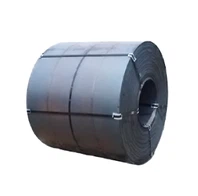
Selecting the appropriate filler metal for A387 steel plate welding is a critical decision that significantly impacts the quality, performance, and safety of the welded joints. As a supplier of A387 steel plates, I understand the importance of this choice and am here to guide you through the process.
Understanding A387 Steel Plate
A387 steel plates are widely used in high - temperature pressure vessel applications due to their excellent creep resistance and high - temperature strength. These plates come in various grades, each with specific chemical compositions and mechanical properties. For instance, different grades of A387 steel have different amounts of alloying elements such as chromium and molybdenum, which enhance their performance at elevated temperatures.
Factors to Consider When Selecting Filler Metal
Chemical Compatibility
The chemical composition of the filler metal should be compatible with that of the A387 steel plate. This ensures that the welded joint has similar mechanical and chemical properties as the base metal. For example, if the A387 steel plate has a high chromium content, the filler metal should also have a comparable chromium level to maintain corrosion resistance and high - temperature strength. A mismatch in chemical composition can lead to issues such as cracking, reduced ductility, and poor corrosion resistance in the welded joint.
Mechanical Properties
The mechanical properties of the filler metal, such as tensile strength, yield strength, and impact toughness, should match or exceed those of the A387 steel plate. This is crucial for ensuring the structural integrity of the welded structure. If the filler metal has lower strength than the base metal, the welded joint may become a weak point in the structure, especially under high - stress conditions. On the other hand, if the filler metal is too strong and lacks sufficient ductility, it can cause cracking during welding or in service.
Welding Process
The welding process used also influences the choice of filler metal. Different welding processes, such as shielded metal arc welding (SMAW), gas metal arc welding (GMAW), and submerged arc welding (SAW), have different requirements for filler metal. For example, SMAW typically uses coated electrodes, while GMAW uses solid or flux - cored wires. The filler metal must be suitable for the specific welding process to achieve optimal results.

Service Conditions
The service conditions of the welded structure play a vital role in filler metal selection. If the A387 steel plate is used in a high - temperature environment, the filler metal should be able to maintain its properties at those temperatures. Similarly, if the structure is exposed to corrosive substances, the filler metal should have good corrosion resistance. For instance, in a chemical processing plant, the filler metal must resist the specific chemicals present in the environment.
Common Filler Metals for A387 Steel Plate Welding
ER80S - B2
ER80S - B2 is a commonly used filler metal for welding A387 Grade 11 steel plates. It has a similar chemical composition to the base metal, with a chromium content of around 1.25% and a molybdenum content of about 0.5%. This filler metal provides good strength and toughness at elevated temperatures, making it suitable for high - temperature pressure vessel applications.
E8018 - B2
E8018 - B2 is an electrode used in shielded metal arc welding of A387 Grade 11 steel. It offers excellent weldability and produces high - quality welds with good mechanical properties. The low - hydrogen coating of this electrode helps to reduce the risk of hydrogen - induced cracking, which is a common problem in high - strength steels.
ER90S - B3
For A387 Grade 22 steel plates, ER90S - B3 is a popular choice. It has a higher chromium and molybdenum content compared to ER80S - B2, providing better high - temperature strength and corrosion resistance. This filler metal is suitable for welding structures that operate at higher temperatures and in more demanding environments.
Case Studies
Let's consider a case where an A387 Grade 11 steel plate is used to construct a high - temperature pressure vessel. The initial choice of filler metal was a low - cost option that did not fully match the chemical composition of the base metal. After a few months of operation, cracks were detected in the welded joints. Upon investigation, it was found that the filler metal had a lower chromium content, which led to reduced corrosion resistance and high - temperature strength. The solution was to replace the filler metal with ER80S - B2, which had a more compatible chemical composition. After re - welding with the appropriate filler metal, the vessel has been operating without any issues.
Another case involves an A387 Grade 22 steel plate used in a power plant. The welding was done using a filler metal that had insufficient impact toughness. During a start - up and shut - down cycle, some of the welded joints failed due to the lack of toughness. By switching to ER90S - B3, which has better impact toughness, the problem was resolved, and the reliability of the structure was improved.
Resources for Further Information
If you are interested in other types of pressure vessel plates, you can visit the following links: SA285GrA, SA285GrC A387GR11CL2, and P335GH Pressure Plate SA516GR70. These pages provide detailed information about the specifications and applications of these plates.
Conclusion
Selecting the appropriate filler metal for A387 steel plate welding is a complex but essential task. By considering factors such as chemical compatibility, mechanical properties, welding process, and service conditions, you can ensure the quality and performance of the welded joints. As a supplier of A387 steel plates, I am committed to providing you with the necessary information and support to make the right choice. If you are in the process of planning a welding project using A387 steel plates, I encourage you to reach out for a detailed discussion about filler metal selection. We can work together to ensure that your project meets the highest standards of quality and safety.
References
- ASME Boiler and Pressure Vessel Code, Section IX - Welding and Brazing Qualifications
- AWS A5.23/A5.23M:2018 - Specification for Carbon Steel Electrodes and Rods for Gas Tungsten Arc Welding
- Manufacturer's technical data sheets for A387 steel plates and filler metals