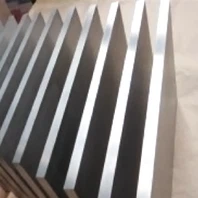
Hey there! As a pressure vessel plate supplier, I've seen firsthand how crucial it is to measure the thickness of these plates accurately. Whether you're in the construction of a large industrial pressure vessel or a smaller, specialized one, a slight deviation in plate thickness can have a significant impact on the vessel's performance and safety. In this blog, I'll share some practical ways to measure the thickness of pressure vessel plates accurately.
Why Accurate Thickness Measurement Matters
Before we dive into the measurement methods, let's talk about why it's so important to get the thickness right. Pressure vessel plates need to withstand high pressures, and the design of the vessel is based on specific plate thicknesses. If the plates are too thin, they may not be able to handle the pressure, leading to potential leaks or even catastrophic failures. On the other hand, if the plates are too thick, it can add unnecessary weight and cost to the project. So, accurate thickness measurement is key to ensuring the safety, functionality, and cost - effectiveness of the pressure vessel.
Methods for Measuring Pressure Vessel Plate Thickness
Ultrasonic Thickness Gauges
One of the most common and reliable methods is using an ultrasonic thickness gauge. These gauges work by sending ultrasonic waves through the plate. When the waves hit the back wall of the plate, they are reflected back to the gauge. The gauge then measures the time it takes for the waves to travel to the back wall and back, and based on the known speed of sound in the material, it calculates the thickness of the plate.
The advantage of ultrasonic thickness gauges is that they are non - destructive, which means you don't have to damage the plate to measure its thickness. They are also relatively easy to use, and many modern gauges can store multiple measurement readings for later analysis. However, they do require a smooth surface for accurate measurements. If the plate's surface is rough or has coatings, you may need to prepare the surface or use an appropriate coupling agent to ensure good contact between the gauge and the plate.
Calipers
Calipers are another tool that can be used for measuring the thickness of pressure vessel plates, especially for smaller plates or when you need to measure the thickness at specific points. There are two main types of calipers: vernier calipers and digital calipers. Vernier calipers use a sliding scale to measure the thickness, while digital calipers display the measurement on a digital screen, which is often more accurate and easier to read.
Calipers are handy for quick, on - the - spot measurements. But they have their limitations. They can only measure the thickness at the point where they are applied, so they may not give you a comprehensive view of the plate's thickness variation across its entire surface. Also, for large plates, it can be time - consuming to measure the thickness at multiple points using calipers.
Laser Scanning
Laser scanning is a more advanced and high - tech method for measuring the thickness of pressure vessel plates. It works by emitting a laser beam onto the plate's surface and measuring the distance between the laser scanner and the plate at multiple points. By scanning the entire surface of the plate, you can create a 3D model of the plate and accurately determine its thickness distribution.
Laser scanning is very accurate and can provide detailed information about the plate's thickness, including any local variations. It is also non - contact, which means it won't damage the plate. However, laser scanning equipment can be expensive, and it requires some technical expertise to operate and analyze the data.
Preparing for Thickness Measurement
Before you start measuring the thickness of the pressure vessel plate, there are a few things you need to do to ensure accurate results.
Surface Preparation
As I mentioned earlier, the surface of the plate needs to be in good condition for accurate measurement. If the plate has a rough surface, you can use a grinder or sandpaper to smooth it out. If there are coatings on the plate, you may need to remove them in the areas where you'll be taking measurements, especially for ultrasonic thickness gauges.
Equipment Calibration
It's essential to calibrate your measurement equipment regularly. For ultrasonic thickness gauges, you can use calibration blocks with known thicknesses to make sure the gauge is reading accurately. Calipers should also be checked and calibrated against a standard measurement tool to ensure their accuracy.
Quality Assurance and Control
Once you've measured the thickness of the pressure vessel plates, it's important to have a quality assurance and control process in place. This includes comparing the measured thickness with the specified design thickness. If there are any deviations, you need to determine if they are within the acceptable tolerance range.
You can also keep a record of all the thickness measurements. This documentation can be useful for future reference, especially if there are any issues with the pressure vessel later on. It can also help you demonstrate compliance with industry standards and regulations.
Our Pressure Vessel Plates
At our company, we supply a wide range of high - quality pressure vessel plates, including SA516GR70, P335GH, and astm a537 16Mo3. Before delivering the plates to our customers, we ensure that their thickness is measured accurately according to the highest industry standards. This way, you can be confident that the plates you receive will meet your requirements and perform reliably in your pressure vessel applications.
If you're in the market for pressure vessel plates or have questions about thickness measurement or any other related topics, don't hesitate to get in touch with us. We're here to provide you with the best products and services, and we'd love to discuss your specific needs and requirements.
Conclusion
Accurately measuring the thickness of pressure vessel plates is an essential part of ensuring the safety and performance of pressure vessels. Whether you choose ultrasonic thickness gauges, calipers, or laser scanning, make sure to prepare the surface properly and calibrate your equipment. With a reliable quality assurance and control process, you can be confident that your pressure vessel plates meet the necessary standards. And if you need high - quality pressure vessel plates, we're here to help. Just reach out to us for a consultation, and let's work together to make your project a success.

References
- "Pressure Vessel Design Manual" by John F. Harvey.
- "Nondestructive Testing Handbook" edited by Paul D. McMaster.