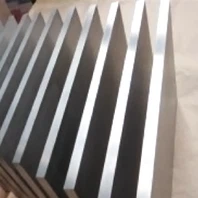
Controlling the welding quality of ASME SA516 is crucial for ensuring the safety and reliability of pressure vessels and other critical components. As a supplier of ASME SA516 steel, I understand the importance of maintaining high - quality welding processes. In this blog, I will share some key strategies and practices that can be employed to control the welding quality of ASME SA516.
1. Understanding ASME SA516
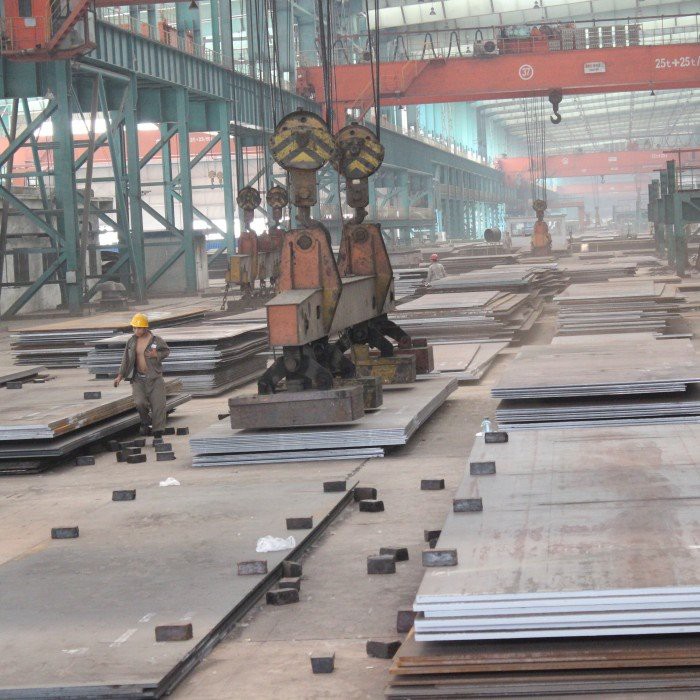
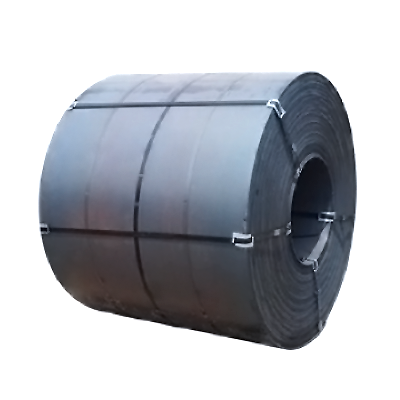
ASME SA516 is a specification for carbon steel plates used in welded pressure vessels. It is available in different grades, such as Grade 55, Grade 60, Grade 65, and Grade 70, with varying tensile and yield strength requirements. These plates are commonly used in applications where the steel needs to withstand high - pressure conditions, like in boilers, storage tanks, and heat exchangers.
2. Material Selection and Inspection
- Proper Grade Selection: The first step in controlling welding quality is to select the appropriate grade of ASME SA516 based on the specific application requirements. Factors such as operating temperature, pressure, and corrosion environment should be considered. For example, if the vessel will be operating at a relatively low temperature, a lower - grade material might be sufficient, while high - pressure applications may require a higher - grade steel.
- Material Inspection: Before welding, it is essential to thoroughly inspect the ASME SA516 plates. Check for surface defects, such as cracks, laminations, or porosity. Also, verify the chemical composition and mechanical properties of the material through proper testing methods, such as spectrographic analysis for chemical composition and tensile and impact testing for mechanical properties. This ensures that the material meets the ASME standards and is suitable for welding.
3. Welding Procedure Specification (WPS)
- Developing a WPS: A well - defined Welding Procedure Specification is the cornerstone of high - quality welding. The WPS should be developed based on the requirements of the ASME Boiler and Pressure Vessel Code. It should include details such as the welding process (e.g., shielded metal arc welding, gas metal arc welding), welding consumables, pre - heat and post - weld heat treatment requirements, welding parameters (e.g., current, voltage, travel speed), and joint design.
- Qualification of WPS: The WPS must be qualified through welding procedure qualification records (PQR). Weld test specimens are prepared according to the WPS, and then tested for mechanical properties and soundness. Only after the WPS is successfully qualified can it be used for production welding.
4. Welder Qualification
- Training and Certification: Welders performing the welding of ASME SA516 must be properly trained and certified. They should have a good understanding of the welding process, the ASME code requirements, and the specific WPS being used. Training programs should cover topics such as welding techniques, safety procedures, and quality control.
- Performance Qualification: In addition to theoretical knowledge, welders need to pass performance qualification tests. These tests involve welding test specimens under the same conditions as the production welding. The welded specimens are then examined for quality, including visual inspection, non - destructive testing (NDT), and mechanical testing. Only qualified welders should be allowed to perform the welding work.
5. Welding Environment
- Temperature and Humidity Control: The welding environment can significantly affect the quality of the weld. Extreme temperatures and high humidity can lead to problems such as hydrogen cracking, porosity, and poor fusion. It is important to control the temperature and humidity within the welding area. For example, pre - heating the base metal can help to reduce the risk of hydrogen cracking, especially in cold environments.
- Cleanliness: The welding area and the surfaces of the ASME SA516 plates must be clean. Remove any dirt, oil, rust, or paint from the joint area before welding. Contaminants can cause defects in the weld, such as inclusions and porosity.
6. Welding Process Control
- Welding Parameters: Strictly adhere to the welding parameters specified in the WPS. Deviations from the recommended current, voltage, and travel speed can result in poor weld quality. For example, too high a current can cause excessive penetration and burn - through, while too low a current can lead to lack of fusion.
- Welding Technique: The welder should use proper welding techniques. This includes maintaining a consistent arc length, angle, and travel speed. The welding bead should be smooth and uniform, without any undercutting, overlap, or irregularities.
7. Non - Destructive Testing (NDT)
- Visual Inspection: Visual inspection is the most basic form of NDT. It should be carried out during and after welding to check for obvious defects such as cracks, porosity, and improper bead shape. Visual inspection can detect surface - breaking defects and provide an initial assessment of the weld quality.
- Other NDT Methods: Depending on the application and the requirements of the ASME code, other NDT methods such as ultrasonic testing (UT), radiographic testing (RT), magnetic particle testing (MT), and liquid penetrant testing (PT) may be required. These methods can detect internal and subsurface defects in the weld, ensuring its integrity.
8. Post - Weld Heat Treatment (PWHT)
- Purpose of PWHT: Post - weld heat treatment is often necessary for ASME SA516 welds. It helps to relieve residual stresses, improve the toughness and ductility of the weld, and reduce the risk of hydrogen cracking. The PWHT process involves heating the welded component to a specific temperature and holding it for a certain period of time, followed by controlled cooling.
- Proper Execution of PWHT: The PWHT parameters, such as the heating rate, holding temperature, holding time, and cooling rate, should be carefully controlled according to the ASME code requirements. Improper PWHT can lead to adverse effects on the weld quality, such as grain growth and loss of strength.
9. Quality Assurance and Quality Control
- Quality Assurance System: Establish a comprehensive quality assurance system that covers all aspects of the welding process, from material selection to final inspection. This system should include procedures for document control, inspection and testing, corrective action, and continuous improvement.
- Quality Control Checks: Regular quality control checks should be carried out during the welding process. This includes in - process inspections, NDT, and mechanical testing. Any non - conformities should be identified and corrected immediately to prevent the production of defective welds.
10. Continuous Improvement
- Data Analysis: Collect and analyze data from the welding process, including welding parameters, inspection results, and welder performance. Use this data to identify trends and areas for improvement. For example, if a particular welding parameter is consistently causing problems, adjustments can be made to the WPS.
- Training and Development: Continuously invest in the training and development of welders and quality control personnel. Keep up with the latest advancements in welding technology and ASME code requirements to ensure that the welding quality is always at the highest level.
As a reliable supplier of ASME SA516, we are committed to providing high - quality steel plates and ensuring the best welding quality for our customers. If you are in the market for SM490A JISG3106 SM490, A572GR50 Carbon Steel Plate, or A633GRD Low Alloy Steel Plate, or have any questions about welding ASME SA516, please feel free to contact us for further discussion and procurement.
References
- ASME Boiler and Pressure Vessel Code
- Welding Handbook, American Welding Society
- Standards for Welder and Welding Operator Qualifications