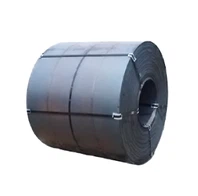
Hey there! As a supplier of abrasion steel plates, I'm super excited to take you behind the scenes and show you how these bad - ass abrasion steel plates are made. It's a fascinating process that combines science, engineering, and a whole lot of hard work.
Let's start with the basics. Abrasion steel plates are designed to withstand wear and tear in tough environments. They're used in a wide range of industries, from mining and construction to agriculture and manufacturing. Whether it's shoveling gravel, hauling heavy loads, or processing materials, these plates need to be tough as nails.
Step 1: Selecting the Right Raw Materials
The first step in making abrasion steel plates is choosing the right raw materials. We work with high - quality steel alloys that are specifically formulated to provide excellent abrasion resistance. These alloys typically contain elements like carbon, manganese, chromium, and nickel, which all play a crucial role in enhancing the plate's properties.
Carbon is one of the most important elements in steel. It increases the hardness and strength of the plate, making it more resistant to abrasion. Manganese helps to improve the steel's toughness and ductility, while chromium provides corrosion resistance and enhances the plate's wear properties. Nickel, on the other hand, improves the plate's impact resistance and toughness at low temperatures.
We source our raw materials from trusted suppliers who adhere to strict quality control standards. This ensures that we start with the best possible materials for our abrasion steel plates.
Step 2: Melting and Refining
Once we have the raw materials, it's time to melt them down. We use electric arc furnaces or basic oxygen furnaces to heat the steel to extremely high temperatures, usually around 1600°C (2912°F). This process not only melts the steel but also allows us to remove impurities and adjust the chemical composition of the alloy.
During the melting process, we carefully monitor the temperature and chemical composition of the steel to ensure that it meets our specifications. We add various alloys and fluxes to the molten steel to achieve the desired properties. After the steel has been melted and refined, it's ready to be cast into slabs.
Step 3: Casting
Casting is the process of pouring the molten steel into molds to form slabs. There are two main methods of casting: continuous casting and ingot casting.
Continuous casting is the most common method used in modern steelmaking. In this process, the molten steel is poured into a water - cooled mold, where it solidifies into a continuous strand. The strand is then cut into slabs of the desired length. Continuous casting is more efficient and produces higher - quality slabs compared to ingot casting.
Ingot casting, on the other hand, involves pouring the molten steel into individual molds to form ingots. The ingots are then reheated and rolled into slabs. While ingot casting is less common today, it's still used for some specialized applications.
Step 4: Rolling
After the slabs have been cast, they're sent to the rolling mill. Rolling is the process of reducing the thickness of the slabs and shaping them into plates.
The slabs are first reheated to a high temperature, usually around 1200°C (2192°F), to make them more malleable. They're then passed through a series of rolling stands, where they're compressed and stretched to the desired thickness and width. The rolling process can be done in either a hot - rolling or cold - rolling mill.
Hot - rolling is the most common method used for making abrasion steel plates. In hot - rolling, the slabs are rolled at high temperatures, which allows for greater deformation and better mechanical properties. Cold - rolling, on the other hand, is used for making thinner plates with a smoother surface finish.
Step 5: Heat Treatment
Heat treatment is a crucial step in the manufacturing process of abrasion steel plates. It helps to improve the plate's hardness, strength, and toughness.
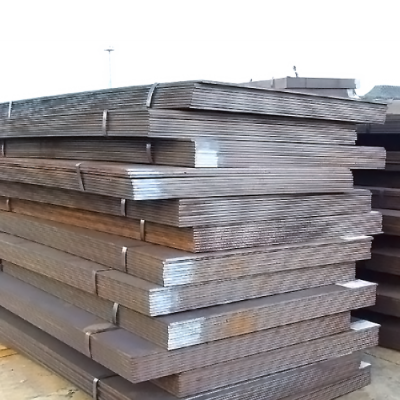

There are several types of heat treatment processes, including quenching, tempering, and annealing. Quenching involves rapidly cooling the plate from a high temperature to room temperature, which hardens the steel. Tempering is then done to relieve the internal stresses created during quenching and to improve the plate's toughness.
Annealing is a process of heating the plate to a high temperature and then slowly cooling it. This helps to soften the steel and improve its ductility.
The specific heat treatment process used depends on the type of steel alloy and the desired properties of the plate. For example, our NM360 Abrasion Resistant Plate undergoes a carefully controlled heat treatment process to achieve the optimal balance of hardness and toughness.
Step 6: Surface Treatment
Surface treatment is another important step in the manufacturing of abrasion steel plates. It helps to protect the plate from corrosion and further enhance its abrasion resistance.
There are several types of surface treatment processes, including painting, galvanizing, and coating. Painting is the most common method of surface treatment. It involves applying a layer of paint to the surface of the plate to protect it from the elements.
Galvanizing is a process of coating the plate with a layer of zinc to provide corrosion resistance. This is done by immersing the plate in a bath of molten zinc. Coating, on the other hand, involves applying a specialized coating to the surface of the plate to improve its abrasion resistance.
Step 7: Quality Control
Quality control is an integral part of the manufacturing process. We have a team of experienced quality control engineers who monitor every step of the process to ensure that our abrasion steel plates meet the highest standards.
We use a variety of testing methods, including ultrasonic testing, magnetic particle testing, and tensile testing, to check the quality of the plates. Ultrasonic testing is used to detect internal defects in the plate, while magnetic particle testing is used to detect surface defects. Tensile testing is used to determine the mechanical properties of the plate, such as its strength and ductility.
We also conduct hardness testing to ensure that the plates have the desired hardness. Our quality control standards are so strict that we reject any plates that don't meet our specifications.
Different Grades of Abrasion Steel Plates
We offer a wide range of abrasion steel plates, including NM360 Abrasion Resistant Plate, NM550, and NM600 Abrasion Steel Plate.
The NM360 is a popular choice for applications where moderate abrasion resistance is required. It has a hardness of around 320 - 390 HBW and is suitable for use in industries such as mining, construction, and agriculture.
The NM550, on the other hand, is a high - performance abrasion steel plate with a hardness of around 500 - 560 HBW. It's designed for applications where high - level abrasion resistance is needed, such as in heavy - duty mining equipment and crushers.
The NM600 is our top - of - the - line abrasion steel plate. It has a hardness of around 570 - 630 HBW and is used in the most demanding applications, such as in the manufacturing of earth - moving equipment and high - wear components.
Why Choose Our Abrasion Steel Plates
There are several reasons why you should choose our abrasion steel plates. Firstly, we use the highest - quality raw materials and state - of - the - art manufacturing processes to ensure that our plates are of the highest quality.
Secondly, we have a team of experienced engineers and technicians who are dedicated to providing the best possible products and services. We can also customize our plates to meet your specific requirements.
Finally, we offer competitive prices and excellent customer service. We understand the importance of timely delivery and are committed to meeting your deadlines.
If you're in the market for abrasion steel plates, whether it's the NM360 Abrasion Resistant Plate, NM550, or NM600 Abrasion Steel Plate, don't hesitate to get in touch with us. We're here to help you find the right solution for your needs. Let's start a conversation about your procurement requirements and see how we can work together to get you the best abrasion steel plates on the market.
References
- "The Making, Shaping and Treating of Steel", United States Steel Corporation
- "Steelmaking and Refining Processes", Open - Courseware from MIT
- "Abrasion Resistance of Steels", Journal of Materials Science and Technology