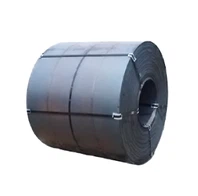
As a supplier of low alloy steel plates, I often encounter various technical inquiries from customers. One question that frequently comes up is, "What is the Poisson's ratio of low alloy steel plate?" In this blog post, I'll delve into this topic, exploring what Poisson's ratio is, how it relates to low alloy steel plates, and its significance in practical applications.
Understanding Poisson's Ratio
Poisson's ratio is a fundamental material property that describes the relationship between the transverse strain and the axial strain of a material when it is subjected to an axial load. When a material is stretched or compressed in one direction (axial direction), it will also deform in the perpendicular directions (transverse directions). Poisson's ratio, denoted by the Greek letter ν (nu), is defined as the negative ratio of the transverse strain (ε_transverse) to the axial strain (ε_axial):
ν = -ε_transverse / ε_axial
For most materials, Poisson's ratio ranges between 0 and 0.5. A value of 0 indicates that the material does not deform in the transverse direction when subjected to an axial load, while a value of 0.5 implies that the volume of the material remains constant during deformation.
Poisson's Ratio of Low Alloy Steel Plate
Low alloy steel plates are widely used in various industries due to their excellent mechanical properties, including high strength, good toughness, and weldability. The Poisson's ratio of low alloy steel typically falls within a relatively narrow range. Generally, the Poisson's ratio of low alloy steel is around 0.3.
This value is consistent across different grades of low alloy steel because the basic crystal structure and atomic bonding characteristics of low alloy steels are similar. However, it's important to note that the Poisson's ratio can be affected by factors such as the chemical composition, heat treatment, and manufacturing process of the steel plate.


Significance of Poisson's Ratio in Low Alloy Steel Plate Applications
The Poisson's ratio of low alloy steel plate plays a crucial role in many engineering applications. Here are some key areas where this property is particularly important:
Structural Design
In structural engineering, the Poisson's ratio is used to calculate the deformation and stress distribution of low alloy steel structures under load. For example, when designing a bridge or a building frame made of low alloy steel plates, engineers need to consider the transverse deformation caused by axial loads to ensure the structural integrity and safety of the design.
Material Testing and Quality Control
Poisson's ratio is one of the important parameters measured during material testing. By accurately determining the Poisson's ratio of low alloy steel plates, manufacturers can assess the quality and consistency of their products. Deviations from the expected Poisson's ratio value may indicate issues such as improper heat treatment or inhomogeneous chemical composition.
Welding and Joining
During the welding process, the Poisson's ratio affects the residual stress distribution and distortion of the welded joints. Understanding the Poisson's ratio of low alloy steel plates helps welders and engineers to optimize the welding parameters and minimize the risk of cracking and distortion in the welded structures.
Examples of Low Alloy Steel Plate Grades
There are many different grades of low alloy steel plates available in the market, each with its own unique properties and applications. Here are some common grades:
- A573GR58 Carbon Steel Plate A283GRC: This grade of low alloy steel plate is known for its good strength and toughness, making it suitable for general structural applications.
- SM520C: SM520C is a high-strength low alloy steel plate that offers excellent weldability and cold formability. It is commonly used in the construction of bridges, buildings, and heavy machinery.
- S355J2: S355J2 is a widely used low alloy steel grade with good mechanical properties and impact resistance. It is often used in the manufacturing of structural components for the automotive, shipbuilding, and energy industries.
Conclusion
In conclusion, the Poisson's ratio of low alloy steel plate is an important material property that has significant implications in various engineering applications. As a supplier of low alloy steel plates, I understand the importance of providing high-quality products with consistent material properties. By ensuring that our low alloy steel plates have the appropriate Poisson's ratio, we can help our customers to achieve reliable and efficient designs in their projects.
If you are interested in purchasing low alloy steel plates for your next project, please feel free to contact us for more information and to discuss your specific requirements. We are committed to providing you with the best products and services to meet your needs.
References
- Callister, W. D., & Rethwisch, D. G. (2012). Materials Science and Engineering: An Introduction. Wiley.
- ASM Handbook Committee. (1990). ASM Handbook Volume 1: Properties and Selection: Irons, Steels, and High-Performance Alloys. ASM International.