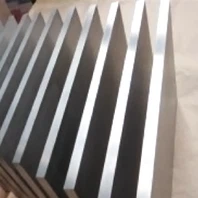
Hey there! As a supplier of JISG3106 SM490, I often get asked about the Poisson's ratio of this steel. So, I thought I'd write this blog to share what I know and clear up any confusion.
First off, let's talk about what Poisson's ratio is. In simple terms, it's a measure of how a material responds to being stretched or compressed. When you pull on a material, it gets longer in the direction you're pulling, but it also gets thinner in the directions perpendicular to the pull. Poisson's ratio is the ratio of the transverse strain (the change in thickness) to the axial strain (the change in length). It's a fundamental property of materials, and it can tell us a lot about how they'll behave under different loads.
Now, onto JISG3106 SM490. This is a type of low-alloy steel that's commonly used in construction, bridges, and other structural applications. It's known for its high strength, good weldability, and excellent toughness. But what about its Poisson's ratio?
Well, the Poisson's ratio of JISG3106 SM490 typically falls in the range of 0.27 to 0.30. This is a fairly standard range for most steels. The exact value can vary depending on a few factors, like the specific chemical composition of the steel, the manufacturing process, and the heat treatment it's undergone.
Let's break down why this range is important. A lower Poisson's ratio (closer to 0.27) means that the steel will experience less transverse contraction when it's stretched. This can be beneficial in applications where you want to minimize the change in the cross-sectional area of the material. On the other hand, a higher Poisson's ratio (closer to 0.30) indicates that the steel will contract more in the transverse direction. This might be desirable in some cases where you need the material to conform to a certain shape or fit within a specific space.
When comparing JISG3106 SM490 with other similar steels, it's interesting to look at their Poisson's ratios. For example, S355NL and S355J2 are also low-alloy structural steels. Their Poisson's ratios are generally in the same ballpark as JISG3106 SM490. However, the slight differences can have an impact on their performance in different applications.
In construction projects, understanding the Poisson's ratio of JISG3106 SM490 is crucial for accurate structural design. Engineers need to take this property into account when calculating the stresses and strains in the steel members. If they use an incorrect Poisson's ratio, it could lead to inaccurate predictions of how the structure will behave under load, which could potentially compromise its safety.
Another aspect to consider is the relationship between Poisson's ratio and other mechanical properties of JISG3106 SM490. For instance, the steel's modulus of elasticity and its yield strength can interact with the Poisson's ratio. A higher modulus of elasticity might mean that the steel is stiffer and less likely to deform under load, which could affect how the Poisson's ratio manifests in real-world applications.

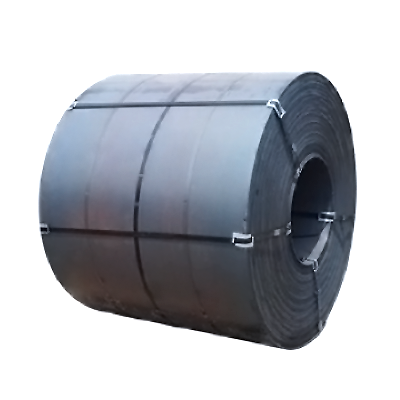
As a supplier of SM490A JISG3106 SM490, I've seen firsthand how important it is for customers to have a good understanding of these properties. When they're choosing the right steel for their project, they need to consider not only the strength and durability but also how the material will respond to different types of loading.
If you're involved in a project that requires high-quality JISG3106 SM490, I'm here to help. I can provide you with detailed information about the steel's properties, including its Poisson's ratio. I can also offer guidance on which grade of the steel would be best suited for your specific application. Whether you're building a bridge, a high-rise building, or a industrial structure, I have the expertise and the products to meet your needs.
So, if you're interested in learning more or if you're ready to start your procurement process, don't hesitate to reach out. Let's have a chat about how JISG3106 SM490 can be the perfect solution for your project.
References
- Standard Handbook for Civil Engineers, 5th Edition
- ASM Handbook, Volume 1: Properties and Selection: Irons, Steels, and High-Performance Alloys