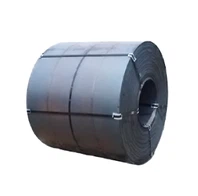
Hey there! As a supplier of high strength plates, I often get asked about the inspection methods for these bad boys. High strength plates, like S690QL1, S550QL1, and S460QL, are used in a bunch of industries, from construction to manufacturing. So, it's super important to make sure they meet the required standards. Let's dive into the different inspection methods for high strength plates.

Visual Inspection
The first and most basic inspection method is visual inspection. It's like giving the plate a good once-over with your own eyes. During visual inspection, we look for obvious defects such as cracks, scratches, dents, and surface irregularities. Cracks can significantly weaken the plate and make it prone to failure under stress. Scratches and dents, on the other hand, might not always affect the plate's strength, but they can indicate potential manufacturing issues.
We also check the plate's dimensions to make sure they match the specifications. This includes measuring the thickness, width, and length of the plate. Even a small deviation in dimensions can cause problems during installation or use. For example, if a plate is supposed to fit into a specific frame, and its width is slightly off, it might not fit properly, leading to structural instability.
Ultrasonic Testing
Ultrasonic testing is a non-destructive testing method that uses high-frequency sound waves to detect internal defects in the plate. It's like having a superpower to see inside the plate without cutting it open. In this method, an ultrasonic transducer is placed on the surface of the plate, and it sends sound waves into the material. These sound waves travel through the plate and bounce back when they encounter a defect, such as a crack or a void.
The time it takes for the sound waves to return and the intensity of the reflected waves are measured and analyzed. By comparing these measurements with known standards, we can determine the size, location, and type of the defect. Ultrasonic testing is very effective in detecting internal defects that are not visible to the naked eye, making it an essential part of the inspection process for high strength plates.
Magnetic Particle Testing
Magnetic particle testing is another non-destructive testing method that is commonly used for high strength plates. This method is based on the principle that magnetic fields are distorted by the presence of defects in ferromagnetic materials, which high strength plates usually are.
First, a magnetic field is applied to the plate. Then, fine iron particles are sprinkled on the surface of the plate. These particles are attracted to the areas where the magnetic field is distorted, which indicates the presence of a defect. The particles form a visible pattern that shows the location and shape of the defect.

Magnetic particle testing is mainly used to detect surface and near-surface defects, such as cracks. It's a relatively quick and easy method, but it can only be used on ferromagnetic materials.
Penetrant Testing
Penetrant testing is a non-destructive testing method that is used to detect surface-breaking defects in high strength plates. In this method, a liquid penetrant is applied to the surface of the plate. The penetrant seeps into any surface cracks or pores and is then removed from the surface. A developer is then applied, which draws the penetrant out of the defects and makes them visible.
Penetrant testing is very sensitive and can detect even very small surface defects. However, it can only be used to detect surface-breaking defects and not internal defects. It's also a time-consuming process, as it involves several steps of cleaning, applying the penetrant, and developing the results.
Chemical Analysis
Chemical analysis is an important part of the inspection process for high strength plates. It helps us determine the chemical composition of the plate, which is crucial for ensuring its mechanical properties. The chemical composition of a high strength plate affects its strength, toughness, and corrosion resistance.
There are several methods for chemical analysis, including spectroscopy and wet chemical analysis. Spectroscopy uses light to analyze the elements in the plate, while wet chemical analysis involves dissolving a sample of the plate in a chemical solution and analyzing the resulting solution.
By comparing the chemical composition of the plate with the required specifications, we can ensure that the plate has the right properties for its intended use. For example, if a plate is supposed to be used in a corrosive environment, it needs to have a certain amount of corrosion-resistant elements, such as chromium and nickel.

Tensile Testing
Tensile testing is a destructive testing method that is used to determine the mechanical properties of high strength plates, such as their yield strength, ultimate tensile strength, and elongation. In this method, a sample of the plate is taken and subjected to a gradually increasing tensile force until it breaks.
During the test, the load and the deformation of the sample are measured. The data is then used to calculate the mechanical properties of the plate. Tensile testing is an important part of the quality control process, as it helps us ensure that the plate meets the required strength and ductility standards.
Hardness Testing
Hardness testing is another important inspection method for high strength plates. Hardness is a measure of a material's resistance to indentation or scratching. It's an important property because it affects the plate's wear resistance, machinability, and strength.
There are several methods for hardness testing, including the Brinell, Rockwell, and Vickers methods. Each method uses a different indenter and a different load to measure the hardness of the material. By measuring the hardness of the plate, we can ensure that it has the right properties for its intended use.
Conclusion
As you can see, there are several inspection methods for high strength plates, each with its own advantages and limitations. Visual inspection is the most basic method, but it's still an important part of the process. Non-destructive testing methods, such as ultrasonic testing, magnetic particle testing, and penetrant testing, are used to detect internal and surface defects without damaging the plate. Chemical analysis, tensile testing, and hardness testing are used to determine the chemical composition and mechanical properties of the plate.
At our company, we use a combination of these inspection methods to ensure that our high strength plates, including S690QL1, S550QL1, and S460QL, meet the highest quality standards. If you're in the market for high strength plates and want to learn more about our products or have any questions about the inspection process, don't hesitate to reach out. We're always here to help and look forward to discussing your procurement needs with you.
References
- ASME Boiler and Pressure Vessel Code
- ASTM International Standards
- ISO Standards for Metallic Materials Testing