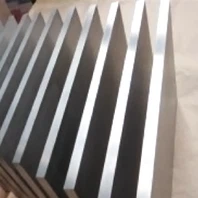
Hey there! As a supplier of A387 steel plates, I often get asked about the hardness of these plates. So, I thought I'd take a moment to break it down for you.
First off, let's talk about what A387 steel plate is. A387 steel is a chromium-molybdenum alloy steel that's commonly used in high-temperature service, like in the construction of boilers and pressure vessels. It offers good strength and toughness at elevated temperatures, which makes it a top choice in these industries.
Now, when we're talking about the hardness of A387 steel plate, it's not a one - size - fits - all answer. The hardness can vary depending on a few factors. One of the main factors is the heat treatment process. Heat treatment can significantly alter the mechanical properties of the steel, including its hardness.
For instance, if the A387 steel plate undergoes a normalizing and tempering process, it'll have a different hardness compared to one that's just been normalized. Normalizing involves heating the steel to a specific temperature and then air - cooling it. This process helps to refine the grain structure of the steel, which can enhance its strength and hardness to some extent. Tempering, on the other hand, is done after normalizing or quenching. It involves reheating the steel to a lower temperature and then cooling it at a controlled rate. Tempering can reduce the brittleness that might be introduced during the normalizing or quenching process and also adjust the hardness to a more desirable level.
Typically, the hardness of A387 steel plate is measured using the Brinell hardness test or the Rockwell hardness test. The Brinell hardness test involves pressing a hard ball of a specific diameter into the surface of the steel with a known force and then measuring the diameter of the indentation. The Rockwell hardness test, on the other hand, measures the depth of penetration of an indenter under a minor load followed by a major load.
The hardness values of A387 steel plate can fall within a certain range. Generally, the Brinell hardness number (BHN) for A387 steel plate can be anywhere from around 130 to 220, depending on the grade and the heat treatment. For example, the A387 Grade 11 steel plate after proper heat treatment might have a Brinell hardness in the range of 160 - 200. The A387 Grade 22 steel plate could have a slightly different hardness range, maybe around 170 - 220.
Another factor that can influence the hardness is the chemical composition of the steel. A387 steel contains elements like chromium, molybdenum, carbon, and others. Chromium and molybdenum are important alloying elements that contribute to the hardenability and high - temperature strength of the steel. A higher percentage of these elements can increase the hardness of the steel, but it also needs to be balanced with other elements to ensure good overall mechanical properties.
When you're choosing an A387 steel plate for your project, it's crucial to consider the required hardness based on the application. If you're building a pressure vessel that will operate at high temperatures and pressures, you'll need a steel plate with a certain level of hardness to withstand the stresses. On the other hand, if the application is less demanding, you might be able to go with a steel plate with a lower hardness.
Now, let's talk about how A387 steel plate compares to some other popular steel grades used in similar applications. For example, ASTM A537CL2 SA285GrB is another steel grade used for pressure vessels. It generally has a lower hardness compared to A387 steel plate. SA285GrB is a carbon steel, and its hardness is usually in the range of 110 - 150 Brinell hardness number. This makes it more suitable for applications where high - temperature strength and hardness aren't the primary concerns.
P335GH is another steel grade commonly used in the pressure vessel industry. It has a similar application as A387 steel plate but with different chemical composition and mechanical properties. P335GH has a hardness range that can be comparable to some grades of A387 steel plate, but again, it depends on the heat treatment and the specific requirements of the application.
SA516GR70 is also a well - known steel grade for pressure vessels. It's a carbon steel with good notch toughness and is often used in moderate - temperature applications. The hardness of SA516GR70 is typically in the range of 120 - 160 Brinell hardness number, which is generally lower than that of A387 steel plate.
As a supplier of A387 steel plate, I can provide you with steel plates of different grades and hardness levels to meet your specific needs. Whether you need a high - hardness A387 steel plate for a high - stress application or a lower - hardness one for a less demanding project, we've got you covered.
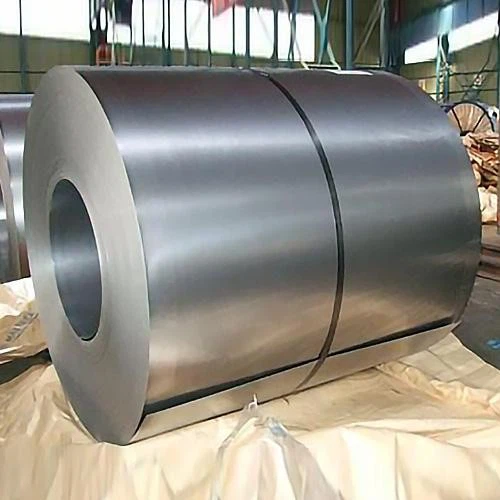

If you're in the market for A387 steel plate or have any questions about its hardness or other properties, don't hesitate to reach out. We're here to help you make the right choice for your project. Contact us for more information and to start the procurement process. We can offer you high - quality A387 steel plates at competitive prices.
References
- ASME Boiler and Pressure Vessel Code
- ASTM International Standards for Steel Plates