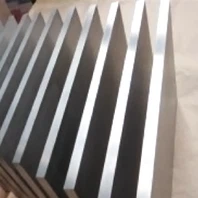
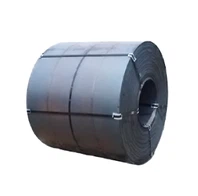
Hey there! As a supplier of A387 steel plates, I often get asked about the fatigue resistance of this material. So, I thought I'd write a blog post to share some insights on what it is and why it matters.
What is Fatigue Resistance?
First off, let's talk about what fatigue resistance means. Fatigue is the weakening of a material caused by repeated loading and unloading. Over time, these cyclic stresses can lead to cracks and eventually failure, even if the stresses are below the material's yield strength. Fatigue resistance, then, is a material's ability to withstand these cyclic loads without failing.
Why is Fatigue Resistance Important for A387 Steel Plates?
A387 steel plates are commonly used in high - temperature and pressure applications, such as in the construction of boilers, pressure vessels, and industrial furnaces. In these environments, the steel plates are subjected to repeated thermal and mechanical stresses. For example, a boiler may go through cycles of heating and cooling during normal operation, which creates thermal expansion and contraction forces on the steel.
If the A387 steel plate doesn't have good fatigue resistance, these cyclic stresses can cause cracks to form. Once a crack starts, it can propagate quickly under continued loading, leading to a catastrophic failure of the equipment. This not only results in costly repairs and downtime but can also pose a significant safety risk to workers and the surrounding environment.
Factors Affecting the Fatigue Resistance of A387 Steel Plates
Chemical Composition
The chemical composition of A387 steel plays a crucial role in its fatigue resistance. A387 steel is a chromium - molybdenum alloy steel. Chromium helps to improve the steel's corrosion resistance and oxidation resistance at high temperatures. Molybdenum, on the other hand, enhances the steel's strength and toughness, which are important for withstanding cyclic loads.
Other elements like carbon, manganese, and silicon also have an impact. Carbon provides strength, but too much carbon can make the steel brittle, reducing its fatigue resistance. Manganese helps to improve the steel's hardenability and toughness, while silicon aids in deoxidation during the steel - making process and can also contribute to the overall strength of the steel.
Heat Treatment
Heat treatment is another key factor. Proper heat treatment can refine the grain structure of the A387 steel plate. A fine - grained structure generally has better fatigue resistance compared to a coarse - grained one. For A387 steel, processes like normalizing and tempering are commonly used. Normalizing involves heating the steel to a specific temperature and then air - cooling it. This helps to relieve internal stresses and refine the grain structure. Tempering is done after normalizing or quenching to reduce the brittleness and improve the toughness of the steel.
Surface Finish
The surface finish of the A387 steel plate can also affect its fatigue resistance. A smooth surface has fewer stress concentration points compared to a rough surface. Stress concentrations can act as initiation sites for cracks under cyclic loading. So, ensuring a good surface finish through processes like machining or grinding can enhance the fatigue life of the steel plate.

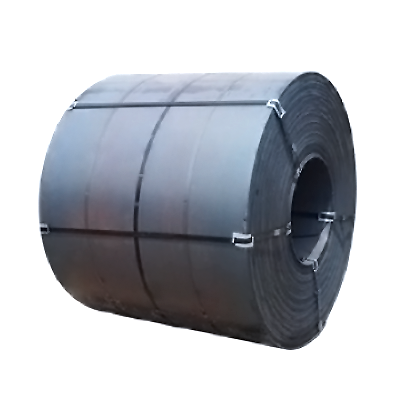
How Does A387 Compare with Other Steel Grades?
When it comes to fatigue resistance, A387 steel holds its own against other popular steel grades used in similar applications. For example, SA516GR70 is a common steel grade for pressure vessels. While SA516GR70 has good general strength and toughness, A387 steel's chromium - molybdenum alloy composition gives it an edge in high - temperature applications and better fatigue resistance under cyclic thermal and mechanical loads.
Another grade is P335GH. P335GH is also used in pressure vessels, but A387 steel's alloying elements and heat - treatment capabilities often result in superior fatigue performance, especially in more demanding high - temperature environments.
ASTM A537CL2 SA285GrB is yet another option. However, A387 steel's ability to maintain its properties at high temperatures and its better resistance to cyclic stresses make it a more suitable choice for applications where fatigue is a major concern.
Testing the Fatigue Resistance of A387 Steel Plates
To ensure that our A387 steel plates meet the required fatigue resistance standards, we conduct various tests. One common test is the fatigue test, where a specimen of the steel plate is subjected to cyclic loading until failure. The number of cycles the specimen can withstand before failing is recorded. This data helps us to determine the fatigue life of the steel under specific loading conditions.
We also perform non - destructive testing methods, such as ultrasonic testing and magnetic particle testing. These methods can detect any surface or subsurface defects in the steel plate that could potentially act as crack initiation sites and reduce the fatigue resistance.
Why Choose Our A387 Steel Plates?
As a supplier, we take pride in offering high - quality A387 steel plates with excellent fatigue resistance. We source our raw materials from reliable suppliers and follow strict manufacturing processes. Our steel plates are heat - treated to optimize their grain structure and mechanical properties.
We also have a team of experienced quality control experts who oversee every step of the production process, from the initial melting of the steel to the final inspection of the finished plates. This ensures that our A387 steel plates meet or exceed industry standards for fatigue resistance and other important properties.
Let's Talk Business
If you're in the market for A387 steel plates and are concerned about fatigue resistance, we'd love to have a chat with you. Whether you're working on a new boiler project, a pressure vessel construction, or any other application that requires high - performance steel, our team can provide you with the right solutions. Reach out to us to discuss your specific requirements and get a quote. We're here to help you make the best choice for your project.
References
- ASME Boiler and Pressure Vessel Code
- ASTM International standards for A387 steel
- Metallurgy textbooks on alloy steels and their properties