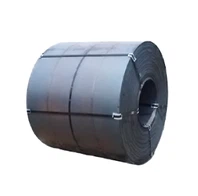
As a supplier of ASTM A514 steel, I've witnessed firsthand the industry's growing interest in understanding the intricate elements that contribute to the performance of this high-strength steel. One such element that plays a crucial role is manganese. In this blog, I'll delve into the effects of manganese in ASTM A514 steel, exploring its impact on mechanical properties, weldability, and overall quality.
Manganese in ASTM A514: An Overview
ASTM A514 is a quenched and tempered alloy steel plate designed for applications where high strength and good toughness are required. Manganese is one of the key alloying elements in ASTM A514, typically present in the range of 0.75% to 1.50%. This element is added during the steelmaking process to enhance various properties of the steel.
Impact on Mechanical Properties
Strength
Manganese is known for its ability to increase the strength of steel. In ASTM A514, manganese contributes to the formation of a fine-grained microstructure, which is essential for high strength. By promoting the formation of pearlite and bainite during cooling, manganese helps to strengthen the steel matrix. This results in improved yield strength and tensile strength, making ASTM A514 suitable for applications such as bridges, construction equipment, and offshore structures.
Toughness
In addition to strength, manganese also plays a vital role in enhancing the toughness of ASTM A514. Toughness is the ability of a material to absorb energy and deform plastically before fracturing. Manganese helps to refine the grain size of the steel, which reduces the tendency for crack initiation and propagation. This improves the impact resistance of the steel, making it more durable and reliable in harsh environments.
Hardness
Manganese can also increase the hardness of ASTM A514. By forming hard carbides and nitrides, manganese helps to strengthen the steel and improve its wear resistance. This makes ASTM A514 suitable for applications where abrasion and wear are a concern, such as mining equipment and industrial machinery.
Effect on Weldability
Weldability is an important consideration when using ASTM A514 in welded structures. Manganese can have both positive and negative effects on the weldability of the steel.
Positive Effects
Manganese can improve the weldability of ASTM A514 by reducing the risk of hot cracking. Hot cracking occurs when the weld metal solidifies and contracts, causing stresses that can lead to cracking. Manganese helps to lower the melting point of the weld metal and promotes the formation of a more ductile microstructure, which reduces the likelihood of hot cracking.
Negative Effects
However, excessive amounts of manganese can also have a negative impact on weldability. High manganese content can increase the hardenability of the steel, which can lead to the formation of martensite in the heat-affected zone (HAZ). Martensite is a hard and brittle phase that can reduce the toughness and ductility of the weld joint. To mitigate this risk, it is important to control the manganese content within the specified range and use appropriate welding procedures.
Influence on Corrosion Resistance
Corrosion resistance is another important property of ASTM A514, especially in applications where the steel is exposed to harsh environments. Manganese can have a minor influence on the corrosion resistance of the steel.
Limited Effect
Manganese itself does not provide significant corrosion protection. However, it can indirectly affect corrosion resistance by influencing the formation of other alloying elements and the microstructure of the steel. For example, manganese can promote the formation of a passive oxide layer on the surface of the steel, which can provide some protection against corrosion.
Complementary Elements
To enhance the corrosion resistance of ASTM A514, other alloying elements such as chromium, nickel, and copper are often added. These elements work together with manganese to form a more protective oxide layer and improve the overall corrosion resistance of the steel.


Real-World Applications
The effects of manganese in ASTM A514 have a significant impact on its real-world applications. Here are some examples:
Bridge Construction
In bridge construction, ASTM A514 is widely used due to its high strength and good toughness. The presence of manganese helps to ensure the structural integrity of the bridge, especially in areas with high traffic loads and harsh environmental conditions.
Construction Equipment
ASTM A514 is also commonly used in the manufacturing of construction equipment such as cranes, bulldozers, and excavators. The high strength and wear resistance provided by manganese make the equipment more durable and reliable, reducing maintenance costs and downtime.
Offshore Structures
Offshore structures such as oil rigs and platforms are exposed to harsh marine environments, including saltwater corrosion and high winds. ASTM A514, with its enhanced corrosion resistance and toughness, is an ideal choice for these applications.
Conclusion
In conclusion, manganese plays a crucial role in the performance of ASTM A514 steel. Its presence in the steel helps to enhance strength, toughness, hardness, and weldability, making it suitable for a wide range of applications. However, it is important to control the manganese content within the specified range to ensure optimal performance and avoid potential issues such as hot cracking and reduced weldability.
As a supplier of ASTM A514 steel, we are committed to providing high-quality products that meet the strictest industry standards. Our S550QL Astm A514 Steel Plate, S550QL1, and S890QL are all carefully engineered to deliver exceptional performance and reliability.
If you are interested in learning more about our ASTM A514 steel products or have any questions about the role of manganese in steel, please don't hesitate to contact us. We look forward to discussing your specific requirements and providing you with the best solutions for your projects.
References
- ASTM International. ASTM A514/A514M - 19 Standard Specification for High-Yield-Strength, Quenched and Tempered Alloy Steel Plate, Suitable for Welding. West Conshohocken, PA: ASTM International, 2019.
- ASM Handbook Committee. ASM Handbook, Volume 1: Properties and Selection: Irons, Steels, and High-Performance Alloys. Materials Park, OH: ASM International, 1990.
- Bhadeshia, H. K. D. H. and Honeycombe, R. W. Steel: Microstructure and Properties. 3rd ed. Oxford: Butterworth-Heinemann, 2006.