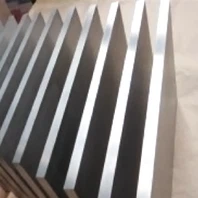
High strength plates are integral components in various industries, from construction to heavy machinery. Their ability to withstand significant stress and load makes them a top choice for engineers and designers. One of the key performance indicators of high strength plates is their bending performance. In this blog, as a high strength plate supplier, I'll delve into what bending performance means for high strength plates, factors affecting it, and how it impacts real - world applications.
Understanding Bending Performance
Bending performance refers to the ability of a high strength plate to undergo plastic deformation without cracking or fracturing when subjected to bending forces. When a plate is bent, the outer surface of the bend is stretched (tensile stress), while the inner surface is compressed (compressive stress). A plate with good bending performance can handle these stresses effectively, maintaining its structural integrity.

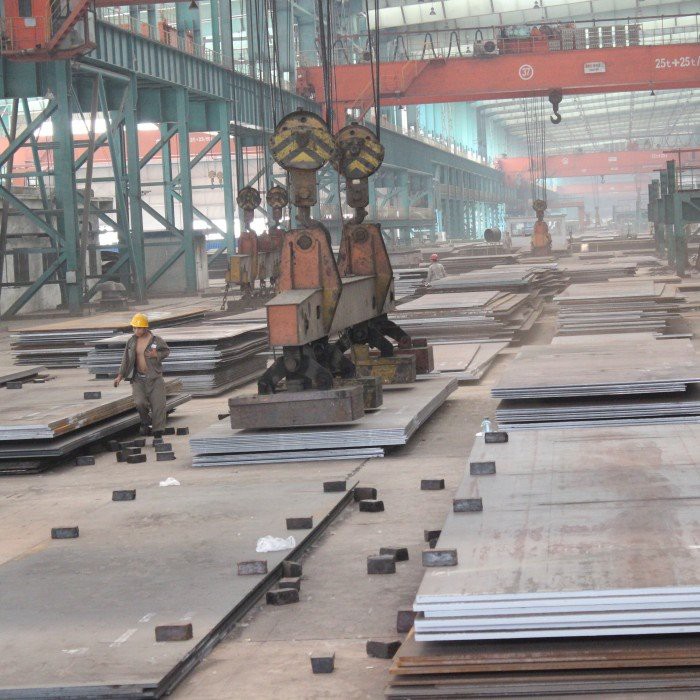
The bending performance of high strength plates is typically evaluated through bending tests. These tests involve applying a force to a plate specimen until it reaches a specific bend angle. The test results can provide valuable information about the plate's ductility, which is a measure of how much it can deform before failure.
Factors Affecting Bending Performance
Material Composition
The chemical composition of a high strength plate plays a crucial role in its bending performance. Elements such as carbon, manganese, silicon, and various alloying elements can significantly influence the plate's mechanical properties. For example, carbon can increase the strength of the plate but may reduce its ductility. On the other hand, alloying elements like nickel and chromium can enhance both strength and toughness, improving the plate's ability to bend without cracking.
Heat Treatment
Heat treatment processes, such as quenching and tempering, are commonly used to improve the mechanical properties of high strength plates. Quenching rapidly cools the plate from a high temperature, which can increase its hardness and strength. However, this process may also make the plate more brittle. Tempering, which involves reheating the quenched plate to a lower temperature, can relieve internal stresses and improve ductility, thus enhancing the bending performance.
Plate Thickness
Thicker plates generally have more difficulty bending compared to thinner ones. As the thickness increases, the stress required to bend the plate also increases, and the risk of cracking or fracturing becomes higher. Additionally, the distribution of stress through the thickness of the plate can be more complex in thicker plates, which may further affect the bending performance.
Grain Structure
The grain structure of the plate can impact its bending performance. A fine - grained structure typically provides better ductility and toughness compared to a coarse - grained structure. During the manufacturing process, controlling the grain size through processes like controlled rolling can improve the plate's ability to bend.
Bending Performance in Different High Strength Plates
S960QL
The S960QL is a high - strength quenched and tempered steel plate. It offers excellent strength and good toughness. Due to its high strength, it can withstand large bending forces. However, its bending performance needs to be carefully considered, especially when dealing with tight bend radii. The heat treatment process used for S960QL is optimized to balance strength and ductility, allowing it to be bent within certain limits without compromising its integrity.
S550QL Astm A514 Steel Plate
The S550QL Astm A514 Steel Plate is another popular high - strength plate. It has a good combination of strength and weldability. When it comes to bending, this plate can be bent to a reasonable degree. Its chemical composition and heat treatment are designed to ensure that it can be formed into various shapes while maintaining its mechanical properties. This makes it suitable for applications where bending is required, such as in the construction of heavy - duty equipment.
S460QL1 690ql Plate
The S460QL1 690ql Plate is known for its high strength and good ductility. It can be bent relatively easily compared to some of the higher - strength plates. The fine - grained structure of this plate, achieved through controlled rolling and heat treatment, contributes to its excellent bending performance. It is often used in applications where complex bending operations are necessary, such as in the production of structural components for bridges and buildings.
Real - World Applications and Bending Performance
In the construction industry, high strength plates are used for various structural elements, such as beams and columns. These elements often need to be bent to fit the design requirements. A plate with good bending performance can be easily formed into the desired shape, reducing the manufacturing time and cost. For example, in the construction of a large - scale building, the ability to bend high strength plates accurately can ensure a more efficient assembly process.
In the manufacturing of heavy machinery, high strength plates are used to build frames, chassis, and other critical components. These components may need to be bent to accommodate different functional requirements. A plate with poor bending performance may lead to cracks or fractures during the bending process, which can compromise the safety and reliability of the machinery.
Importance of Bending Performance for Suppliers
As a high strength plate supplier, understanding the bending performance of our products is of utmost importance. We need to be able to provide accurate information to our customers about the bending capabilities of different plates. This includes specifying the minimum bend radii, the recommended bending methods, and any precautions that need to be taken during the bending process.
By ensuring that our high strength plates have good bending performance, we can meet the diverse needs of our customers. This not only enhances customer satisfaction but also helps us build a good reputation in the market. We can also work closely with our customers to develop customized solutions based on their specific bending requirements.
Contact for Procurement
If you are interested in our high strength plates and want to discuss the bending performance and other aspects in more detail, we are here to assist you. Whether you have a large - scale construction project or are manufacturing heavy machinery, our team of experts can provide you with the best - suited high strength plates. Reach out to us to start the procurement process and find the perfect solution for your needs.
References
- ASM Handbook Volume 1: Properties and Selection: Irons, Steels, and High - Performance Alloys. ASM International.
- "Steel Construction Manual", American Institute of Steel Construction.
- Various technical data sheets provided by steel manufacturers regarding high strength plates.