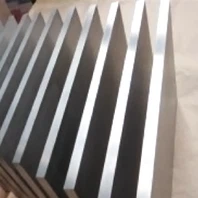
In the world of industrial materials, ASTM A516 Gr 70 plate holds a significant position, especially in applications related to pressure vessels. As a dedicated supplier of ASTM A516 Gr 70 plates, I am often asked about the various properties of this remarkable material. One aspect that is not as commonly discussed but is of great importance in certain scenarios is its acoustic property.
Understanding ASTM A516 Gr 70 Plate
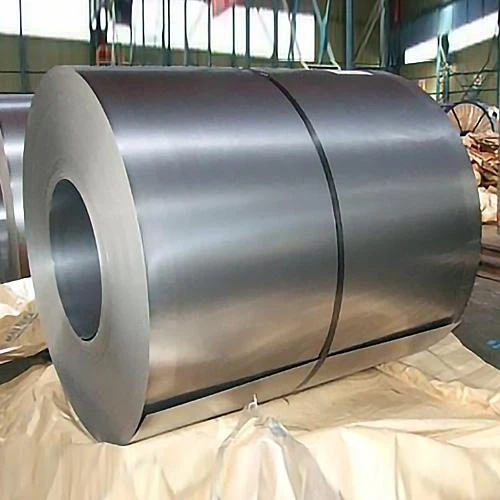
Before delving into the acoustic properties, it's essential to understand what ASTM A516 Gr 70 is. ASTM A516 is a standard specification for pressure vessel plates made from carbon manganese - silicon steel. Grade 70 is one of the grades within this specification, known for its excellent weldability, notch toughness, and good strength. These properties make it a popular choice for fabricating pressure vessels, boilers, and other related equipment that operate under high - pressure conditions.

What are Acoustic Properties?
Acoustic properties of a material refer to how it behaves when it interacts with sound waves. These properties include sound absorption, sound transmission, and sound reflection. Sound absorption is the ability of a material to convert sound energy into heat energy. Materials with high sound absorption coefficients are effective at reducing echo and reverberation in a space. Sound transmission refers to the amount of sound that passes through a material, and sound reflection is the bouncing back of sound waves from the surface of a material.
Acoustic Properties of ASTM A516 Gr 70 Plate
In general, steel plates like ASTM A516 Gr 70 have relatively low sound absorption capabilities. Steel is a dense and rigid material, which means that when sound waves hit its surface, most of the sound energy is reflected back. The smooth and hard surface of the steel plate does not allow for easy dissipation of sound energy as heat.
The sound transmission through ASTM A516 Gr 70 plates is also affected by its density and thickness. A thicker plate will generally transmit less sound compared to a thinner one. This is because the extra mass in a thicker plate requires more energy to vibrate, which in turn reduces the amount of sound that can pass through. However, even with a certain thickness, steel is still a good conductor of sound compared to some more porous and fibrous materials.
When it comes to sound reflection, steel plates are excellent reflectors. The high stiffness and density of ASTM A516 Gr 70 cause sound waves to bounce off its surface with minimal energy loss. This property can be both beneficial and problematic in different applications.
Applications and the Impact of Acoustic Properties
In the context of pressure vessels made from ASTM A516 Gr 70, the acoustic properties can have several implications. In some industrial settings, pressure vessels may generate noise during operation, such as from the flow of fluids inside or the mechanical vibrations of the equipment. The high sound reflection of the steel plate can cause the noise to be concentrated in the surrounding area, leading to a noisy working environment.
On the other hand, in applications where sound insulation is required, the thickness of the ASTM A516 Gr 70 plate can be utilized to some extent. For example, in a pressure vessel that is located in a noise - sensitive area, a thicker plate can help reduce the amount of sound that is transmitted to the outside.
Comparison with Other Related Materials
When comparing the acoustic properties of ASTM A516 Gr 70 with other similar materials, it's interesting to look at materials like SA285GrC A387GR11CL2 and P335GH Pressure Plate SA516GR70. SA285GrC is also a pressure vessel plate, but it may have slightly different acoustic characteristics due to its different chemical composition and manufacturing process. It may have a different balance between sound absorption, transmission, and reflection.
P335GH is another pressure - related steel plate. Similar to ASTM A516 Gr 70, it is also a dense material, but the specific acoustic properties of P335GH can vary depending on its heat treatment and other factors. Compared to ASTM A516 Gr 70, it may show different levels of sound transmission and reflection based on its physical properties.
Improving Acoustic Performance
Although the inherent acoustic properties of ASTM A516 Gr 70 are not ideal for sound - absorbing applications, there are ways to improve its acoustic performance. One approach is to add acoustic insulation materials on the surface of the plate. These insulation materials can be made of porous materials such as fiberglass or mineral wool, which have high sound absorption coefficients. By adding a layer of insulation, the overall sound absorption of the system can be significantly increased, and the sound transmission can be reduced.
Another method is to use vibration - damping materials. Since sound in a pressure vessel can be generated by mechanical vibrations, using damping materials can help reduce the vibration amplitude and thus the noise level. These damping materials work by converting the mechanical energy of vibration into heat energy, similar to how sound - absorbing materials convert sound energy into heat.
Importance of Acoustic Considerations in Material Selection
When choosing a material for a pressure vessel, acoustic properties should not be overlooked. In some industries, such as the food and pharmaceutical industries, where a quiet working environment is essential for employee comfort and product quality control, the acoustic performance of the pressure vessel material can be a deciding factor.
Even in industries where noise is not as critical, considering the acoustic properties can still lead to a more efficient and sustainable design. By reducing noise pollution, companies can meet environmental regulations more easily and improve the overall working conditions for their employees.
Our Expertise as an ASTM A516 Gr 70 Supplier
As a supplier of SA516GR70, we understand the importance of not only providing high - quality plates but also offering comprehensive technical support. Our team of experts can assist you in understanding how the acoustic properties of ASTM A516 Gr 70 can impact your specific application. We can help you choose the right thickness of the plate and recommend appropriate acoustic improvement measures if needed.
We also ensure that our ASTM A516 Gr 70 plates meet the strictest quality standards. Our manufacturing process is carefully controlled to ensure consistent mechanical properties, which in turn can have an impact on the acoustic behavior of the material.
Contact Us for Procurement and Consultation
If you are interested in purchasing ASTM A516 Gr 70 plates or need more information about its acoustic properties, we invite you to contact us for a detailed discussion. Our experienced sales team is ready to answer all your questions and provide you with the best solutions tailored to your needs. Whether you are a small - scale manufacturer or a large industrial enterprise, we are committed to delivering the highest level of service and the best - quality products.
References
- ASTM International. ASTM A516/A516M - 17 Standard Specification for Pressure Vessel Plates, Carbon Steel, for Moderate - and Lower - Temperature Service.
- Bies, D. A., & Hansen, C. H. (2009). Engineering Noise Control: Theory and Practice. Spon Press.
- Beranek, L. L., & Ver, I. L. (1992). Noise and Vibration Control Engineering: Principles and Applications. Wiley.