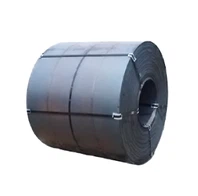
Low alloy steel plates play a crucial role in the shipbuilding industry. Their properties and quality directly affect the safety, durability, and performance of ships. As a low alloy steel plate supplier, I understand the importance of meeting the strict standards in this industry. In this blog, I will discuss the standards for low alloy steel plates in the shipbuilding industry.
Chemical Composition Standards
The chemical composition of low alloy steel plates is carefully regulated to ensure specific mechanical properties. For example, elements like carbon (C), silicon (Si), manganese (Mn), sulfur (S), and phosphorus (P) have defined limits. Carbon content affects the strength and hardness of the steel. Generally, a moderate carbon content is preferred in shipbuilding to balance strength and weldability. Silicon is added to deoxidize the steel and improve its strength. Manganese enhances the hardenability and strength of the steel. On the other hand, sulfur and phosphorus are considered impurities, and their content is strictly limited as they can have a negative impact on the steel's ductility and weldability.


Most shipbuilding standards specify maximum limits for sulfur and phosphorus. For instance, in many common low alloy steel grades used in ships, the sulfur content is typically limited to less than 0.035% and the phosphorus content to less than 0.030%. These limits help to prevent the formation of brittle phases and ensure good weld quality.
Mechanical Property Standards
Mechanical properties are of utmost importance in shipbuilding. Low alloy steel plates must have sufficient strength, toughness, and ductility to withstand the harsh marine environment and the stresses encountered during the ship's operation.
Tensile Strength
Tensile strength is a measure of the maximum stress a material can withstand before breaking under tension. In the shipbuilding industry, different grades of low alloy steel plates have specific tensile strength requirements. For example, some common grades may have a minimum tensile strength ranging from 400 MPa to 600 MPa. This ensures that the plates can bear the loads and forces acting on the ship's structure, such as wave impacts, cargo weights, and the forces generated during maneuvering.
Yield Strength
Yield strength is the stress at which a material begins to deform plastically. It is an important parameter as it indicates the point at which the steel will start to permanently change shape. Shipbuilding standards usually define a minimum yield strength for low alloy steel plates. For example, certain grades may require a minimum yield strength of 235 MPa or higher. This ensures that the ship's structure remains within the elastic range under normal operating conditions and can return to its original shape after the load is removed.
Elongation
Elongation is a measure of the material's ability to stretch before breaking. In shipbuilding, a sufficient elongation is required to ensure that the steel plates can undergo some deformation without fracturing. This is particularly important during the construction process, where the plates may be bent, formed, or welded. Typically, low alloy steel plates for shipbuilding are required to have an elongation of at least 20% in a standard tensile test.
Impact Toughness
Impact toughness is the ability of a material to absorb energy during impact loading. In the marine environment, ships are exposed to various impact forces, such as collisions with floating objects or ice. Therefore, low alloy steel plates used in shipbuilding must have good impact toughness. Impact tests, such as the Charpy V-notch test, are commonly used to evaluate the impact toughness of the steel. The test results are usually specified at different temperatures, typically -20°C or lower, to ensure the steel's performance in cold environments.
Weldability Standards
Weldability is a critical factor in shipbuilding as a large part of the ship's structure is assembled by welding. Low alloy steel plates must be easily weldable without the formation of defects such as cracks, porosity, or incomplete fusion.
To ensure good weldability, the chemical composition of the steel is carefully controlled. Elements that can affect weldability, such as carbon equivalent, are considered. The carbon equivalent is a calculated value that takes into account the combined effect of various elements on the steel's hardenability and weldability. Shipbuilding standards often specify a maximum carbon equivalent for low alloy steel plates to ensure that they can be welded using common welding processes without significant problems.
In addition, pre - welding and post - welding heat treatments may be required depending on the steel grade and the welding process used. These heat treatments help to relieve residual stresses, improve the microstructure of the weld, and enhance the overall weld quality.
Corrosion Resistance Standards
The marine environment is highly corrosive, and low alloy steel plates used in shipbuilding must have good corrosion resistance. This is achieved through a combination of alloying elements and proper surface treatments.
Alloying elements such as chromium (Cr), nickel (Ni), and copper (Cu) can be added to the low alloy steel to improve its corrosion resistance. These elements form a passive oxide layer on the surface of the steel, which acts as a barrier against corrosion. However, the addition of these elements is usually balanced with cost and other performance requirements.
Surface treatments, such as painting or galvanizing, are also commonly used to protect the low alloy steel plates from corrosion. Shipbuilding standards may specify the type, thickness, and quality of the surface coating to ensure long - term corrosion protection.
Specific Steel Grades and Their Standards
There are several well - known low alloy steel grades used in the shipbuilding industry, each with its own specific standards.
SM520B
SM520B is a commonly used low alloy steel grade in shipbuilding. It has good strength and weldability. The chemical composition of SM520B is carefully controlled to meet the requirements of shipbuilding standards. It typically has a carbon content of around 0.20% or less, a manganese content of 1.00 - 1.60%, and other alloying elements in appropriate amounts. In terms of mechanical properties, it has a minimum yield strength of 325 MPa, a minimum tensile strength of 490 - 610 MPa, and an elongation of at least 21%.
P460QL2 Vessel Plate A516GR70
P460QL2 is a high - strength low alloy steel plate that is often used in the construction of ship pressure vessels and other critical components. It has a high yield strength, typically around 460 MPa, and good toughness at low temperatures. The chemical composition is designed to ensure excellent weldability and corrosion resistance. The plate also meets strict standards for impact toughness at low temperatures, making it suitable for use in cold marine environments.
S355JR
S355JR is another widely used low alloy steel grade in shipbuilding. It has a minimum yield strength of 275 MPa and a minimum tensile strength of 470 - 630 MPa. It offers good weldability and is suitable for general structural applications in ships. The steel grade also has a relatively low carbon content, which helps to improve its weldability and reduce the risk of cracking during welding.
Our Role as a Low Alloy Steel Plate Supplier
As a low alloy steel plate supplier, we are committed to providing high - quality products that meet all the relevant shipbuilding standards. We source our steel from reliable mills and conduct strict quality control inspections at every stage of the production process.
We have a wide range of low alloy steel plate grades available, including SM520B, P460QL2 Vessel Plate A516GR70, and S355JR. Our plates are carefully tested for chemical composition, mechanical properties, weldability, and corrosion resistance to ensure they meet the strict requirements of the shipbuilding industry.
If you are in the shipbuilding industry and are looking for high - quality low alloy steel plates, we invite you to contact us for procurement and further discussions. We are confident that our products will meet your needs and contribute to the safety and performance of your ships.
References
- Shipbuilding Steel Standards - Classification Societies' Rules
- ASTM Standards for Steel Plates in Marine Applications
- ISO Standards Related to Low Alloy Steel for Shipbuilding