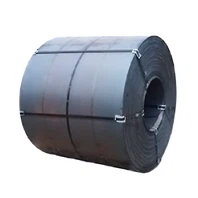
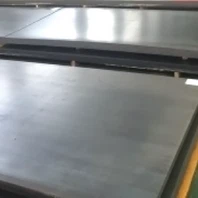
As a supplier of JISG3106 SM490, ensuring the quality of this steel product is of utmost importance. JISG3106 SM490 is a high - tensile welded structural steel, which is widely used in various engineering and construction projects. In this blog, I will share some effective methods on how to test the quality of JISG3106 SM490.
1. Chemical Composition Analysis
The chemical composition of JISG3106 SM490 significantly affects its mechanical properties and performance. To test the chemical composition, we commonly use spectrometry analysis. Spectrometry can accurately measure the content of various elements in the steel, such as carbon (C), silicon (Si), manganese (Mn), phosphorus (P), sulfur (S), and other alloying elements.


Carbon is a crucial element that affects the strength and hardness of the steel. An appropriate carbon content can enhance the strength of JISG3106 SM490, but too high a carbon content may reduce its weldability. Silicon is often used as a deoxidizer, and it can improve the strength and hardness of the steel to a certain extent. Manganese can improve the hardenability and toughness of the steel. Phosphorus and sulfur are harmful impurities, and their content should be strictly controlled to avoid reducing the ductility and toughness of the steel.
By comparing the measured chemical composition with the standard requirements of JISG3106, we can determine whether the steel meets the quality standards. If the chemical composition deviates from the standard, it may lead to poor mechanical properties and performance of the steel.
2. Mechanical Property Testing
Tensile Test
The tensile test is one of the most important tests for evaluating the mechanical properties of JISG3106 SM490. In a tensile test, a specimen is placed in a tensile testing machine, and a gradually increasing tensile force is applied until the specimen breaks. During the test, key parameters such as yield strength, tensile strength, and elongation are measured.
The yield strength is the stress at which the steel begins to deform plastically. For JISG3106 SM490, the yield strength should meet the specified standard values. Tensile strength is the maximum stress that the steel can withstand before breaking. A higher tensile strength indicates better load - bearing capacity of the steel. Elongation reflects the ductility of the steel, that is, the ability of the steel to deform plastically before breaking. A sufficient elongation is necessary to ensure that the steel can withstand certain deformation without cracking during use.
Impact Test
The impact test is used to evaluate the toughness of JISG3106 SM490 at low temperatures. In an impact test, a notched specimen is struck by a pendulum hammer, and the energy absorbed during the impact is measured. The absorbed energy reflects the ability of the steel to resist brittle fracture at low temperatures.
Low - temperature toughness is particularly important for JISG3106 SM490 used in cold regions or in applications where it may be subjected to impact loads at low temperatures. If the impact energy is too low, the steel may be prone to brittle fracture under impact loads, which can pose a serious threat to the safety of the structure.
Hardness Test
The hardness test is a simple and effective method to evaluate the mechanical properties of JISG3106 SM490. Common hardness testing methods include the Brinell hardness test, Rockwell hardness test, and Vickers hardness test.
Hardness is related to the strength and wear resistance of the steel. A higher hardness generally indicates higher strength, but it may also reduce the ductility of the steel. By measuring the hardness of the steel, we can quickly assess its overall mechanical properties and detect possible heat treatment or material quality problems.
3. Microstructure Examination
The microstructure of JISG3106 SM490 has a significant impact on its mechanical properties. Microstructure examination is usually carried out using a metallographic microscope.
The normal microstructure of JISG3106 SM490 mainly consists of ferrite and pearlite. The proportion, size, and distribution of these microstructures affect the strength, toughness, and other properties of the steel. For example, a fine - grained microstructure generally provides better strength and toughness compared to a coarse - grained microstructure.
During the microstructure examination, we can also detect possible defects such as inclusions, cracks, and segregation. Inclusions are non - metallic substances in the steel, which can reduce the strength and toughness of the steel. Cracks are serious defects that can lead to the failure of the steel structure. Segregation refers to the uneven distribution of elements in the steel, which can also affect the performance of the steel.
4. Non - destructive Testing
Ultrasonic Testing
Ultrasonic testing is a widely used non - destructive testing method for detecting internal defects in JISG3106 SM490. In ultrasonic testing, ultrasonic waves are transmitted into the steel, and when they encounter internal defects such as cracks, inclusions, or porosity, the waves are reflected or scattered. By analyzing the reflected or scattered waves, the location, size, and type of defects can be determined.
Ultrasonic testing is suitable for detecting internal defects in thick - walled steel products. It can quickly and accurately detect defects that are not visible on the surface, which helps to ensure the quality and safety of the steel.
Magnetic Particle Testing
Magnetic particle testing is mainly used to detect surface and near - surface defects in ferromagnetic materials such as JISG3106 SM490. In magnetic particle testing, a magnetic field is applied to the steel, and magnetic particles are then sprayed on the surface of the steel. If there are surface or near - surface defects, the magnetic field will be distorted, and the magnetic particles will accumulate at the defect locations, making the defects visible.
Magnetic particle testing is a simple and effective method for detecting surface and near - surface cracks, which is very important for ensuring the quality of the steel surface.
Radiographic Testing
Radiographic testing, such as X - ray and gamma - ray testing, can be used to detect internal defects in JISG3106 SM490. In radiographic testing, radiation is passed through the steel, and the image of the internal structure of the steel is recorded on a film or a digital detector. By analyzing the image, internal defects such as voids, inclusions, and incomplete fusion can be detected.
Radiographic testing provides a clear image of the internal structure of the steel, but it requires special equipment and safety precautions due to the use of radiation.
5. Comparison with Similar Products
To further evaluate the quality of JISG3106 SM490, we can compare it with similar products such as A572GR60, NM450 Abrasion Resistant Wear Plates, and SM520C.
By comparing the chemical composition, mechanical properties, and performance of these products, we can identify the advantages and disadvantages of JISG3106 SM490. This comparison can also help customers make more informed decisions when choosing steel products according to their specific application requirements.
In conclusion, testing the quality of JISG3106 SM490 requires a comprehensive approach, including chemical composition analysis, mechanical property testing, microstructure examination, non - destructive testing, and comparison with similar products. As a supplier, we are committed to providing high - quality JISG3106 SM490 products. If you are interested in our products or have any questions about the quality testing of JISG3106 SM490, please feel free to contact us for further discussion and negotiation.
References
- Japanese Industrial Standards Committee. JIS G3106: 2017, High - tensile welded structural steel.
- ASTM International. ASTM standards related to steel testing methods.
- ASM Handbook Committee. ASM Handbook, Volume 1: Properties and Selection: Irons, Steels, and High - Performance Alloys.